Harro van Lente - Böcker
Visar alla böcker från författaren Harro van Lente. Handla med fri frakt och snabb leverans.
4 produkter
4 produkter
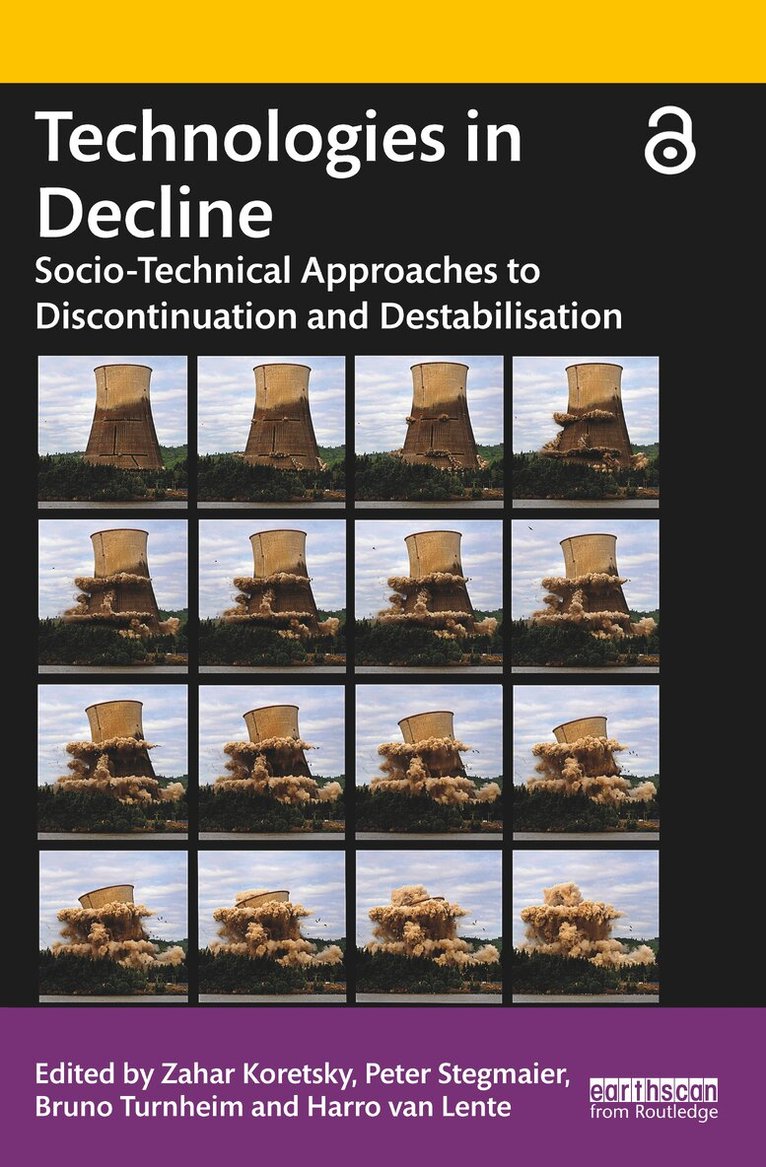
Technologies in Decline
Socio-Technical Approaches to Discontinuation and Destabilisation
Häftad, Engelska, 2022
495 kr
Skickas inom 10-15 vardagar
The central questions of this book are how technologies decline, how societies deal with technologies in decline, and how governance may be explicitly oriented towards parting with ‘undesirable’ technology.Surprisingly, these questions are fairly novel. Thus far, the dominant interest in historical, economic, sociological and political studies of technology has been to understand how novelty emerges, how innovation can open up new opportunities and how such processes may be supported. This innovation bias reflects how in the last centuries modern societies have embraced technology as a vehicle of progress. It is timely, however, to broaden the social study of technology and society: next to considering the rise of technologies, their fall should be addressed, too. Dealing with technologies in decline is an important challenge or our times, as socio-technical systems are increasingly part of the problems of climate change, biodiversity loss, social inequalities and geo-political tensions. This volume presents empirical studies of technologies in decline, as well as conceptual clarifications and theoretical deepening. Technologies in Decline presents an emerging research agenda for the study of technological decline, emphasising the need for a plurality of perspectives.Given that destabilisation and discontinuation are seen as a way to accelerate sustainability transitions, this book will be of interest to academics, students and policy makers researching and working in the areas of sustainability science and policy, economic geography, innovation studies, and science and technology studies.The Open Access version of this book, available at http://www.taylorfrancis.com, has been made available under a Creative Commons [Attribution-Non Commercial-No Derivatives (CC-BY-NC-ND)] 4.0 license.
Technologies in Decline
Socio-Technical Approaches to Discontinuation and Destabilisation
Inbunden, Engelska, 2022
1 909 kr
Skickas inom 10-15 vardagar
The central questions of this book are how technologies decline, how societies deal with technologies in decline, and how governance may be explicitly oriented towards parting with ‘undesirable’ technology.Surprisingly, these questions are fairly novel. Thus far, the dominant interest in historical, economic, sociological and political studies of technology has been to understand how novelty emerges, how innovation can open up new opportunities and how such processes may be supported. This innovation bias reflects how in the last centuries modern societies have embraced technology as a vehicle of progress. It is timely, however, to broaden the social study of technology and society: next to considering the rise of technologies, their fall should be addressed, too. Dealing with technologies in decline is an important challenge or our times, as socio-technical systems are increasingly part of the problems of climate change, biodiversity loss, social inequalities and geo-political tensions. This volume presents empirical studies of technologies in decline, as well as conceptual clarifications and theoretical deepening. Technologies in Decline presents an emerging research agenda for the study of technological decline, emphasising the need for a plurality of perspectives.Given that destabilisation and discontinuation are seen as a way to accelerate sustainability transitions, this book will be of interest to academics, students and policy makers researching and working in the areas of sustainability science and policy, economic geography, innovation studies, and science and technology studies.The Open Access version of this book, available at http://www.taylorfrancis.com, has been made available under a Creative Commons [Attribution-Non Commercial-No Derivatives (CC-BY-NC-ND)] 4.0 license.
Emerging Technologies for Diagnosing Alzheimer's Disease
Innovating with Care
Inbunden, Engelska, 2016
1 094 kr
Skickas inom 10-15 vardagar
This book explores international biomedical research and development on the early diagnosis of Alzheimer's disease. Subsequent contributions explore the values at stake in current practices of dealing with Alzheimer's disease and dementia, both within and outside the biomedical domain.
904 kr
Skickas inom 10-15 vardagar
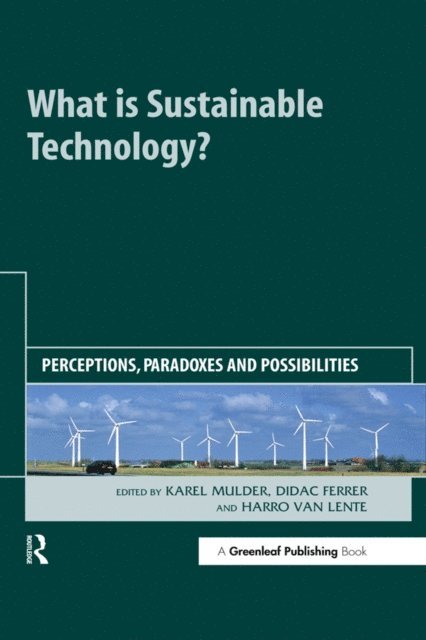
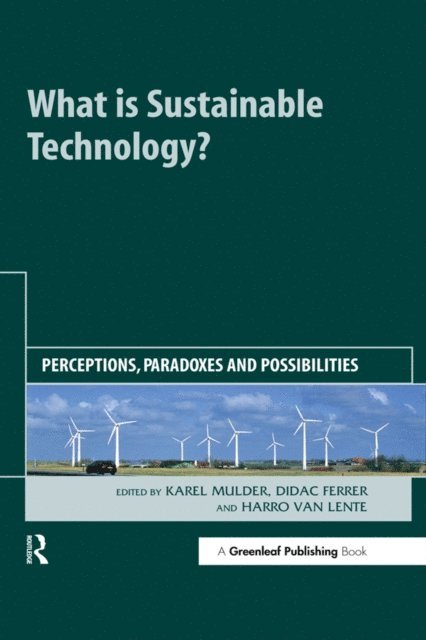
Designers of technology have a major responsibility in the current age. Their designs can have tremendous effects on society, in both the short and the long term. In fact, sustainable development itself has all the characteristics of a design project, albeit a vast one. But a failed product design here will be not just be unsuccessful in the market – it will have far-reaching consequences. It is our common responsibility to make the project successful. Technology has played an important role in creating the problems that we now face; but it will also play an important role in solving them. But this does not mean the technological fix will be easy. How do we allocate resources and attention when there are myriad issues under the umbrella of "sustainable development" currently in competition with one another? How do we arrive at precise specifications for the sustainable technologies that are to be developed and, furthermore, reach consensus on these specifications? What if our sustainable technological solutions aggravate other problems or create new ones? And, because sustainable development is all about the long-term consequences of our actions, how do we assess the effects of modifying existing landscapes, infrastructures and patterns of life?How could we be sure in advance that the changes that new technologies bring will make our society more sustainable? These dilemmas and paradoxes are the subject of this provocative book. Sometimes the claim that a technology is sustainable is made in order to make the technology acceptable in the political process, as in the case of nuclear energy production, where the claims of "sustainability" refer to the absence of CO2 emissions. In the case of biofuels, claims of sustainability have led to a "fuel or food" debate, showing that sustainability has counteracting articulations. And the well-known rebound effect is observed when increased resource efficiency can create a stimulus for consumption. What is Sustainable Technology? illustrates that the sustainability impact of a technology is often much more complicated and ambivalent than one might expect. Making improvements to existing designs is not the technological challenge that will lead to real solutions. We mustn't look to change a part of a machine, but rather the machine as a whole – or even the whole system in which it functions. It is these system innovations that have the potential to make a genuine contribution to sustainable development. What is Sustainable Technology? will help all those involved in designing more sustainable technologies in determining their strategies. It does so by presenting case studies of different technologies in contrasting contexts. Each case asks:1. What articulations of sustainability played a role in the design process?2. What sustainability effects did this technology lead to?3. Who was affected, where, and when?4. Could the designer have foreseen these consequences?5. How did the designer anticipate them?6. How was societal interaction dealt with during the design process?Finally, the authors reflect on future options for the sustainable technology designer. They argue that an important first step is an awareness of the multitude of sustainable development challenges that play a role in production, use, recycling and end-of-life disposal. What is Sustainable Technology? will be essential reading for product designers, engineers, material scientists and others involved in the development of sustainable technologies, as well as a wide academic audience interested in the complexities of the sustainable design process.