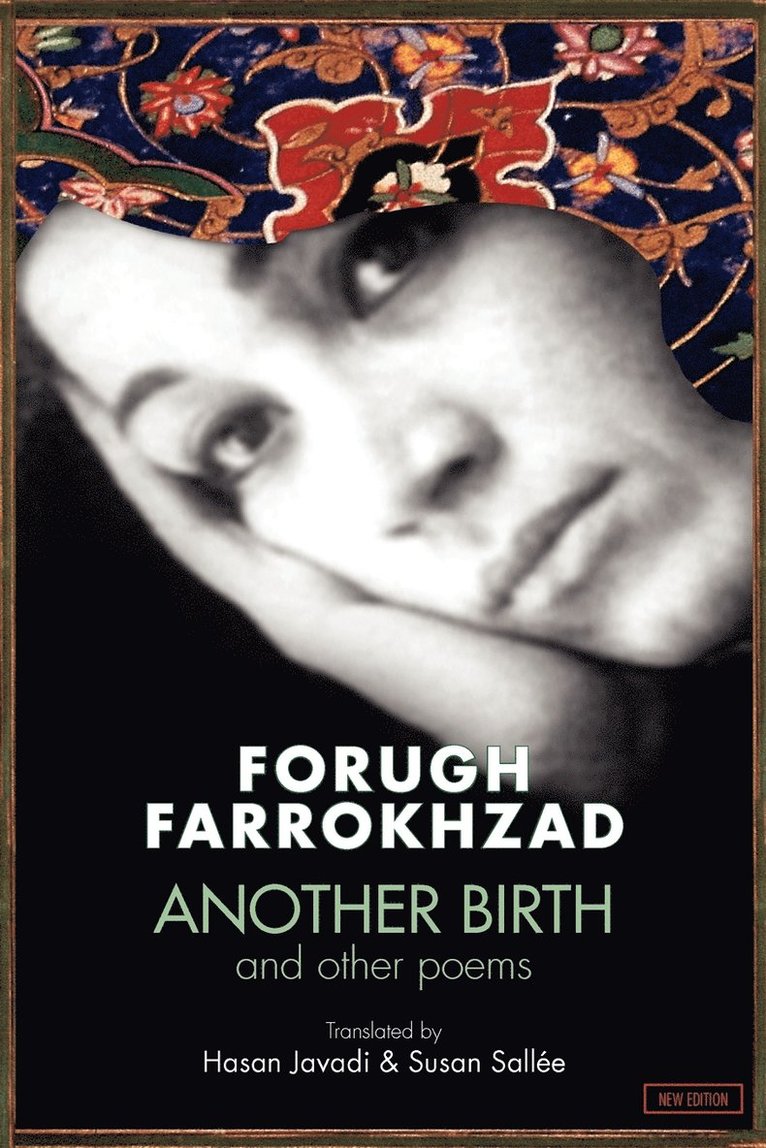
Forugh Farrokhzad was born in Tehran in 1935 and died in a car crash at the age of 32. During her short, tumultuous life she was married and divorced; had a son, who was taken away from her; had love affairs; made an award-winning documentary film; adopted a child from a leper colony; and published several collections of poetry. In her writing as well as her lifestyle, she challenged female stereotypes and shocked the establishment, but her talent was unmistakable. Fiercely honest, insightful, and often wonderfully lyrical, her work has earned her a secure place in the thousand-year tradition of illustrious Iranian poets. This revised and updated edition of "Another Birth & Other Poems" includes an introduction, letters, interviews, a timeline of Forugh's life and creative work, two essays analysing her finest poems, and the Persian text of the poems on facing pages. Forugh Farrokhzad's poetry is as poignant today as it was half a century ago, when it scandalised Iranian society. This book brings into perspective the full evolution of Forugh's work, from introspective reflections on womanhood, love, and religion to broader visions of modern society as a whole.
In August 1907 while Iran was in the throes of its Constitutional Revolution, Britain and Russia concluded a secret agreement to divide the country between themselves into zones of influence. In 1910 with the tacit support of the British, Tsarist Russia occupied northwest Iran and violently suppressed the constitutional movement in Tabriz, the northwestern city which was at the centre of the constitutional movement. The ferocity of the Russian occupation took leaders of the constitutionalists by surprise, and in desperation they cried out for help to democratic nations. Edward G Browne was a scholar and professor at Cambridge University who wrote "The Persian Revolution" and the four-volume "Literary History of Persia". He supported the constitutionalists in word and deed. Appalled by the British government's acquiescence of the Russian atrocities in Tabriz, he tried through letters to the editor, political lobbying, and the writing of pamphlets to mobilise public opinion to force the British government to intervene with Russia. "Letters from Tabriz" is the publication, prepared by Browne, of the letters sent to him by Iranian constitutionalist leaders describing, in rousing eyewitness accounts, the Russian atrocities in Tabriz. Its full publication was stifled because of the Anglo-Russian partnership prior to World War I, and it has never been published in English until now.
Forugh Farrokhzad was born in Tehran in 1935 and died in a car crash at the age of 32. During her short, tumultuous life she was married and divorced; had a son, who was taken away from her; had love affairs; made an award-winning documentary film; adopted a child from a leper colony; and published several collections of poetry. In her writing as well as her lifestyle, she challenged female stereotypes and shocked the establishment, but her talent was unmistakable. Fiercely honest, insightful, and often wonderfully lyrical, her work has earned her a secure place in the thousand-year tradition of illustrious Iranian poets. This revised and updated edition of "Another Birth & Other Poems" includes an introduction, letters, interviews, a timeline of Forugh's life and creative work, two essays analysing her finest poems, and the Persian text of the poems on facing pages. Forugh Farrokhzad's poetry is as poignant today as it was half a century ago, when it scandalised Iranian society. This book brings into perspective the full evolution of Forugh's work, from introspective reflections on womanhood, love, and religion to broader visions of modern society as a whole.
In August 1907 while Iran was in the throes of its Constitutional Revolution, Britain and Russia concluded a secret agreement to divide the country between themselves into zones of influence. In 1910 with the tacit support of the British, Tsarist Russia occupied northwest Iran and violently suppressed the constitutional movement in Tabriz, the northwestern city which was at the centre of the constitutional movement. The ferocity of the Russian occupation took leaders of the constitutionalists by surprise, and in desperation they cried out for help to democratic nations. Edward G Browne was a scholar and professor at Cambridge University who wrote "The Persian Revolution" and the four-volume "Literary History of Persia". He supported the constitutionalists in word and deed. Appalled by the British government's acquiescence of the Russian atrocities in Tabriz, he tried through letters to the editor, political lobbying, and the writing of pamphlets to mobilise public opinion to force the British government to intervene with Russia. "Letters from Tabriz" is the publication, prepared by Browne, of the letters sent to him by Iranian constitutionalist leaders describing, in rousing eyewitness accounts, the Russian atrocities in Tabriz. Its full publication was stifled because of the Anglo-Russian partnership prior to World War I, and it has never been published in English until now.