Hassan Tahiri – författare
Visar alla böcker från författaren Hassan Tahiri. Handla med fri frakt och snabb leverans.
9 produkter
Unity of Science in the Arabic Tradition
Science, Logic, Epistemology and their Interactions
Av Shahid Rahman, Tony Street m. fl.
Inbunden, 2008
3280 kr
Lägg i varukorg
the demise of the logical positivism programme. The answers given to these qu- tions have deepened the already existing gap between philosophy and the history and practice of science. While the positivists argued for a spontaneous, steady and continuous growth of scientific knowledge the …
Unity of Science in the Arabic Tradition
Science, Logic, Epistemology and their Interactions
Av Hassan Tahiri, Tony Street m. fl.
E-bok, 2008
4286 kr
Lägg i varukorg
the demise of the logical positivism programme. The answers given to these qu- tions have deepened the already existing gap between philosophy and the history and practice of science. While the positivists argued for a spontaneous, steady and continuous growth of scientific knowledge the …
Periodisation En Histoire Des Sciences Et De La Philosophie. La Fin D'un Mythe
Häftad, 2013
193 kr
Lägg i varukorg
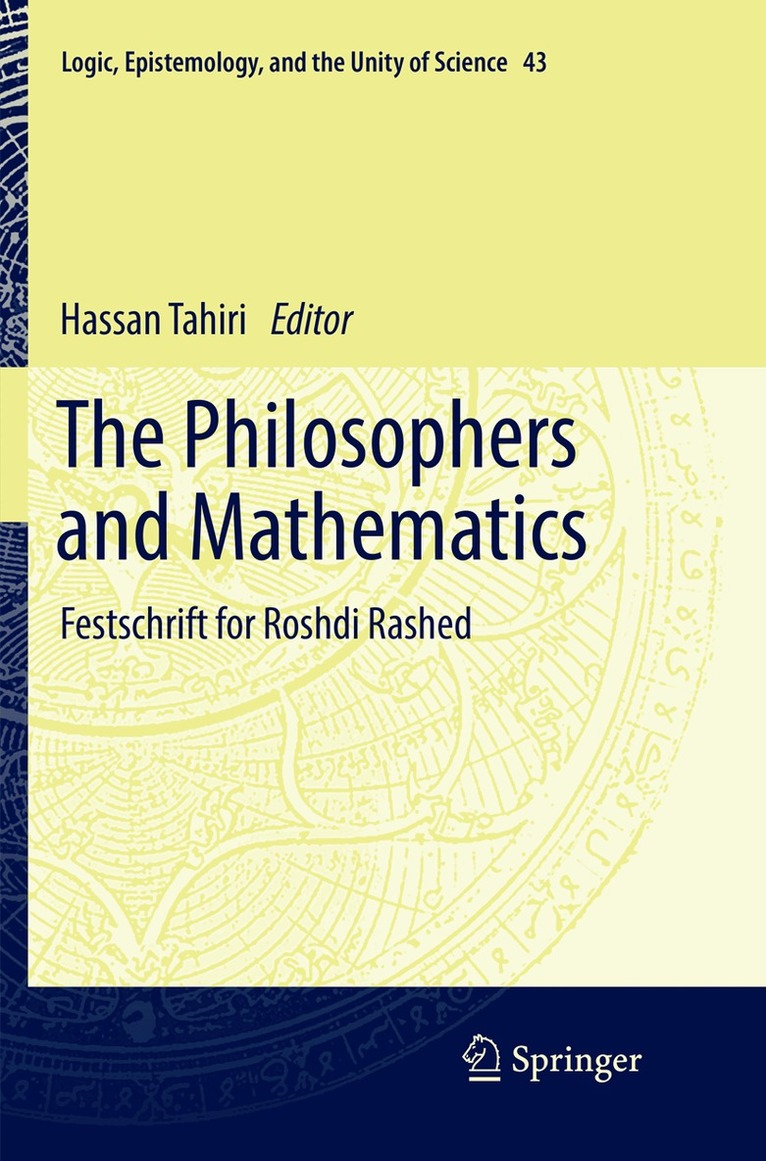
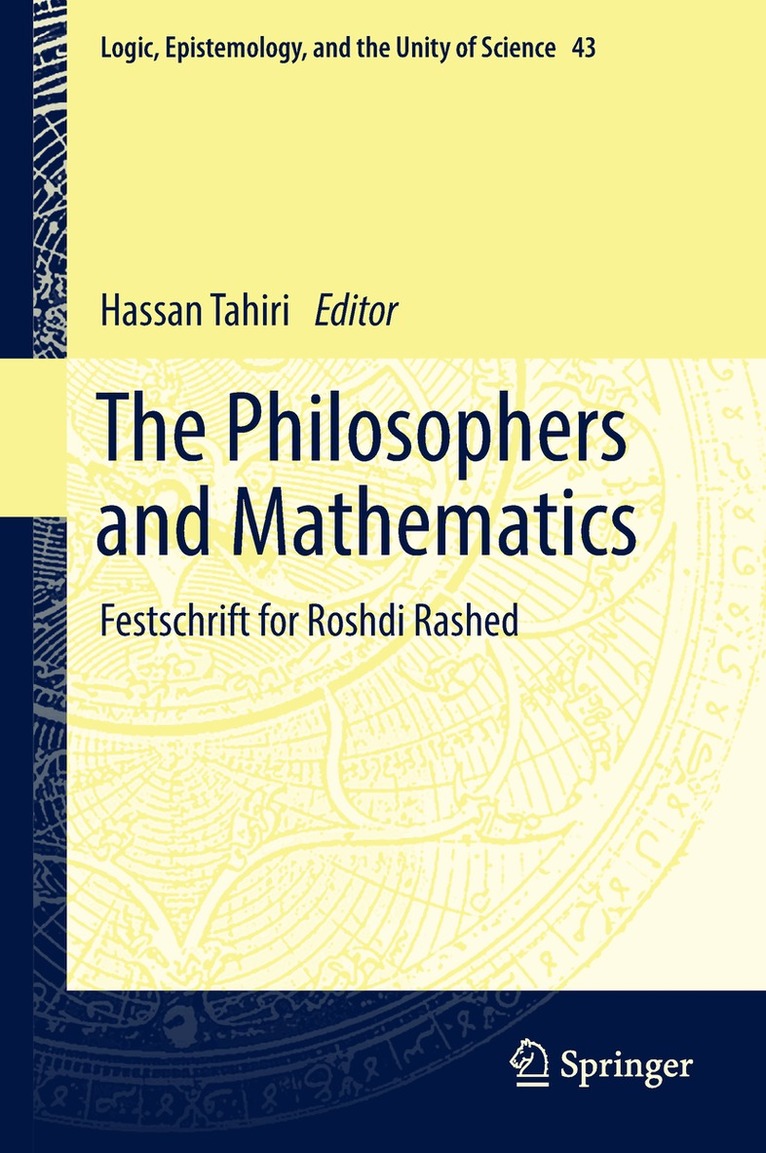
Philosophers and Mathematics
Festschrift for Roshdi Rashed
Häftad, 2018
1095 kr
Lägg i varukorg
This book explores the unique relationship between two different approaches to understand the nature of knowledge, reality, and existence. It collects essays that examine the distinctive historical relationship between mathematics and philosophy. Readers learn what key philosophers throughout the …
Mathematics and the Mind
An Introduction into Ibn Sīnā’s Theory of Knowledge
Häftad, 2015
551 kr
Lägg i varukorg
This book examines how epistemology was reinvented by Ibn Sīnā, an influential philosopher-scientist of the classical Islamic world who was known to the West by the Latinised name Avicenna. It explains his theory of knowledge in which intentionality acts as an interaction between the mind and the …
Mathematics and the Mind
An Introduction into Ibn Sīnā’s Theory of Knowledge
E-bok, 2015
734 kr
Lägg i varukorg
This book examines how epistemology was reinvented by Ibn Sīnā, an influential philosopher-scientist of the classical Islamic world who was known to the West by the Latinised name Avicenna. It explains his theory of knowledge in which intentionality acts as an interaction between the mind and the …
Philosophers and Mathematics
Festschrift for Roshdi Rashed
Inbunden, 2018
1095 kr
Lägg i varukorg
This book explores the unique relationship between two different approaches to understand the nature of knowledge, reality, and existence. It collects essays that examine the distinctive historical relationship between mathematics and philosophy. Readers learn what key philosophers throughout the …
Philosophers and Mathematics
Festschrift for Roshdi Rashed
E-bok, 2018
1427 kr
Lägg i varukorg
This book explores the unique relationship between two different approaches to understand the nature of knowledge, reality, and existence. It collects essays that examine the distinctive historical relationship between mathematics and philosophy. Readers learn what key philosophers throughout the …
Unity of Science in the Arabic Tradition
Science, Logic, Epistemology and their Interactions
Av Shahid Rahman, Tony Street m. fl.
Häftad, 2010
3272 kr
Lägg i varukorg
the demise of the logical positivism programme. The answers given to these qu- tions have deepened the already existing gap between philosophy and the history and practice of science. While the positivists argued for a spontaneous, steady and continuous growth of scientific knowledge the …