Heidi M. Ravven – författare
Visar alla böcker från författaren Heidi M. Ravven. Handla med fri frakt och snabb leverans.
4 produkter
4 produkter
Häftad, Engelska, 2002
380 kr
Skickas inom 7-10 vardagar
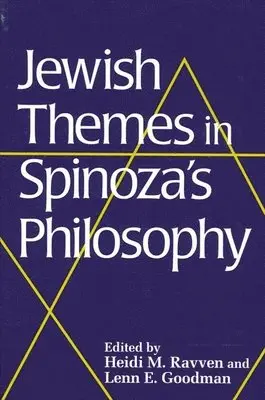
Explores Jewish aspects of Spinoza's philosophy from a wide variety of perspectives.Breaking new ground in the study of Spinoza's philosophy, the essays in this volume explore the extent to which Spinoza may be considered a Jewish thinker. The rich diversity of Spinoza scholarship today is represented here by a wide range of intellectual methods and scholarly perspectives-from Jewish philosophy and history, to Cartesian-analytic and Continental-Marxist streams of interpretation, to the disciplines of political science and intellectual history. Two questions underlie all the essays: How and in what measure is Spinoza's a Jewish philosophy, and what is its impact on the project of Jewish philosophy as a living enterprise now and for the future? The contributors' varied perspectives afford a highly nuanced vision of the multifaceted Judaic tradition itself, as refracted through the Spinozist lens. What draws them together is the quest for enduring insights that emerge from the philosophy of Spinoza.
E-bok
Engelska, 2014222 kr
Läs direkt efter köp
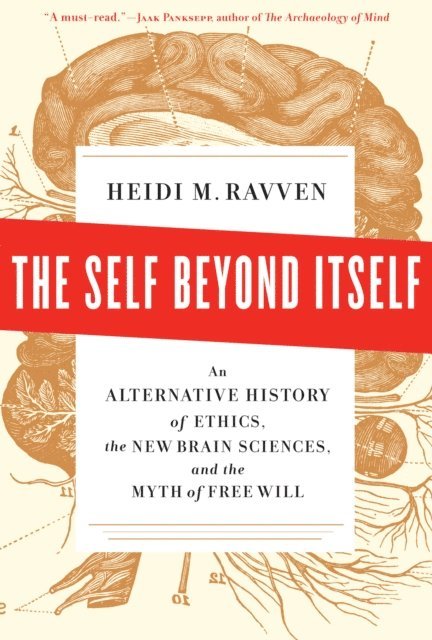
“Intertwines history, philosophy, and science . . . A powerful challenge to conventional notions of individual responsibility” (Publishers Weekly). Few concepts are more unshakable in our culture than free will, the idea that individuals are fundamentally in control of the decisions they make, good or bad. And yet the latest research about how the brain functions seems to point in the opposite direction . . . In a work of breathtaking intellectual sweep and erudition, Heidi M. Ravven offers a riveting and accessible review of cutting-edge neuroscientific research into the brain’s capacity for decision-making—from “mirror” neurons and “self-mapping” to surprising new understandings of group psychology. The Self Beyond Itself also introduces readers to a rich, alternative philosophical tradition of ethics, rooted in the writing of Baruch Spinoza, that finds uncanny confirmation in modern science. Illustrating the results of today’s research with real-life examples, taking readers from elementary school classrooms to Nazi concentration camps, Ravven demonstrates that it is possible to build a theory of ethics that doesn’t rely on free will yet still holds both individuals and groups responsible for the decisions that help create a good society. The Self Beyond Itself is that rare book that injects new ideas into an old debate—and “an important contribution to the development of our thinking about morality” (Washington Independent Review of Books). “An intellectual hand-grenade . . . A magisterial survey of how contemporary neuroscience supports a vision of human morality which puts it squarely on the same plane as other natural phenomena.” —William D. Casebeer, author of Natural Ethical Facts
Inbunden, Engelska, 2002
1 079 kr
Tillfälligt slut
Explores Jewish aspects of Spinoza's philosophy from a wide variety of perspectives.Breaking new ground in the study of Spinoza's philosophy, the essays in this volume explore the extent to which Spinoza may be considered a Jewish thinker. The rich diversity of Spinoza scholarship today is represented here by a wide range of intellectual methods and scholarly perspectives-from Jewish philosophy and history, to Cartesian-analytic and Continental-Marxist streams of interpretation, to the disciplines of political science and intellectual history. Two questions underlie all the essays: How and in what measure is Spinoza's a Jewish philosophy, and what is its impact on the project of Jewish philosophy as a living enterprise now and for the future? The contributors' varied perspectives afford a highly nuanced vision of the multifaceted Judaic tradition itself, as refracted through the Spinozist lens. What draws them together is the quest for enduring insights that emerge from the philosophy of Spinoza.
Inbunden, Engelska, 2013
265 kr
Tillfälligt slut
Few concepts are more unshakable in Western culture than free will. In The Self Beyond Itself, Heidi M. Ravven throws a wrench into this view, calling free will a myth that reflects the still-powerful influence of Christian theology on popular thinking. The book offers a riveting and accessible review of neuro-scientific research into the brain's capacity for decision-making, pointing to the profound, virtually inescapable social influences on moral choices. Ravven shows that it is possible to build a theory of ethics that doesn't rely on free will.