• Fri frakt över 249 kr
  • •
  • Snabba leveranser
  • •
  • Billiga böcker
Kundservice

Du är på sajten för privatpersoner.

Företag, bibliotek eller offentlig verksamhet?

Du handlar på classic.bokus.com, där alla dina funktioner finns intakta.
Till classic.bokus.com
Bokus logotyp. Gå till startsidan.
  • Erbjudanden
  • Student
  • Topplistor
  • Barn & ungdom
  • Bokus Play
  • E-böcker
  • Ljudböcker
  • Pocketböcker
  • Spel & pussel

Upp till 25% på utvalda nyheter →

Sidfot

Mina sidor

    Hjälp

    • Kundservice
    • Vanliga frågor och svar
    • Frakt och leverans
    • Retur vid ångerrätt
    • Reklamera vara
    • Betalning
    • Köpvillkor
    • Allmänna villkor
    • Information om webbplatsens tillgänglighet

    Om Bokus

    • Om oss
    • Pressrum
    • För studenter
    • För företag
    • För bibliotek och offentlig verksamhet
    • För leverantörer
    • Hållbarhet

    Populärt

    • Aktuella erbjudanden
    • Presentkort
    • Studentlitteratur
    • Nya böcker
    • Topplistor
    • Signerade böcker
    • Engelska böcker

    Inspiration

    • Boktips
    • BookTok
    • Populära bokserier
    • Barnbokskaraktärer
    • Populära författare
    Logotyp för Bokus
    Följ oss på Facebook (extern länk)Följ oss på Instagram (extern länk)Följ oss på YouTube (extern länk)Följ oss på TikTok (extern länk)
    bokus @ CookiesAnpassa cookiesIntegritetspolicyKöpvillkor
    Till Citymail hemsida (extern länk)Till Budbee hemsida (extern länk)Till Postnord hemsida (extern länk)Till Schenker hemsida (extern länk)Till Early Bird hemsida (extern länk)Till Walleys hemsida (extern länk)
    1. Naturvetenskap och teknik
    2. Matematik och naturvetenskap
    3. Naturvetenskap:allmänt
    4. Populärvetenskap

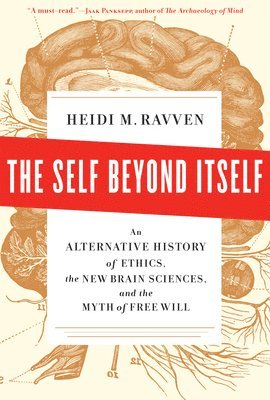
    Self Beyond Itself

    An Alternative History of Ethics, the New Brain Sciences, and the Myth of Free Will

    AvHeidi M. Ravven

    Inbunden, Engelska, 2013

    264 kr

    Tillfälligt slut

    Fler format och utgåvor

    E-bok

    149 kr

    Beskrivning

    Few concepts are more unshakable in Western culture than free will. In The Self Beyond Itself, Heidi M. Ravven throws a wrench into this view, calling free will a myth that reflects the still-powerful influence of Christian theology on popular thinking. The book offers a riveting and accessible review of neuro-scientific research into the brain's capacity for decision-making, pointing to the profound, virtually inescapable social influences on moral choices. Ravven shows that it is possible to build a theory of ethics that doesn't rely on free will.

    Produktinformation

    • Utgivningsdatum:2013-06-13
    • Mått:156 x 235 x 45 mm
    • Vikt:860 g
    • Format:Inbunden
    • Språk:Engelska
    • Antal sidor:528
    • Förlag:The New Press
    • ISBN:9781595585370

    Utforska kategorier

    • Populärvetenskap inom Naturvetenskap och teknik
    • Filosofiska discipliner inom Filosofi och religion

    Mer om författaren

    Heidi M. Ravven is a professor of religious studies at Hamilton College. A founding member of the Society for Empirical Ethics, she has published widely in interdisciplinary journals and is the co-editor of Jewish Themes in Spinoza’s Philosophy. She lives in Cazenovia, New York.

    Recensioner i media

    “As she delves deeply into the cognitive, cultural and philosophical sources of moral agency, Ravven takes careful note of the emerging brain sciences. . . .[A] must-read for anyone interested in the breadth and depth of our moral mentality.”—Jaak Panksepp, Baily Endowed Professor in Animal Well-Being Sciences, Washington State University, and author of The Archaeology of Mind“An intellectual hand-grenade, The Self Beyond Itself is a magisterial survey of how contemporary neuroscience supports a vision of human morality which puts it squarely on the same plane as other natural phenomena. . . . This book will spark fruitful debate and reminds us of the debt we owe Aristotle and Spinoza as we make sense of ourselves as part of the natural world.”—William D. Casebeer, author of Natural Ethical Facts“The most brilliant, original book on ethics in decades. Ravven’s immense erudition and sharp critical insights are extraordinary. This is a fascinating book for everyone concerned about education, politics, history, philosophy, religion, and the survival of human society.”—Susannah Heschel, Eli Black Professor of Jewish Studies, Dartmouth College“Shatters the many bubbles that contemporary philosophers have built around themselves. Its criticisms of free will are historically grounded and logically cogent; its alternative views of freedom and moral agency, drawing largely on Spinoza, are persuasive and much needed. This book will generate wide discussion in academic fields—and break new paths for society as a whole.”—John McCumber, professor of Germanic languages, UCLA“I began reading this book, because I had agreed to; I stayed because it riveted me. Not only is this a brilliant examination of ethical behavior in the light of history, social psychology, brain science, and philosophy, it is a powerful demonstration of what those disciplines are for. A new basis for the instilling of ethical behavior cannot be gainsaid after reading The Self Beyond Itself.”—Daniel Boyarin, Taubman Professor of Talmudic Culture, University of California, Berkeley“Fascinating, accessible, and engaging. . . . Ravven provides an alternative vision of human ethics, initially expressed in the naturalistic philosophy of Spinoza but also well supported by contemporary research in the cognitive sciences.”—Wendell Wallach, Yale Interdisciplinary Center for Bioethics“Extraordinarily wide-ranging, fervently argued, and visionary. . . . Ravven’s book is an exemplary case of a public philosophy, or the use of different modes of reasoning to broaden political sensibilities and battle provincialism.”—Jim Wetzel, Augustinian Chair, Villanova University“A thought-provoking study about the most urgent moral questions.” —Warren Zev Harvey, professor emeritus, Department of Jewish Thought, The Hebrew University of Jerusalem “A perfect book for thoughtful people who wish they had taken (or wish they had paid attention in) a philosophy class in college. The real-life examples render the ideas very accessible and illustrate how our concepts of ‘self’ influence everything we do. Make it the gift you give your ‘self.’”—P.H. Longstaff, professor, S.I. Newhouse School of Public Communications, Syracuse University