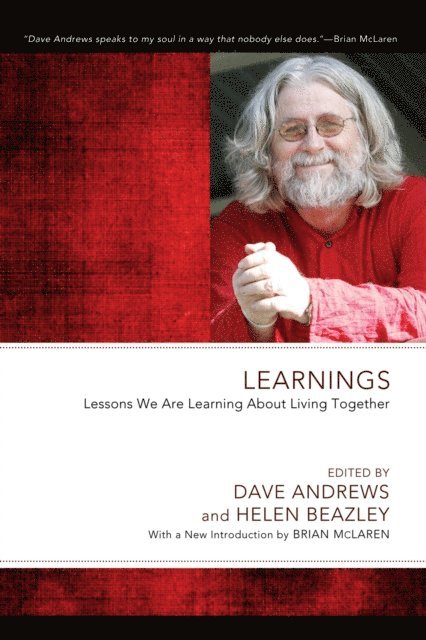
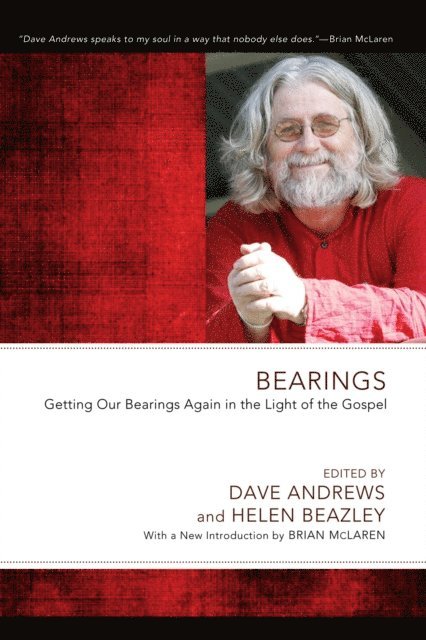
Introduction to Dave Andrews for the 2012 Dave Andrews Legacy SeriesIntroduction to the 2012 Reprinted EditionIkept seeing this guy on the shuttle bus - long hair, graying beard, a gentle 60's-70's feel to him. He seemed thoughtful, intense, friendly, and quiet, like he had a lot on his mind, as did I. Even though I saw him nearly every time I boarded the shuttle bus, we didn't speak beyond him smiling and saying, "e;G'day"e; and me nodding and saying, "e;Hey"e; as we boarded or disembarked.It was my first time at Greenbelt, a huge festival about faith, art, and justice held every August in the UK. I had always heard great things about the event and so was thrilled when I was invited to speak. I was just as thrilled to get a chance to hear in person some musicians and speakers I had only heard about from a distance, so I went through the program and marked people I wanted to be sure not to miss.It was near the end of the conference when a friend told me to be sure to catch an Australian fellow named Dave Andrews. "e;I've never heard of him,"e; I said. "e;Oh, he's a force of nature,"e; my friend said. "e;Kind of like Jim Wallis, Tony Campolo, and Mother Teresa rolled up into one."e; How could I not put a combination like that in one of the last free slots on my schedule?I arrived at the venue a few minutes late and there he was, the bearded guy from the bus. Thoughtful, intense, and friendly, yes -- but quiet he was not. He was nearly exploding with passion -- passion and compassion, in a voice that ranged from fortis- simo to fortississimo to furioso. How could a guy churning with so much hope, love, anger, energy, faith, fury, and curiosity have been so quiet and unassuming on the bus?He was a force of nature indeed, evoking from his audience laughter, shouts, amens, reverent silence, and even tears before he was done. He spoke of justice, of poverty, of oppression, of solidarity across religious differences, of service, of hope, of celebration, of the way of Jesus.As I listened, I wanted to kick myself. This is the most inspiring talk I've heard at this whole festival. Why did I miss all those opportunities to get to know this fellow on the bus? Now the festival is almost over and I've missed my chance!Later than evening, I boarded the shuttle bus for the last ride back to my hotel, and there sat Dave and his wife, Ange. I didn't miss my chance this time. I intro- duced myself and they reciprocated warmly.I was a largely unknown American author at the time and hardly known at Greenbelt, much less in Australia, so I'm quite certain Dave and Ange had never heard of me. But they couldn't have been kinder, and as we disembarked, he pulled two books from his backpack and told me they were a gift.The next day when I flew home from Heathrow, I devoured them both on the plane. First, I opened Not Religion, But Love and read it through from cover to cover. Then I opened Christi-anarchy and couldn't put it down either. When my plane landed, I felt I had been on a spiritual retreat . . . or maybe better said, in a kind of spiritual boot camp!Things I was thinking but had been afraid to say out loud Dave was saying boldly and confidently. Ideas I was very tentatively considering he had already been living with for years. Complaints and concerns I only shared in highly guarded situa- tions he was publishing from the housetops. Hopes and ideals I didn't dare to express he celebrated without embarrassment.I think I gave him a copy of one or two of my books as well, and I guess he was favorably impressed enough that we stayed in touch and a friendship developed. I discovered that we were both songwriters as well as writers, that we both had a deep interest in interfaith friendships, that we both had some critics and we both had known the pain of labeling and rejection.Since then, whatever he has written, I've been sure to read . . . knowing that he speaks to my soul in a way that nobody else does.We've managed to get together several times since our initial meeting in England, in spite of the fact that we live on opposite sides of the planet. We've spoken together at a few conferences on both hemispheres, and I had the privilege of visiting him in Brisbane. I've seen the beautiful things he has been doing in a particularly interesting and challenging neighborhood there, walking the streets with him, meet- ing his friends, sensing his love for that place and those people. He's been in my home in the US as well, and we've been conspiring for some other chances to be and work together in the future.In my speaking across North America, I frequently refer to Dave's work, but until now, his books have been hard to come by. That's why I'm thrilled to introduce this volume to everyone I can in North America.Yes, you'll find he's one part Tony Campolo, one part Jim Wallis, and one part Mother Teresa, a force of nature, as I was told.You'll also find he is a serious student of the Bible and a serious theological sage -- the kind of reflective activist or thinker-practitioner that we need more of.In a book like Christi-anarchy, he can boldly and provocatively unsettle you and challenge you. Then in a book like Plan Be, he can gently and pastorally encourage and inspire you. Like the central inspiration of his life, he is the kind of person to confidently turn over tables in the Temple one minute and then humbly defend a shamed and abused woman from her accusers the next.You'll see in Dave's writings that he is highly knowledgeable about poverty, ecology, psychology, sociology, politics, and economics . . . not only from an aca- demic standpoint, but also from a grass-roots, experiential level. His writing on these subjects grows from what he has done on the ground . . . for example, nurtur- ing a community network that is training young adults to live and serve among thesupervising homes for adults who are learning to live with physical and psychiatric disabilities, encouraging small businesses to hire people who others would consider unemployable and developing a non-profit solar energy co-op for local people.Dave's writings and friendship have meant so much to me. I consider him a friend and mentor. Now I am so happy that people across North America can dis- cover him too.You'll feel as I did - so grateful that you didn't miss the chance to learn from this one-of-a-kind, un-categorizable, un-containable, wild wonder from Down Under named Dave Andrews.Brian D. McLarenauthor/speaker/activist (brianmclaren.net)