Hélène Landemore – författare
Visar alla böcker från författaren Hélène Landemore. Handla med fri frakt och snabb leverans.
16 produkter
Politics Without Politicians
The Case for Citizen Rule
Inbunden, 2026
240 kr
Lägg i varukorg
Politicians have failed us. But democracy doesn’t have to. Bought by special interests, detached from real life, obsessed with re-election. Politicians make big promises, deliver little to nothing, and keep the game rigged in their favour. But what can we do?With disarming clarity and a deep sense …
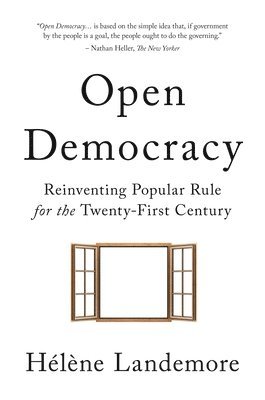
Open Democracy
Reinventing Popular Rule for the Twenty-First Century
Häftad, 2022
236 kr
Lägg i varukorg
"Open Democracy envisions what true government by mass leadership could look like."—Nathan Heller, New YorkerHow a new model of democracy that opens up power to ordinary citizens could strengthen inclusiveness, responsiveness, and accountability in modern societies To the ancient Greeks, democracy …
Politics Without Politicians
The Case for Citizen Rule
Häftad, 2027
155 kr
Kommande
Politicians have failed us. But democracy doesn’t have to. Bought by special interests, detached from real life, obsessed with re-election. Politicians make big promises, deliver little to nothing, and keep the game rigged in their favour. But what can we do?With disarming clarity and a deep sense …
Debating Democracy
Do We Need More or Less?
Av Jason Brennan, Hélène Landemore
Häftad, 2021
374 kr
Lägg i varukorg
Around the world, faith in democracy is falling. Russia, Turkey, and Venezuela have moved from flawed democracies to authoritarian regimes. Brexit and the rise of far-right parties show that even stable Western democracies are struggling. Partisanship and mutual distrust are increasing. What, if …
Debating Democracy
Do We Need More or Less?
Av Jason Brennan, Hélène Landemore
Inbunden, 2021
1376 kr
Lägg i varukorg
Around the world, faith in democracy is falling. Russia, Turkey, and Venezuela have moved from flawed democracies to authoritarian regimes. Brexit and the rise of far-right parties show that even stable Western democracies are struggling. Partisanship and mutual distrust are increasing. What, if …
Debating Democracy
Do We Need More or Less?
Av Helene Landemore, Jason Brennan
E-bok, 2021
277 kr
Lägg i varukorg
Around the world, faith in democracy is falling. Russia, Turkey, and Venezuela have moved from flawed democracies to authoritarian regimes. Brexit and the rise of far-right parties show that even stable Western democracies are struggling. Partisanship and mutual distrust are increasing. What, if …
Debating Democracy
Do We Need More or Less?
Av Helene Landemore, Jason Brennan
E-bok, 2021
277 kr
Lägg i varukorg
Around the world, faith in democracy is falling. Russia, Turkey, and Venezuela have moved from flawed democracies to authoritarian regimes. Brexit and the rise of far-right parties show that even stable Western democracies are struggling. Partisanship and mutual distrust are increasing. What, if …
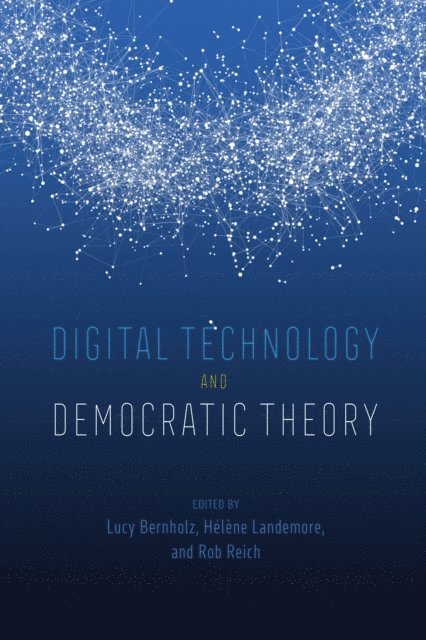
Digital Technology and Democratic Theory
Av Lucy Bernholz, Helene Landemore m. fl.
Inbunden, 2021
984 kr
Lägg i varukorg
One of the most far-reaching transformations in our era is the wave of digital technologies rolling over--and upending--nearly every aspect of life. Work and leisure, family and friendship, community and citizenship have all been modified by now-ubiquitous digital tools and platforms. Digital …
Digital Technology and Democratic Theory
Av Lucy Bernholz, Helene Landemore m. fl.
Häftad, 2021
279 kr
Lägg i varukorg
One of the most far-reaching transformations in our era is the wave of digital technologies rolling over--and upending--nearly every aspect of life. Work and leisure, family and friendship, community and citizenship have all been modified by now-ubiquitous digital tools and platforms. Digital …
Digital Technology and Democratic Theory
Av Rob Reich, Helene Landemore m. fl.
E-bok, 2021
541 kr
Lägg i varukorg
One of the most far-reaching transformations in our era is the wave of digital technologies rolling over—and upending—nearly every aspect of life. Work and leisure, family and friendship, community and citizenship have all been modified by now-ubiquitous digital tools and platforms. Digital …
Politics Without Politicians
The Case for Citizen Rule
E-bok, 2026
170 kr
Lägg i varukorg
Politicians have failed us. But democracy doesn’t have to. Bought by special interests, detached from real life, obsessed with re-election. Politicians make big promises, deliver little to nothing, and keep the game rigged in their favour. But what can we do?With disarming clarity and a deep sense …
Democratic Reason
Politics, Collective Intelligence, and the Rule of the Many
Häftad, 2017
271 kr
Lägg i varukorg
Individual decision making can often be wrong due to misinformation, impulses, or biases. Collective decision making, on the other hand, can be surprisingly accurate. In Democratic Reason, Helene Landemore demonstrates that the very factors behind the superiority of collective decision making add …
Open Democracy
Reinventing Popular Rule for the Twenty-First Century
Inbunden, 2020
585 kr
Lägg i varukorg
"Open Democracy envisions what true government by mass leadership could look like."—Nathan Heller, New YorkerHow a new model of democracy that opens up power to ordinary citizens could strengthen inclusiveness, responsiveness, and accountability in modern societies To the ancient Greeks, democracy …
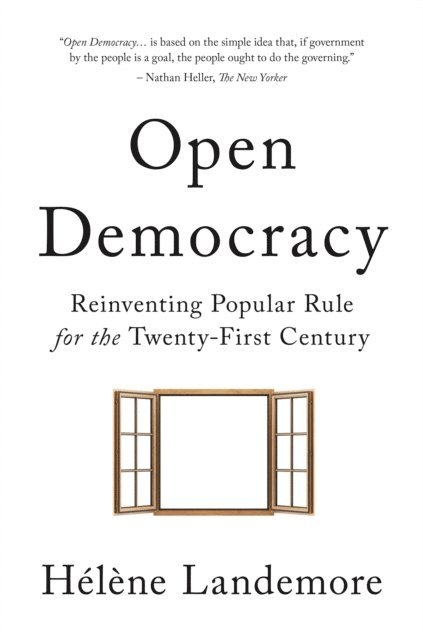
Open Democracy
Reinventing Popular Rule for the Twenty-First Century
E-bok, 2020
314 kr
Lägg i varukorg
" Open Democracy envisions what true government by mass leadership could look like."—Nathan Heller, New Yorker How a new model of democracy that opens up power to ordinary citizens could strengthen inclusiveness, responsiveness, and accountability in modern societies To the ancient Greeks, …
Democratic Reason
Politics, Collective Intelligence, and the Rule of the Many
E-bok, 2012
388 kr
Lägg i varukorg
Individual decision making can often be wrong due to misinformation, impulses, or biases. Collective decision making, on the other hand, can be surprisingly accurate. In Democratic Reason , Hélène Landemore demonstrates that the very factors behind the superiority of collective decision making add …