Heli Tissari - Böcker
Visar alla böcker från författaren Heli Tissari. Handla med fri frakt och snabb leverans.
2 produkter
2 produkter
2 195 kr
Skickas inom 5-8 vardagar
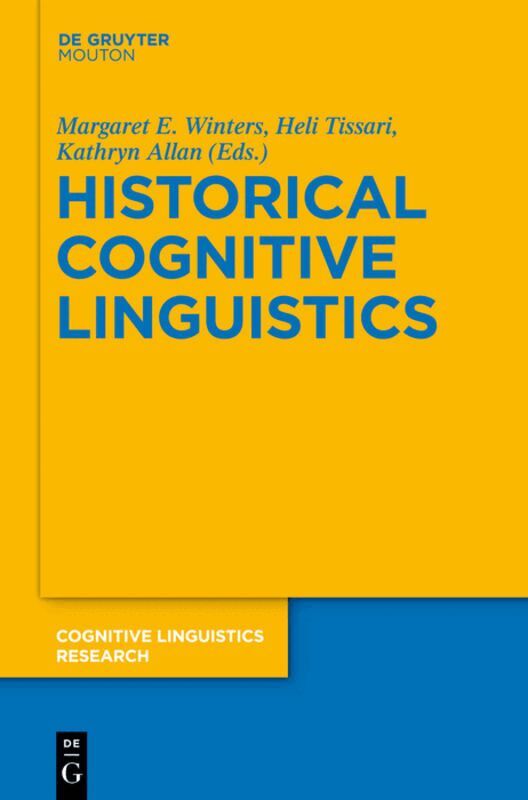
The volume explores the ways in which language change is studied within the framework of Cognitive Linguistics, a semantics-based theory of language production and perception. The eleven chapters explore two kinds of changes: firstly, those which involve mental prototypes or 'best instances' of particular concepts and extensions of these prototypes, and secondly, those which relate to conceptual networks, for example via metaphor or metonymy. More specifically, the papers address syntactic and lexical change, as well as the evolution of language and changes in the expression - usually metaphoric - of emotions.In presenting a wide range of current work of this kind, the volume demonstrates the value of cross-fertilization between historical and cognitive linguistics, and is intended to open the way for further related research. The included papers are of particular relevance to those working in metaphor theory and syntactic / semantic change within Cognitive Linguistics, but will also be of interest to other historical linguists and those studying cognitive semantics and metaphor from a synchronic viewpoint.
Del 21 - Figurative Thought and Language
At the Crossroads of Historical and Cognitive Linguistics
Inbunden, Engelska, 2026
1 637 kr
Skickas inom 11-20 vardagar
This volume explores the synergy between historical and cognitive linguistics, demonstrating how the two can jointly shed light on patterns of language change. Focusing on figurative language, particularly metaphor and metonymy, it features a range of case studies that zoom in on the emergence and evolution of meaning across time, with chapters addressing, among other topics, diachronic changes in the semantics of nouns (e.g. for emotions) and speech act verbs. Beyond lexical and grammatical change, the volume engages with broader issues such as belief systems, the conceptualization of the future, intersubjectification, etymology, and prototype theory. The contributors employ a variety of theoretical and methodological frameworks, including diachronic morphology, cultural history, and both exploratory and confirmatory statistics. Together, these studies exemplify the potential of interdisciplinary approaches and invite further dialogue on the tools and theories suited to tracing the evolution of figurative thought and language over time.