Henk Barendregt – författare
Visar alla böcker från författaren Henk Barendregt. Handla med fri frakt och snabb leverans.
4 produkter
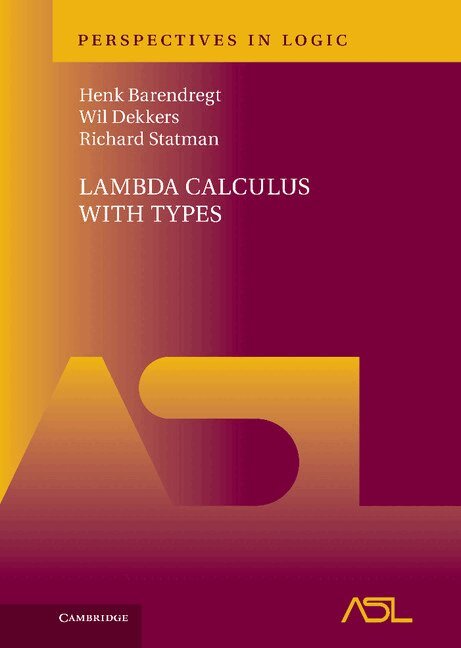
Lambda Calculus with Types
Av Henk Barendregt, Wil Dekkers m. fl.
Inbunden, 2013
1400 kr
Lägg i varukorg
This handbook with exercises reveals in formalisms, hitherto mainly used for hardware and software design and verification, unexpected mathematical beauty. The lambda calculus forms a prototype universal programming language, which in its untyped version is related to Lisp, and was treated in the …
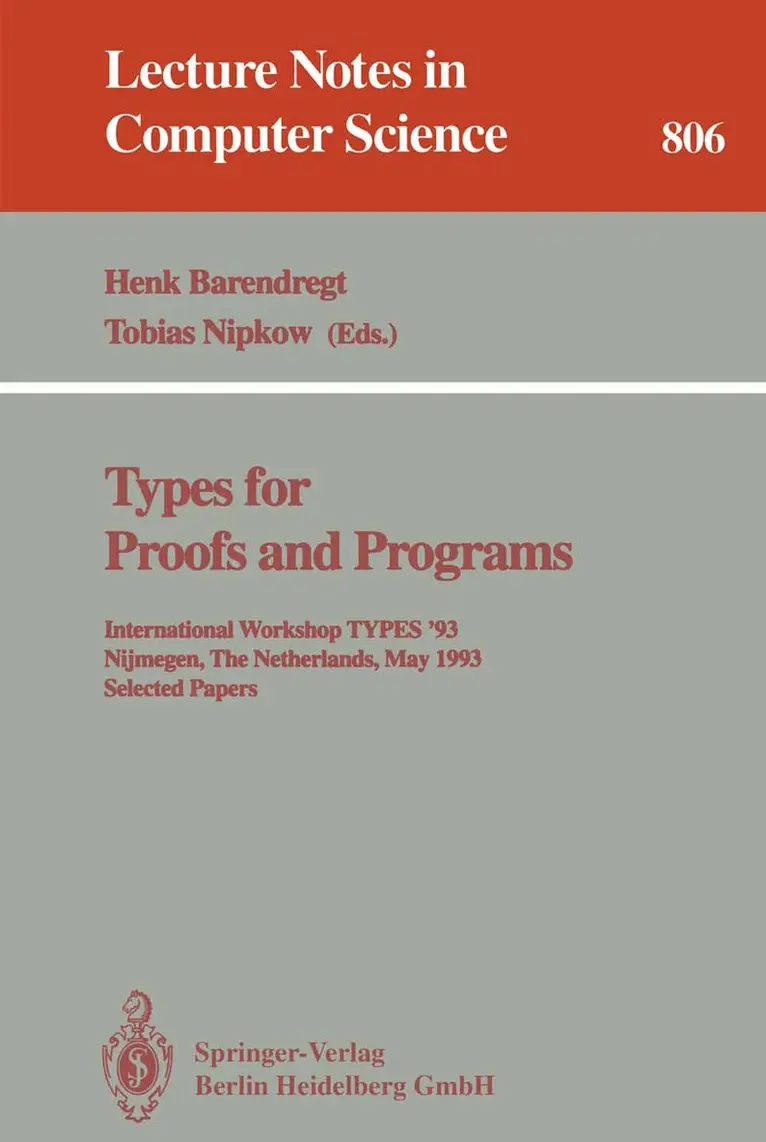
Types for Proofs and Programs
International Workshop TYPES '93, Nijmegen, The Netherlands, May 24 - 28, 1993. Selected Papers
Av Henk Barendregt, Tobias Nipkow
Häftad, 1994
551 kr
Lägg i varukorg
This volume contains thoroughly refereed and revised full papers selected from the presentations at the first workshop held under the auspices of the ESPRIT Basic Research Action 6453 Types for Proofs and Programs in Nijmegen, The Netherlands, in May 1993.As the whole ESPRIT BRA 6453, this volume …