Henrik Scharfe – författare
Visar alla böcker från författaren Henrik Scharfe. Handla med fri frakt och snabb leverans.
5 produkter
5 produkter
E-bok
Engelska, 20161 295 kr
Läs direkt efter köp
Exploring fundamental research questions, Conceptual Structures in Practice takes you through the basic yet nontrivial task of establishing conceptual relations as the foundation for research in knowledge representation and knowledge mining. It includes contributions from leading researchers in both the conceptual graph and formal concept analysis
Häftad, Engelska, 2017
1 088 kr
Skickas inom 10-15 vardagar
Exploring fundamental research questions, Conceptual Structures in Practice takes you through the basic yet nontrivial task of establishing conceptual relations as the foundation for research in knowledge representation and knowledge mining. It includes contributions from leading researchers in both the conceptual graph and formal concept analysis (FCA) communities.This accessible, self-contained book begins by providing the formal background in FCA and conceptual graphs. It then describes various software tools for analysis and computation, including the ToscanaJ suite. Written by the original visionaries of the field, the next section discusses the history and future directions of conceptual structures. The final chapters explore prominent application areas in computer science, including text analysis, web semantics, and intelligent systems.An unprecedented, state-of-the-art overview from innovators in the field, this volume discusses how FCA and conceptual graphs can be used in many computer science areas. It serves as a benchmark of research on conceptual structures, inspiring further exploration in this discipline.
Inbunden, Engelska, 2009
3 043 kr
Skickas inom 10-15 vardagar
Exploring fundamental research questions, Conceptual Structures in Practice takes you through the basic yet nontrivial task of establishing conceptual relations as the foundation for research in knowledge representation and knowledge mining. It includes contributions from leading researchers in both the conceptual graph and formal concept analysis (FCA) communities.This accessible, self-contained book begins by providing the formal background in FCA and conceptual graphs. It then describes various software tools for analysis and computation, including the ToscanaJ suite. Written by the original visionaries of the field, the next section discusses the history and future directions of conceptual structures. The final chapters explore prominent application areas in computer science, including text analysis, web semantics, and intelligent systems.An unprecedented, state-of-the-art overview from innovators in the field, this volume discusses how FCA and conceptual graphs can be used in many computer science areas. It serves as a benchmark of research on conceptual structures, inspiring further exploration in this discipline.
E-bok
PDF, Engelska, 2016800 kr
Läs direkt efter köp
Exploring fundamental research questions, Conceptual Structures in Practice takes you through the basic yet nontrivial task of establishing conceptual relations as the foundation for research in knowledge representation and knowledge mining. It includes contributions from leading researchers in both the conceptual graph and formal concept analysis
E-bok
PDF, Engelska, 2006712 kr
Läs direkt efter köp
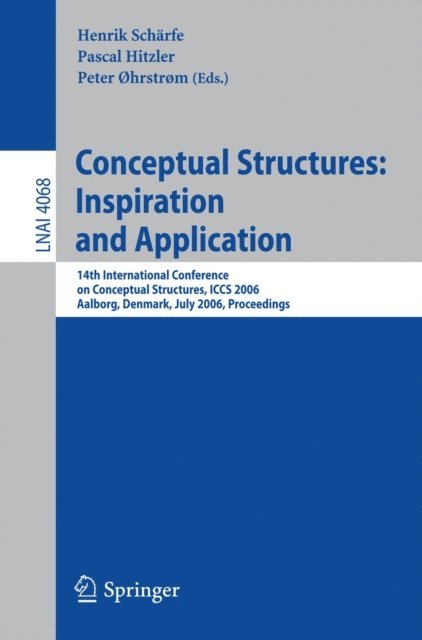
th The 14 International Conference on Conceptual Structures (ICCS 2006) was held in Aalborg, Denmark during July 16 – 21, 2006. Responding to the Call for Papers, we received 62 papers from 20 different countries, representing six different continents. This clearly indicates the international nature of the ICCS community as well as the widespread interest which was spawned by the previous conferences. By a thorough review process, 24 papers were selected to be included in this volume. In addition, six invited speakers made contributions which can be found in the first section of this volume. The theme of ICCS 2006––Conceptual Structures: Inspiration and Application–– points to a dual focus of interest that is also reflected in the constellation of papers. From the beginning of the planning of this conference, we focused on inspirational sources that have led to the current state of research in our community, by tracing important historical influences which daily effect work in representing knowledge and in handling representations of conceptual structures. At the same time, we also focused on ways in which these legacies are employed to further advance theory and practice in the field of knowledge representation and processing. With this volume, we believe that a valuable contribution to both aspects of this field is being made. We wish to express our appreciation to all the authors of submitted papers, to the members of the Editorial Board and the Program Committee for all their work and valuable comments.