Herbert Hovenkamp – författare
Visar alla böcker från författaren Herbert Hovenkamp. Handla med fri frakt och snabb leverans.
8 produkter
8 produkter
747 kr
Skickas inom 5-8 vardagar
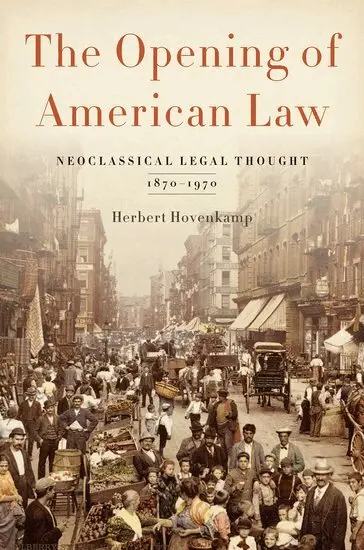
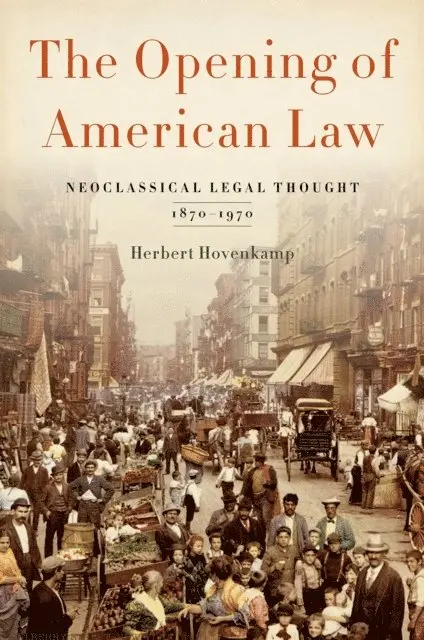
Two Victorian Era intellectual movements changed the course of American legal thought: Darwinian natural selection and marginalist economics. The two movements rested on fundamentally inconsistent premises. Darwinism emphasized instinct, random selection, and determinism. Marginalism emphasized rational choice. Legal theory managed to accommodate both, although to different degrees in different disciplines. The two movements also developed mutually exclusive scientific methodologies. Darwinism emphasizing external indicators of welfare such as productivity, education or health, while marginalists emphasized market choice. Historians have generally exaggerated the role of Darwinism in American legal thought, while understating the role of marginalist economics. This book explores these issues in several legal disciplines. One is Progressive Era movements for redistributive policies about taxation and public goods. Darwinian science also dominated the law of race relations, while criminal law reflected an inconsistent mixture of Darwinian and marginalist incentive-based theories. The common law, including family law, contract, property, and tort, moved from emphasis on correction of past harms to management of ongoing risk and relationship. A chapter on Legal Realism emphasizes the Realists' indebtedness to institutional economics, a movement that powerfully influenced American legal theory long after it fell out of favor with economists. Five chapters on the corporation, innovation and competition policy show how marginalist economics transformed business policy. The ironic exception was patent law, which developed in relative insulation from economic concerns about innovation policy. The book concludes with three chapters on public law, emphasizing the role of institutionalist economics in policy making during and after the New Deal. A lengthy epilogue then explores the variety of postwar attempts to reconstruct a defensible and more market-oriented rule of law after the decline of Legal Realism and the New Deal.
850 kr
Skickas inom 7-10 vardagar
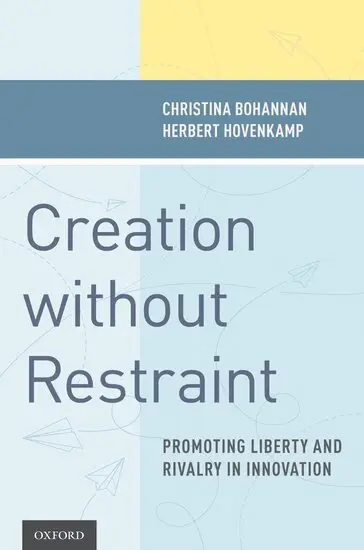
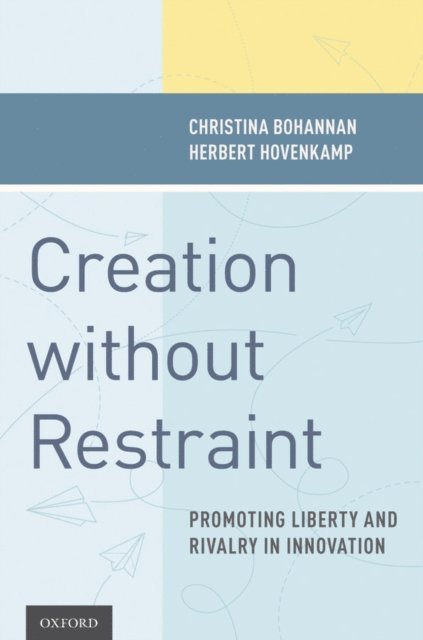
Both antitrust and intellectual property laws are intended to facilitate economic growth. Antitrust is meant to encourages competition of all kinds and intellectual property law should offer inventors and artists the correct incentives to develop new ideas and technologies, but the harsh reality is that antitrust and IP laws have wandered off this course. In Creation without Restraint: Promoting Liberty and Rivalry in Innovation, Christina Bohannan and Herbert Hovenkamp analyze the current state of competition (antitrust) and intellectual property laws, and propose realistic reforms that will encourage innovation. As with antitrust and a reform process that aligned injury requirements in lawsuits with the incentive to compete, this book proposes similar reforms for patent and copyright law, and considers both the uses and limitations of antitrust as a vehicle for intellectual property law reform. This book considers how antitrust and IP law should engage practices that restrain rather than promote innovation, and covers the troubled topic of IP "misuse," which the authors suggest needs a broader reach but narrower remedies. Bohannan and Hovenkamp also evaluate the uses and limits of antitrust to address a variety of practices in innovation intensive markets, including interconnection in networks, duties to deal, and internet neutrality. The book constructs a framework and rules for governing the "innovation commons," or the vast area that involves collaborative innovation. Finally, it considers ways to further competition in the licensing and distribution of IP rights, and offers several proposals for specific reforms, most of which can be instituted by the courts without the need for new legislation.
1 847 kr
Skickas inom 5-8 vardagar
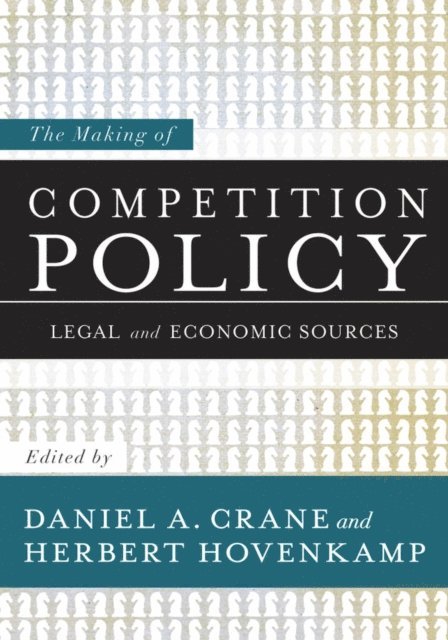
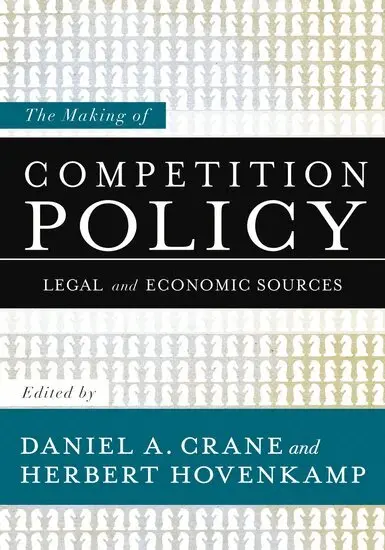
This book provides edited selections of primary source material in the intellectual history of competition policy from Adam Smith to the present day. Chapters include classical theories of competition, the U.S. founding era, classicism and neoclassicism, progressivism, the New Deal, structuralism, the Chicago School, and post-Chicago theories. Although the focus is largely on Anglo-American sources, there is also a chapter on European Ordoliberalism, an influential school of thought in post-War Europe. Each chapter begins with a brief essay by one of the editors pulling together the important themes from the period under consideration.
157 kr
Skickas
285 kr
Skickas inom 5-8 vardagar
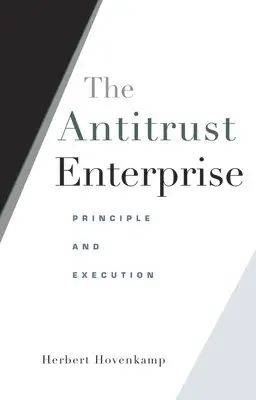
After thirty years, the debate over antitrust's ideology has quieted. Most now agree that the protection of consumer welfare should be the only goal of antitrust laws. Execution, however, is another matter. The rules of antitrust remain unfocused, insufficiently precise, and excessively complex. The problem of poorly designed rules is severe, because in the short run rules weigh much more heavily than principles. At bottom, antitrust is a defensible enterprise only if it can make the microeconomy work better, after accounting for the considerable costs of operating the system.The Antitrust Enterprise is the first authoritative and compact exposition of antitrust law since Robert Bork's classic The Antitrust Paradox was published more than thirty years ago. It confronts not only the problems of poorly designed, overly complex, and inconsistent antitrust rules but also the current disarray of antitrust's rule of reason, offering a coherent and workable set of solutions. The result is an antitrust policy that is faithful to the consumer welfare principle but that is also more readily manageable by the federal courts and other antitrust tribunals.
792 kr
Tillfälligt slut
In this integration of law and economic ideas, Herbert Hovenkamp charts the evolution of the legal framework that regulated American business enterprise from the time of Andrew Jackson through the first New Deal. He reveals the interdependent relationship between economic theory and law that existed in these decades of headlong growth and examines how this relationship shaped both the modern business corporation and substantive due process. Classical economic theory--the cluster of ideas about free markets--became the guiding model for the structure and function of both private and public law. Hovenkamp explores the relationship of classical economic ideas to law in six broad areas related to enterprise in the nineteenth and early twentieth centuries. He traces the development of the early business corporation and maps the rise of regulated industry from the first charterbased utilities to the railroads. He argues that free market political economy provided the intellectual background for constitutional theory and helped define the limits of state and federal regulation of business behavior. The book also illustrates the unique American perspective on political economy reflected in the famous doctrine of substantive due process. Finally, Hovenkamp demonstrates the influence of economic theory on labor law and gives us a reexamination of the antitrust movement, the most explicit intersection of law and economics before the New Deal. Legal, economic, and intellectual historians and political scientists will welcome these trenchant insights on an influential period in American constitutional and corporate history.
1 028 kr
Skickas inom 10-15 vardagar
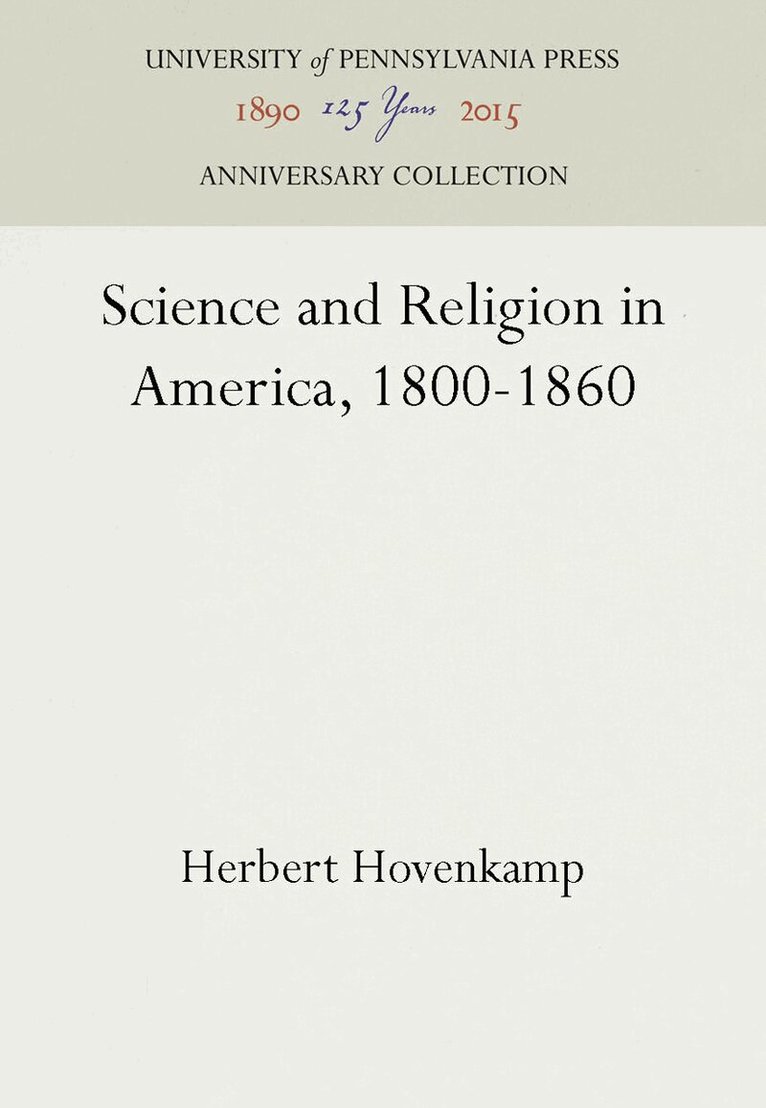
This book is a volume in the Penn Press Anniversary Collection. To mark its 125th anniversary in 2015, the University of Pennsylvania Press rereleased more than 1,100 titles from Penn Press's distinguished backlist from 1899-1999 that had fallen out of print. Spanning an entire century, the Anniversary Collection offers peer-reviewed scholarship in a wide range of subject areas.
764 kr
Skickas