Herbert L. Colston - Böcker
Visar alla böcker från författaren Herbert L. Colston. Handla med fri frakt och snabb leverans.
15 produkter
15 produkter
831 kr
Skickas inom 10-15 vardagar
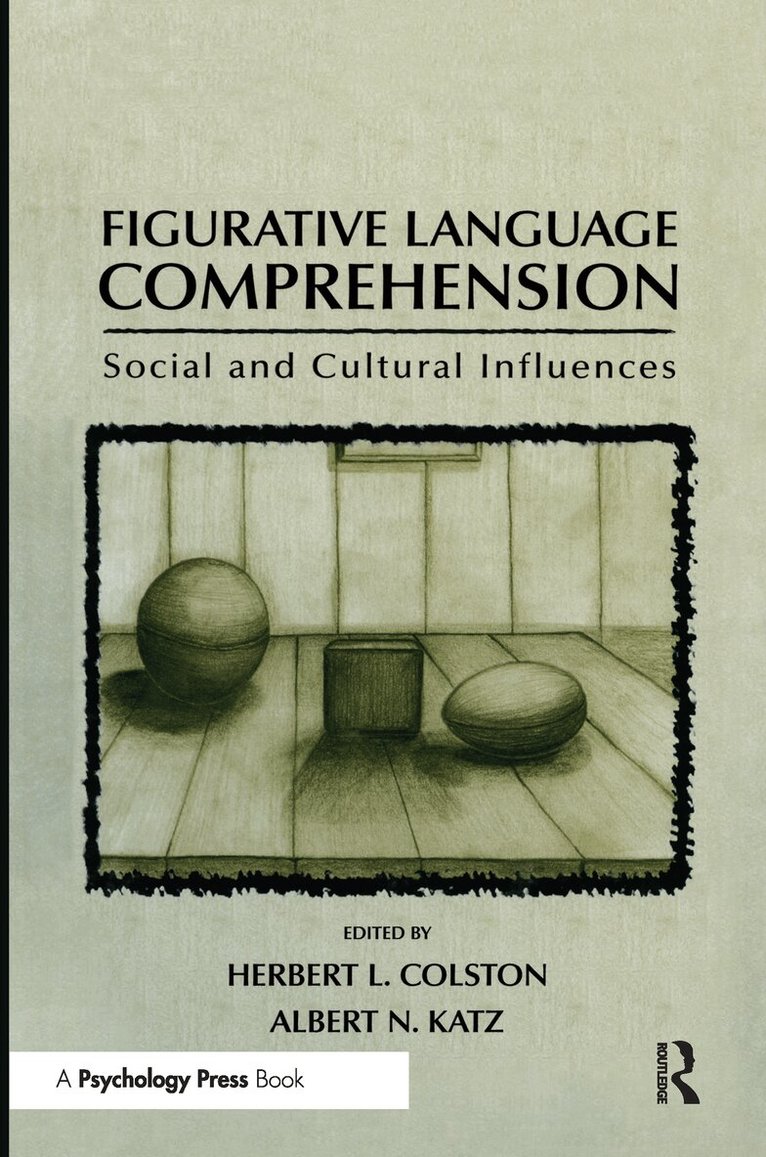
Figurative language, such as verbal irony, metaphor, hyperbole, idioms, and other forms is an increasingly important subfield within the empirical study of language comprehension and use. Figurative Language Comprehension: Social and Cultural Influences is an edited scholarly book that ties together recent research concerning the social and cultural influences on figurative language cognition. These influences include gender, cultural differences, economic status, and inter-group effects, among others. The effects these influences have on people's use, comprehension, and even processing of figurative language, comprise the main theme of this volume. No other book offers such a look at the social and cultural influences on a whole family of figurative forms at several levels of cognition. This volume is of great interest to scholars and professionals in the disciplines of social and cognitive psychology, psycholinguistics, and second language acquisition, as well as cognitive and other fields of linguistics where scholars have interests in pragmatics, metaphor, symbol, discourse, and narrative. Some knowledge of the empirical and experimental methods used in language research, as well as some familiarity with theories underlying the use, comprehension, and processing of figurative language would be helpful to readers of this book.
2 160 kr
Skickas inom 10-15 vardagar
Figurative language, such as verbal irony, metaphor, hyperbole, idioms, and other forms is an increasingly important subfield within the empirical study of language comprehension and use. Figurative Language Comprehension: Social and Cultural Influences is an edited scholarly book that ties together recent research concerning the social and cultural influences on figurative language cognition. These influences include gender, cultural differences, economic status, and inter-group effects, among others. The effects these influences have on people's use, comprehension, and even processing of figurative language, comprise the main theme of this volume. No other book offers such a look at the social and cultural influences on a whole family of figurative forms at several levels of cognition. This volume is of great interest to scholars and professionals in the disciplines of social and cognitive psychology, psycholinguistics, and second language acquisition, as well as cognitive and other fields of linguistics where scholars have interests in pragmatics, metaphor, symbol, discourse, and narrative. Some knowledge of the empirical and experimental methods used in language research, as well as some familiarity with theories underlying the use, comprehension, and processing of figurative language would be helpful to readers of this book.
2 039 kr
Skickas inom 10-15 vardagar
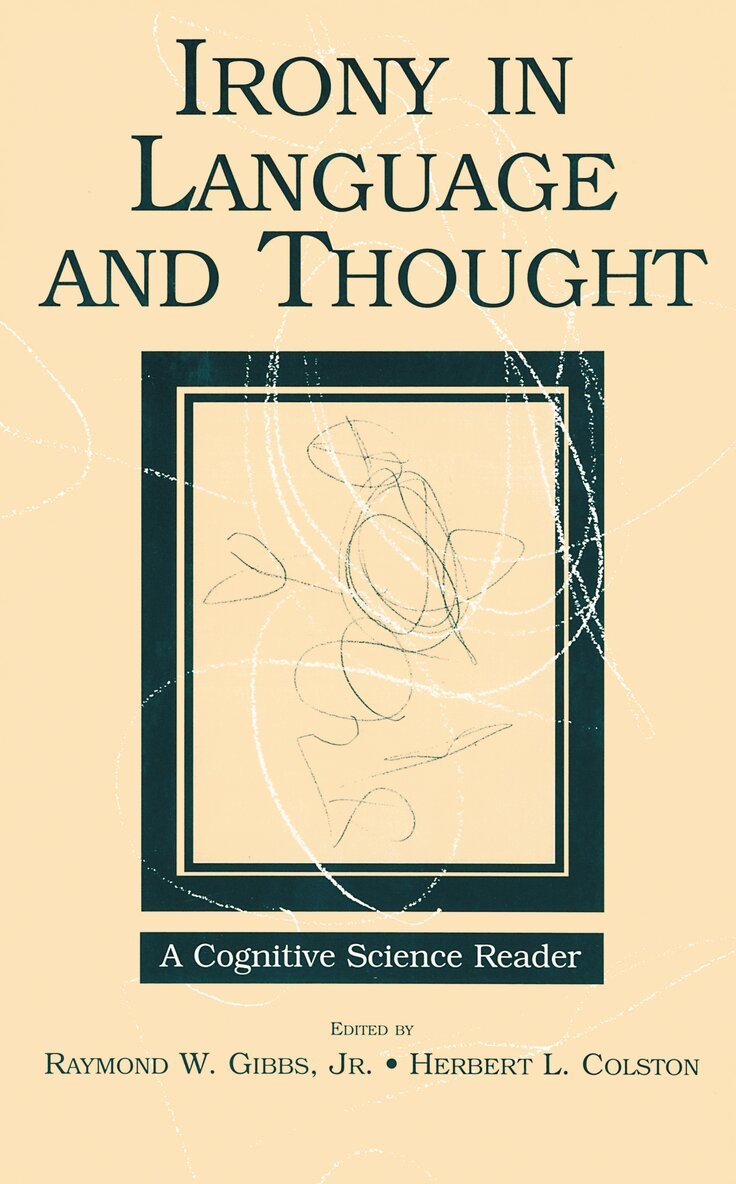
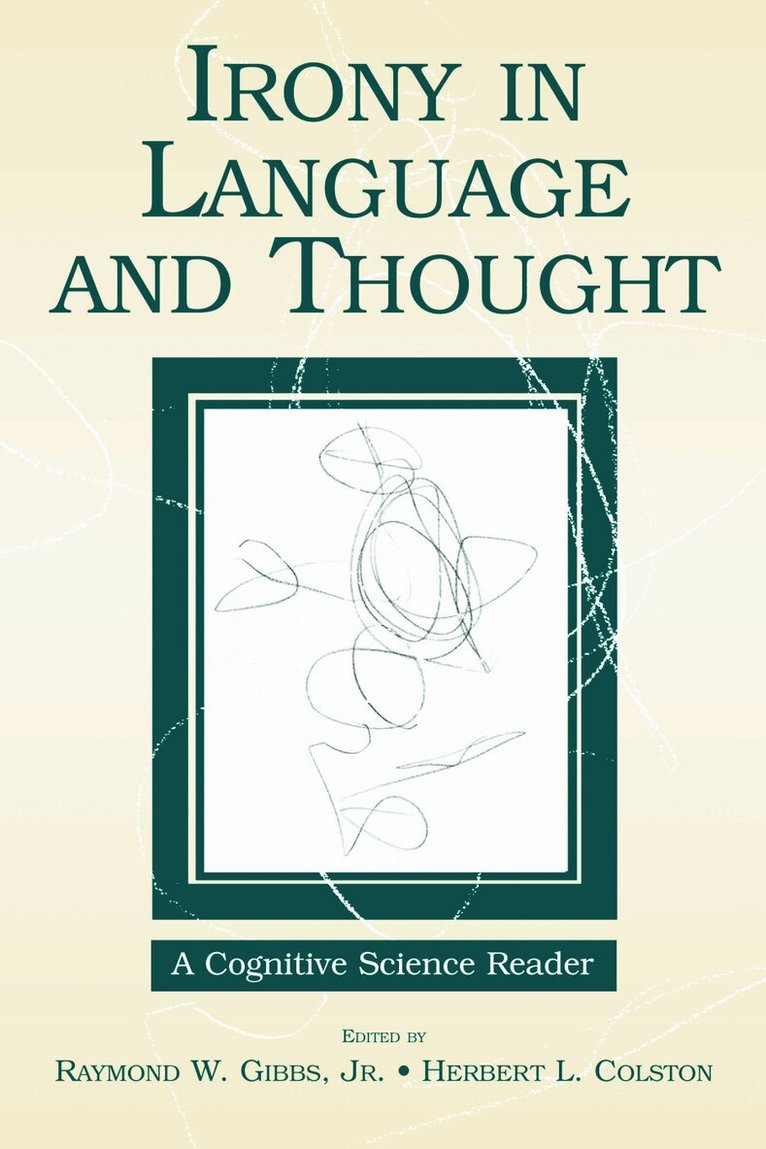
Irony in Language and Thought assembles an interdisciplinary collection of seminal empirical and theoretical papers on irony in language and thought into one comprehensive book. A much-needed resource in the area of figurative language, this volume centers on a theme from cognitive science - that irony is a fundamental way of thinking about the human experience. The editors lend perspective in the form of opening and closing chapters, which enable readers to see how such works have furthered the field, as well as to inspire present and future scholars.Featured articles focus on the following topics:theories of irony, addressing primarily comprehension of its verbal formcontext in irony comprehensionsocial functions of ironythe development of irony understandingsituational irony.Scholars and students in psychology, linguistics, philosophy, literature, anthropology, artificial intelligence, art, and communications will consider this book an excellent resource. It serves as an ideal supplement in courses that present major ideas in language and thought.
788 kr
Skickas inom 10-15 vardagar
Irony in Language and Thought assembles an interdisciplinary collection of seminal empirical and theoretical papers on irony in language and thought into one comprehensive book. A much-needed resource in the area of figurative language, this volume centers on a theme from cognitive science - that irony is a fundamental way of thinking about the human experience. The editors lend perspective in the form of opening and closing chapters, which enable readers to see how such works have furthered the field, as well as to inspire present and future scholars.Featured articles focus on the following topics:theories of irony, addressing primarily comprehension of its verbal formcontext in irony comprehensionsocial functions of ironythe development of irony understandingsituational irony.Scholars and students in psychology, linguistics, philosophy, literature, anthropology, artificial intelligence, art, and communications will consider this book an excellent resource. It serves as an ideal supplement in courses that present major ideas in language and thought.
314 kr
Skickas inom 7-10 vardagar
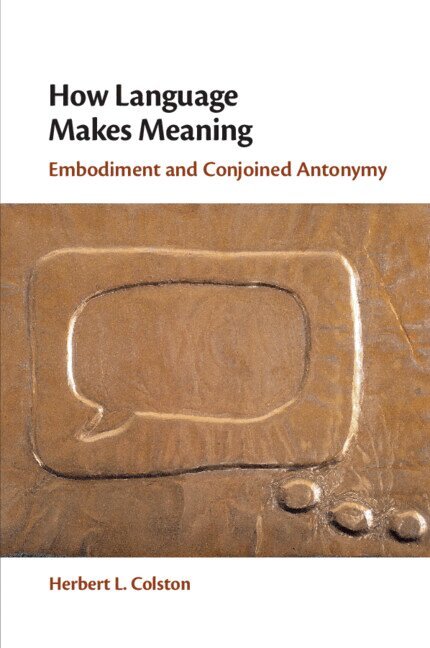
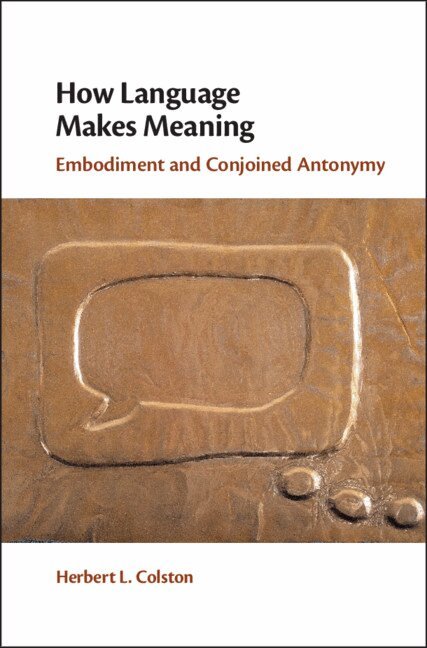
Language's key function is to enable human social interaction, for which people are motivated to engage by powerful brain mechanisms. This book integrates recent work on embodied simulations, traditional meaning-making processes and a myriad of semantic and other meaning contributors to formulate a new model of how language functions following a pattern of conjoined antonymy. It investigates how embodied simulations,semantic information, deviation, omission, indirectness, figurativity, language play, and other processes leverage rich meaning from only a few words by using inherently biological, cognitive and social frameworks. The interaction of these meaning-making components of language is described and a language-functioning model based on recent neuroscientific research is laid out to allow for a more complete understanding of how language operates.
634 kr
Skickas inom 7-10 vardagar
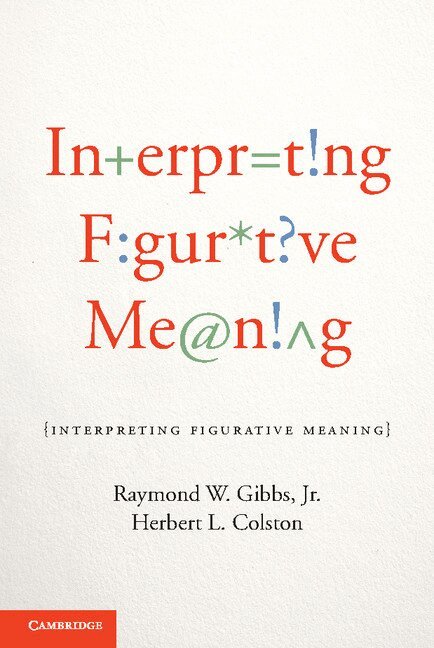
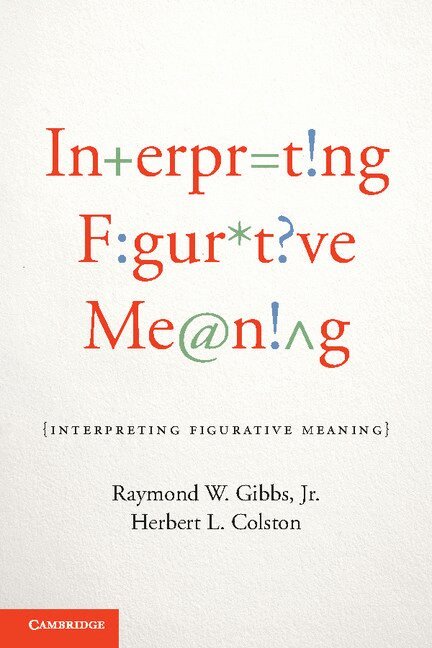
Interpreting Figurative Meaning critically evaluates the recent empirical work from psycholinguistics and neuroscience examining the successes and difficulties associated with interpreting figurative language. There is now a huge, often contradictory literature on how people understand figures of speech. Gibbs and Colston argue that there may not be a single theory or model that adequately explains both the processes and products of figurative meaning experience. Experimental research may ultimately be unable to simply adjudicate between current models in psychology, linguistics and philosophy of how figurative meaning is interpreted. Alternatively, the authors advance a broad theoretical framework, motivated by ideas from 'dynamical systems theory', that describes the multiple, interacting influences which shape people's experiences of figurative meaning in discourse. This book details past research and theory, offers a critical assessment of this work and sets the stage for a new vision of figurative experience in human life.
1 286 kr
Skickas inom 7-10 vardagar
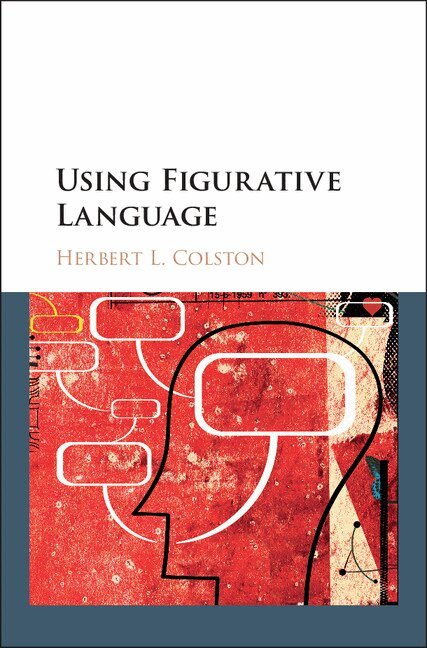
Using Figurative Language presents results from a multidisciplinary decades-long study of figurative language that addresses the question, 'Why don't people just say what they mean?' This research empirically investigates goals speakers or writers have when speaking (writing) figuratively, and concomitantly, meaning effects wrought by figurative language usage. These 'pragmatic effects' arise from many kinds of figurative language including metaphors (e.g. 'This computer is a dinosaur'), verbal irony (e.g. 'Nice place you got here'), idioms (e.g. 'Bite the bullet'), proverbs (e.g. 'Don't put all your eggs in one basket') and others. Reviewed studies explore mechanisms - linguistic, psychological, social and others - underlying pragmatic effects, some traced to basic processes embedded in human sensory, perceptual, embodied, cognitive, social and schematic functioning. The book should interest readers, researchers and scholars in fields beyond psychology, linguistics and philosophy that share interests in figurative language - including language studies, communication, literary criticism, neuroscience, semiotics, rhetoric and anthropology.
416 kr
Skickas inom 7-10 vardagar
Using Figurative Language presents results from a multidisciplinary decades-long study of figurative language that addresses the question, 'Why don't people just say what they mean?' This research empirically investigates goals speakers or writers have when speaking (writing) figuratively, and concomitantly, meaning effects wrought by figurative language usage. These 'pragmatic effects' arise from many kinds of figurative language including metaphors (e.g. 'This computer is a dinosaur'), verbal irony (e.g. 'Nice place you got here'), idioms (e.g. 'Bite the bullet'), proverbs (e.g. 'Don't put all your eggs in one basket') and others. Reviewed studies explore mechanisms - linguistic, psychological, social and others - underlying pragmatic effects, some traced to basic processes embedded in human sensory, perceptual, embodied, cognitive, social and schematic functioning. The book should interest readers, researchers and scholars in fields beyond psychology, linguistics and philosophy that share interests in figurative language - including language studies, communication, literary criticism, neuroscience, semiotics, rhetoric and anthropology.
398 kr
Skickas inom 7-10 vardagar
Interpreting Figurative Meaning critically evaluates the recent empirical work from psycholinguistics and neuroscience examining the successes and difficulties associated with interpreting figurative language. There is now a huge, often contradictory literature on how people understand figures of speech. Gibbs and Colston argue that there may not be a single theory or model that adequately explains both the processes and products of figurative meaning experience. Experimental research may ultimately be unable to simply adjudicate between current models in psychology, linguistics and philosophy of how figurative meaning is interpreted. Alternatively, the authors advance a broad theoretical framework, motivated by ideas from 'dynamical systems theory', that describes the multiple, interacting influences which shape people's experiences of figurative meaning in discourse. This book details past research and theory, offers a critical assessment of this work and sets the stage for a new vision of figurative experience in human life.
1 338 kr
Skickas inom 7-10 vardagar
Language's key function is to enable human social interaction, for which people are motivated to engage by powerful brain mechanisms. This book integrates recent work on embodied simulations, traditional meaning-making processes and a myriad of semantic and other meaning contributors to formulate a new model of how language functions following a pattern of conjoined antonymy. It investigates how embodied simulations,semantic information, deviation, omission, indirectness, figurativity, language play, and other processes leverage rich meaning from only a few words by using inherently biological, cognitive and social frameworks. The interaction of these meaning-making components of language is described and a language-functioning model based on recent neuroscientific research is laid out to allow for a more complete understanding of how language operates.
2 040 kr
Skickas inom 7-10 vardagar
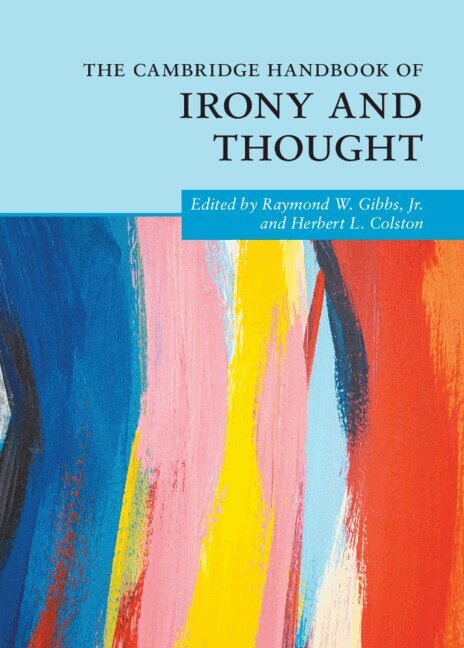
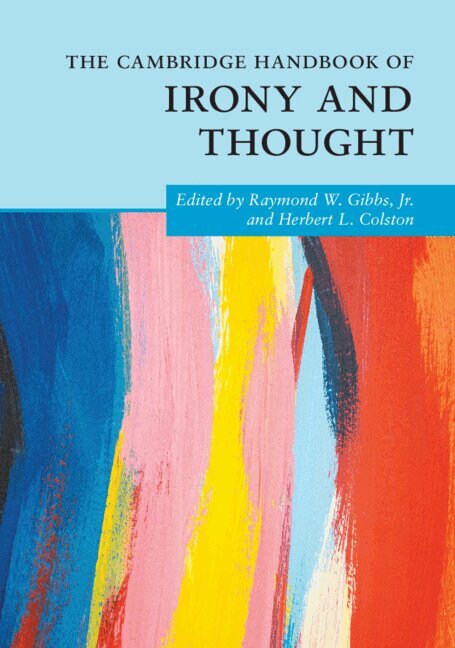
The Cambridge Handbook of Irony and Thought offers the first comprehensive collection of chapters in multidisciplinary irony scholarship. These chapters explore the significance of irony, both verbal and situational, in language, thought, human action, and artistic expression. They cover five main themes: the scope of irony in human experience; irony's impact (both personal and in social life); irony in linguistic communication; irony and affect, and irony in expressive contexts. Contributions come from a wide range of academic disciplines, including psychology, linguistics, philosophy, literature, computer science, film and media studies, and music, making this a truly cross-disciplinary collection of benefit to a wide range of students and researchers.
636 kr
Skickas inom 7-10 vardagar
The Cambridge Handbook of Irony and Thought offers the first comprehensive collection of chapters in multidisciplinary irony scholarship. These chapters explore the significance of irony, both verbal and situational, in language, thought, human action, and artistic expression. They cover five main themes: the scope of irony in human experience; irony's impact (both personal and in social life); irony in linguistic communication; irony and affect, and irony in expressive contexts. Contributions come from a wide range of academic disciplines, including psychology, linguistics, philosophy, literature, computer science, film and media studies, and music, making this a truly cross-disciplinary collection of benefit to a wide range of students and researchers.
1 706 kr
Skickas inom 5-8 vardagar
Although the figure of irony has enjoyed extensive attention through important contributions to the diverse literatures addressing figurative thought and language, it still remains relatively in the background compared to other figures such as metaphor and metonymy. The present volume, together with a 2017 collection by Angeliki Athanasiadou and Herbert L. Colston, aims to the further exploration of verbal and situational irony, its gestural accompaniments, its comprehension and interpretation, its constructional diversity and its cooperation with other figures such as metaphor and hyperbole. The present volume is a highly interesting collection of chapters dealing with both theoretical investigations and descriptive applications of a central figure pervading human thought and language. Its aim is to draw more attention to irony’s diversity and its concomitant connections to other aspects of figurativeness.
308 kr
Skickas inom 5-8 vardagar
Although the figure of irony has enjoyed extensive attention through important contributions to the diverse literatures addressing figurative thought and language, it still remains relatively in the background compared to other figures such as metaphor and metonymy. The present volume, together with a 2017 collection by Angeliki Athanasiadou and Herbert L. Colston, aims to the further exploration of verbal and situational irony, its gestural accompaniments, its comprehension and interpretation, its constructional diversity and its cooperation with other figures such as metaphor and hyperbole. The present volume is a highly interesting collection of chapters dealing with both theoretical investigations and descriptive applications of a central figure pervading human thought and language. Its aim is to draw more attention to irony’s diversity and its concomitant connections to other aspects of figurativeness.
Del 19 - Figurative Thought and Language
What makes a Figure
Rethinking figurativity
Inbunden, Engelska, 2025
1 697 kr
Skickas inom 11-20 vardagar
This volume presents works seeking to re-think the very nature and scope of figurativity, calling into attention some of the received tenets in accounts of figurativity, both as a holistic category and for individual types and families of figures, but also attempting to expand upon the current scope of figurative theorizing. The works presented here investigate a wider array of figures than the typically-studied tropes of metaphor, irony, and metonymy, and they address broad issues such as figurativity writ large (what figurativity actually is and does, including how embodied it is), multimodality, contiguity of figurative forms, and furthering our consideration of the ingredients of irony. It should appeal to any scholar interested in figurativity in all its expansive guises.