Raymond W. Gibbs, Jr - Böcker
Visar alla böcker från författaren Raymond W. Gibbs, Jr. Handla med fri frakt och snabb leverans.
16 produkter
16 produkter
423 kr
Skickas inom 7-10 vardagar
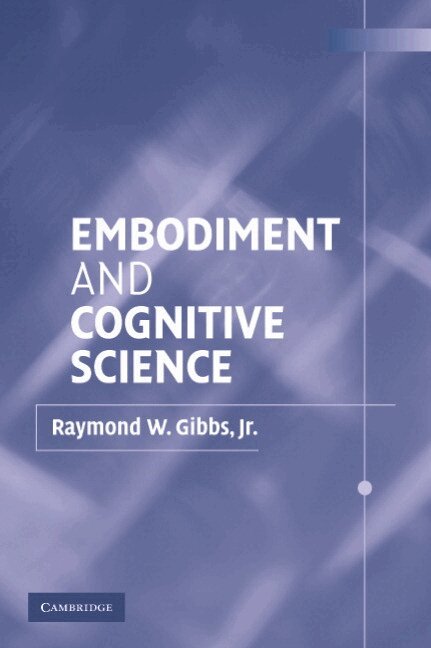
This 2006 book explores how people's subjective, felt experiences of their bodies in action provide part of the fundamental grounding for human cognition and language. Cognition is what occurs when the body engages the physical and cultural world and must be studied in terms of the dynamical interactions between people and the environment. Human language and thought emerge from recurring patterns of embodied activity that constrain ongoing intelligent behavior. We must not assume cognition to be purely internal, symbolic, computational, and disembodied, but seek out the gross and detailed ways that language and thought are inextricably shaped by embodied action. Embodiment and Cognitive Science describes the abundance of empirical evidence from many disciplines, including work on perception, concepts, imagery and reasoning, language and communication, cognitive development, and emotions and consciousness, that support the idea that the mind is embodied.
1 670 kr
Skickas inom 7-10 vardagar
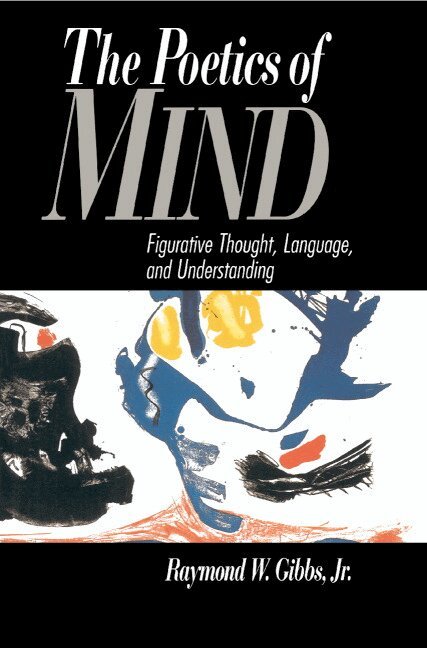
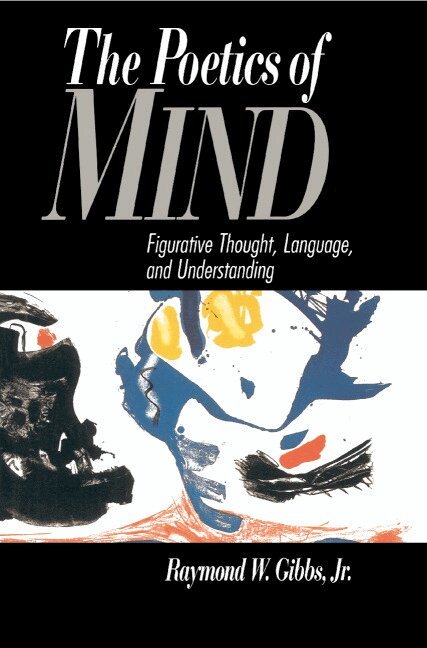
In this bold new work, Ray Gibbs demonstrates that human cognition is deeply poetic and that figurative imagination constitutes the way we understand ourselves and the world in which we live. The traditional view of the mind holds that thought and language are inherently literal and that poetic language is a special human ability requiring different cognitive and linguistic skills than employed in ordinary language. This view has imposed serious limitations on the scholarly study of mental life and on everyday folk conceptions of human experience. Poetics of Mind overturns the traditional perspective by showing how figurative aspects of language reveal the poetic structure of mind. Ideas and research from psychology, linguistics, philosophy, anthropology, and literary theory are used to establish important links between the poetic structure of thought and everyday use of language. Particular use is made of the extensive research that has accumulated in experimental psycholinguistics and cognitive linguistics over the past 15 years. Poetics of Mind evaluates current philosophical, linguistic, and literary theories of figurative language, using tools provided by psycholinguistic and cognitive psychology research. It relates the empirical work on figurative language understanding to broader issues concerning the nature of everyday thought and reasoning. As such, it will be of crucial interest to students and researchers in psychology, cognitive science, and linguistics.
698 kr
Skickas inom 7-10 vardagar
In this bold new work, Ray Gibbs demonstrates that human cognition is deeply poetic and that figurative imagination constitutes the way we understand ourselves and the world in which we live. The traditional view of the mind holds that thought and language are inherently literal and that poetic language is a special human ability requiring different cognitive and linguistic skills than employed in ordinary language. This view has imposed serious limitations on the scholarly study of mental life and on everyday folk conceptions of human experience. Poetics of Mind overturns the traditional perspective by showing how figurative aspects of language reveal the poetic structure of mind. Ideas and research from psychology, linguistics, philosophy, anthropology, and literary theory are used to establish important links between the poetic structure of thought and everyday use of language. Particular use is made of the extensive research that has accumulated in experimental psycholinguistics and cognitive linguistics over the past 15 years. Poetics of Mind evaluates current philosophical, linguistic, and literary theories of figurative language, using tools provided by psycholinguistic and cognitive psychology research. It relates the empirical work on figurative language understanding to broader issues concerning the nature of everyday thought and reasoning. As such, it will be of crucial interest to students and researchers in psychology, cognitive science, and linguistics.
707 kr
Skickas inom 7-10 vardagar
A comprehensive collection of essays in multidisciplinary metaphor scholarship that has been written in response to the growing interest among scholars and students from a variety of disciplines such as linguistics, philosophy, anthropology, music and psychology. These essays explore the significance of metaphor in language, thought, culture and artistic expression. There are five main themes of the book: the roots of metaphor, metaphor understanding, metaphor in language and culture, metaphor in reasoning and feeling, and metaphor in non-verbal expression. Contributors come from a variety of academic disciplines, including psychology, linguistics, philosophy, cognitive science, literature, education, music, and law.
775 kr
Skickas inom 7-10 vardagar
This 2006 book explores how people's subjective, felt experiences of their bodies in action provide part of the fundamental grounding for human cognition and language. Cognition is what occurs when the body engages the physical and cultural world and must be studied in terms of the dynamical interactions between people and the environment. Human language and thought emerge from recurring patterns of embodied activity that constrain ongoing intelligent behavior. We must not assume cognition to be purely internal, symbolic, computational, and disembodied, but seek out the gross and detailed ways that language and thought are inextricably shaped by embodied action. Embodiment and Cognitive Science describes the abundance of empirical evidence from many disciplines, including work on perception, concepts, imagery and reasoning, language and communication, cognitive development, and emotions and consciousness, that support the idea that the mind is embodied.
1 499 kr
Skickas inom 7-10 vardagar
A comprehensive collection of essays in multidisciplinary metaphor scholarship that has been written in response to the growing interest among scholars and students from a variety of disciplines such as linguistics, philosophy, anthropology, music and psychology. These essays explore the significance of metaphor in language, thought, culture and artistic expression. There are five main themes of the book: the roots of metaphor, metaphor understanding, metaphor in language and culture, metaphor in reasoning and feeling, and metaphor in non-verbal expression. Contributors come from a variety of academic disciplines, including psychology, linguistics, philosophy, cognitive science, literature, education, music, and law.
2 040 kr
Skickas inom 10-15 vardagar
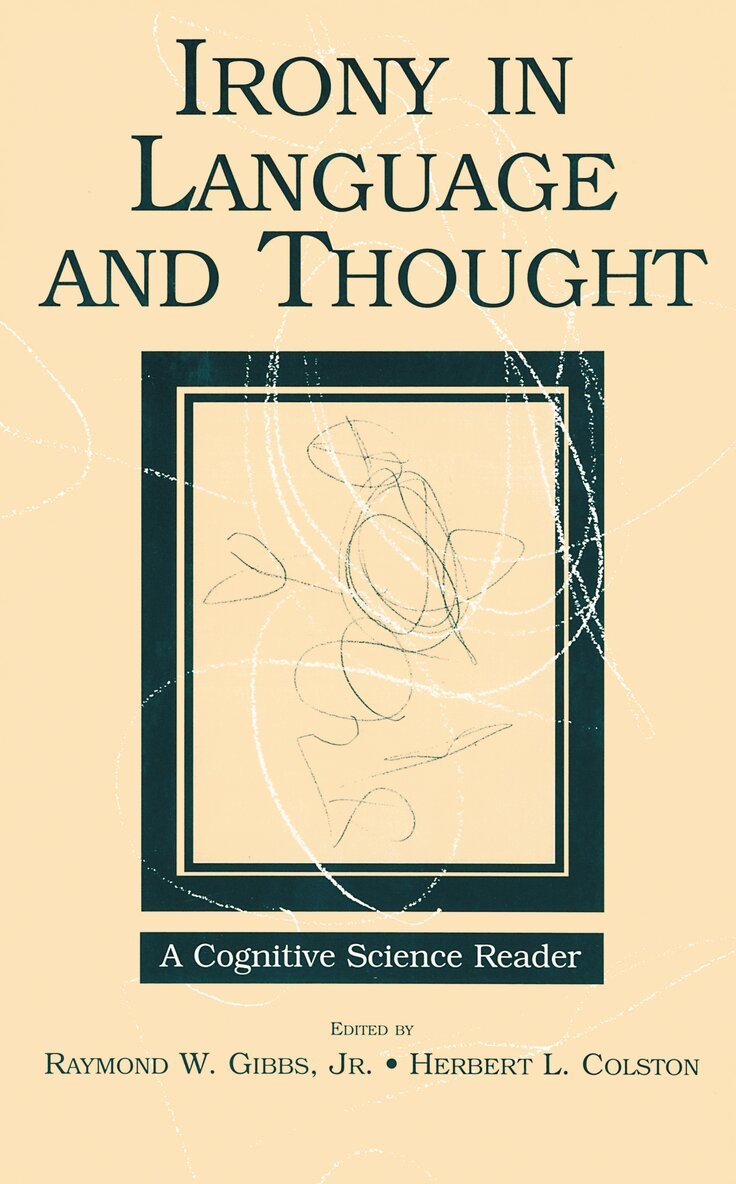
Irony in Language and Thought assembles an interdisciplinary collection of seminal empirical and theoretical papers on irony in language and thought into one comprehensive book. A much-needed resource in the area of figurative language, this volume centers on a theme from cognitive science - that irony is a fundamental way of thinking about the human experience. The editors lend perspective in the form of opening and closing chapters, which enable readers to see how such works have furthered the field, as well as to inspire present and future scholars.Featured articles focus on the following topics:theories of irony, addressing primarily comprehension of its verbal formcontext in irony comprehensionsocial functions of ironythe development of irony understandingsituational irony.Scholars and students in psychology, linguistics, philosophy, literature, anthropology, artificial intelligence, art, and communications will consider this book an excellent resource. It serves as an ideal supplement in courses that present major ideas in language and thought.
781 kr
Skickas inom 10-15 vardagar
Irony in Language and Thought assembles an interdisciplinary collection of seminal empirical and theoretical papers on irony in language and thought into one comprehensive book. A much-needed resource in the area of figurative language, this volume centers on a theme from cognitive science - that irony is a fundamental way of thinking about the human experience. The editors lend perspective in the form of opening and closing chapters, which enable readers to see how such works have furthered the field, as well as to inspire present and future scholars.Featured articles focus on the following topics:theories of irony, addressing primarily comprehension of its verbal formcontext in irony comprehensionsocial functions of ironythe development of irony understandingsituational irony.Scholars and students in psychology, linguistics, philosophy, literature, anthropology, artificial intelligence, art, and communications will consider this book an excellent resource. It serves as an ideal supplement in courses that present major ideas in language and thought.
410 kr
Skickas inom 7-10 vardagar
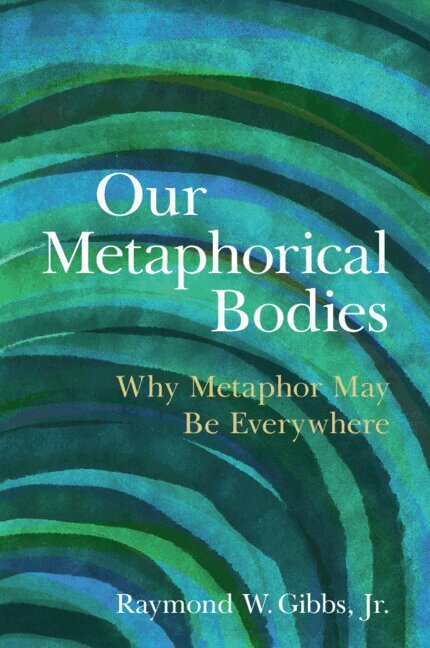
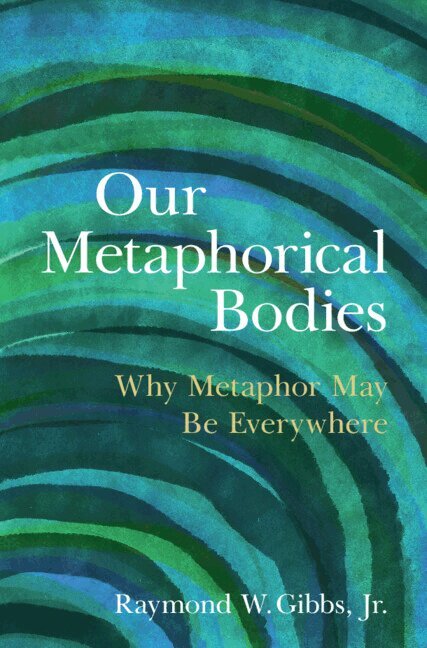
This book offers a fresh examination of the significance of metaphorical thinking in comprehending human bodies and actions. It delves into numerous examples illustrating metaphor's role in conceptualizing body parts, illnesses, and various mundane and artistic bodily performances, fostering a deeper appreciation for metaphor's impact on human life. One key objective is to challenge the implicit dualism prevalent in much metaphor research, where the body is often considered in nonmetaphorical terms, with metaphors arising solely from cross-domain mappings involving abstract concepts. The book exposes the flaws in this traditional perspective, emphasizing the intrinsic connection between metaphor and understanding our bodies. Recognizing this connection is essential for grasping the extensive influence of metaphor across all realms of human cognition and behavior. Additionally, this book underscores cultural variations in how we conceptualize our bodies through metaphorical frameworks, enriching our understanding of diverse perspectives on bodily experiences.
1 324 kr
Skickas inom 7-10 vardagar
This book offers a fresh examination of the significance of metaphorical thinking in comprehending human bodies and actions. It delves into numerous examples illustrating metaphor's role in conceptualizing body parts, illnesses, and various mundane and artistic bodily performances, fostering a deeper appreciation for metaphor's impact on human life. One key objective is to challenge the implicit dualism prevalent in much metaphor research, where the body is often considered in nonmetaphorical terms, with metaphors arising solely from cross-domain mappings involving abstract concepts. The book exposes the flaws in this traditional perspective, emphasizing the intrinsic connection between metaphor and understanding our bodies. Recognizing this connection is essential for grasping the extensive influence of metaphor across all realms of human cognition and behavior. Additionally, this book underscores cultural variations in how we conceptualize our bodies through metaphorical frameworks, enriching our understanding of diverse perspectives on bodily experiences.
634 kr
Skickas inom 7-10 vardagar
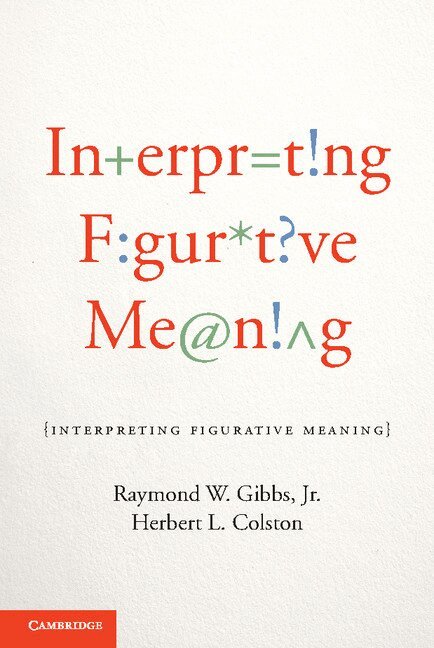
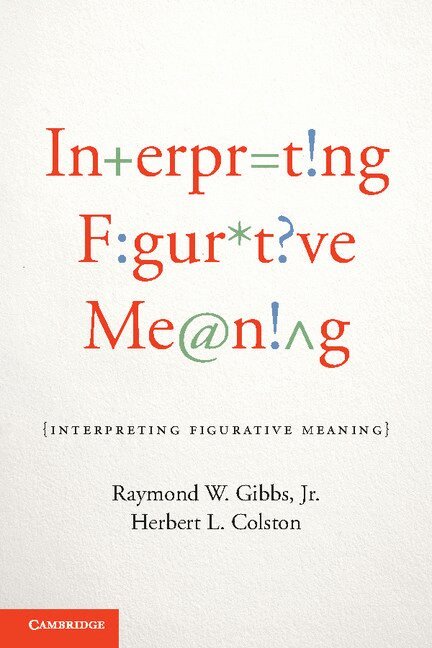
Interpreting Figurative Meaning critically evaluates the recent empirical work from psycholinguistics and neuroscience examining the successes and difficulties associated with interpreting figurative language. There is now a huge, often contradictory literature on how people understand figures of speech. Gibbs and Colston argue that there may not be a single theory or model that adequately explains both the processes and products of figurative meaning experience. Experimental research may ultimately be unable to simply adjudicate between current models in psychology, linguistics and philosophy of how figurative meaning is interpreted. Alternatively, the authors advance a broad theoretical framework, motivated by ideas from 'dynamical systems theory', that describes the multiple, interacting influences which shape people's experiences of figurative meaning in discourse. This book details past research and theory, offers a critical assessment of this work and sets the stage for a new vision of figurative experience in human life.
1 338 kr
Skickas inom 7-10 vardagar
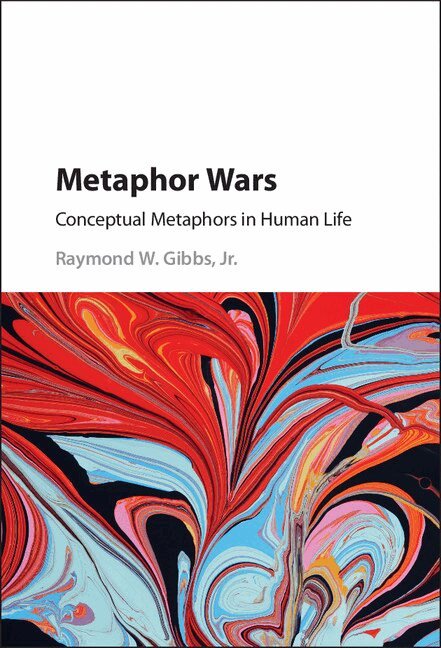
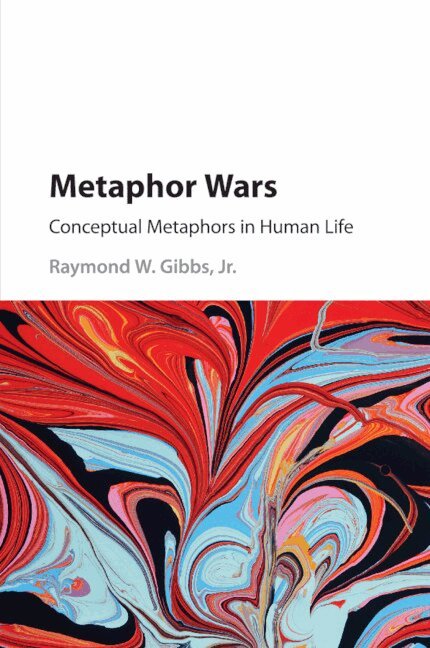
The study of metaphor is now firmly established as a central topic within cognitive science and the humanities. We marvel at the creative dexterity of gifted speakers and writers for their special talents in both thinking about certain ideas in new ways, and communicating these thoughts in vivid, poetic forms. Yet metaphors may not only be special communicative devices, but a fundamental part of everyday cognition in the form of 'conceptual metaphors'. An enormous body of empirical evidence from cognitive linguistics and related disciplines has emerged detailing how conceptual metaphors underlie significant aspects of language, thought, cultural and expressive action. Despite its influence and popularity, there have been major criticisms of conceptual metaphor. This book offers an evaluation of the arguments and empirical evidence for and against conceptual metaphors, much of which scholars on both sides of the wars fail to properly acknowledge.
416 kr
Skickas inom 7-10 vardagar
The study of metaphor is now firmly established as a central topic within cognitive science and the humanities. We marvel at the creative dexterity of gifted speakers and writers for their special talents in both thinking about certain ideas in new ways, and communicating these thoughts in vivid, poetic forms. Yet metaphors may not only be special communicative devices, but a fundamental part of everyday cognition in the form of 'conceptual metaphors'. An enormous body of empirical evidence from cognitive linguistics and related disciplines has emerged detailing how conceptual metaphors underlie significant aspects of language, thought, cultural and expressive action. Despite its influence and popularity, there have been major criticisms of conceptual metaphor. This book offers an evaluation of the arguments and empirical evidence for and against conceptual metaphors, much of which scholars on both sides of the wars fail to properly acknowledge.
398 kr
Skickas inom 7-10 vardagar
Interpreting Figurative Meaning critically evaluates the recent empirical work from psycholinguistics and neuroscience examining the successes and difficulties associated with interpreting figurative language. There is now a huge, often contradictory literature on how people understand figures of speech. Gibbs and Colston argue that there may not be a single theory or model that adequately explains both the processes and products of figurative meaning experience. Experimental research may ultimately be unable to simply adjudicate between current models in psychology, linguistics and philosophy of how figurative meaning is interpreted. Alternatively, the authors advance a broad theoretical framework, motivated by ideas from 'dynamical systems theory', that describes the multiple, interacting influences which shape people's experiences of figurative meaning in discourse. This book details past research and theory, offers a critical assessment of this work and sets the stage for a new vision of figurative experience in human life.
2 040 kr
Skickas inom 7-10 vardagar
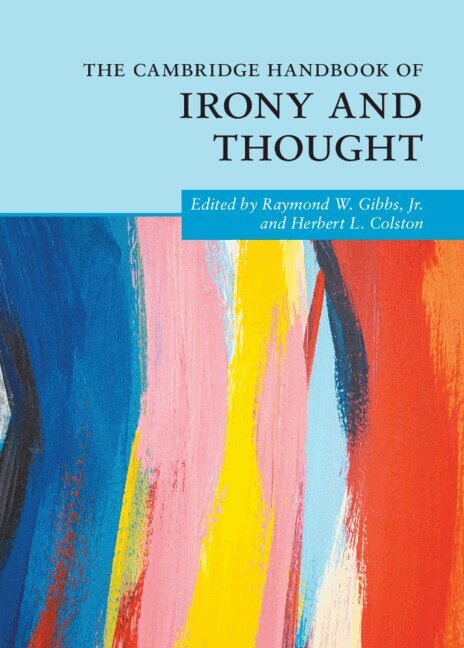
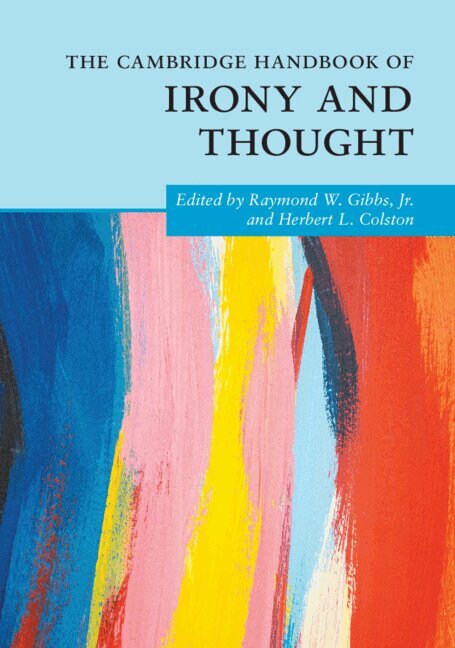
The Cambridge Handbook of Irony and Thought offers the first comprehensive collection of chapters in multidisciplinary irony scholarship. These chapters explore the significance of irony, both verbal and situational, in language, thought, human action, and artistic expression. They cover five main themes: the scope of irony in human experience; irony's impact (both personal and in social life); irony in linguistic communication; irony and affect, and irony in expressive contexts. Contributions come from a wide range of academic disciplines, including psychology, linguistics, philosophy, literature, computer science, film and media studies, and music, making this a truly cross-disciplinary collection of benefit to a wide range of students and researchers.
636 kr
Skickas inom 7-10 vardagar
The Cambridge Handbook of Irony and Thought offers the first comprehensive collection of chapters in multidisciplinary irony scholarship. These chapters explore the significance of irony, both verbal and situational, in language, thought, human action, and artistic expression. They cover five main themes: the scope of irony in human experience; irony's impact (both personal and in social life); irony in linguistic communication; irony and affect, and irony in expressive contexts. Contributions come from a wide range of academic disciplines, including psychology, linguistics, philosophy, literature, computer science, film and media studies, and music, making this a truly cross-disciplinary collection of benefit to a wide range of students and researchers.