Hervé This vo Kientza – författare
Visar alla böcker från författaren Hervé This vo Kientza. Handla med fri frakt och snabb leverans.
5 produkter
5 produkter
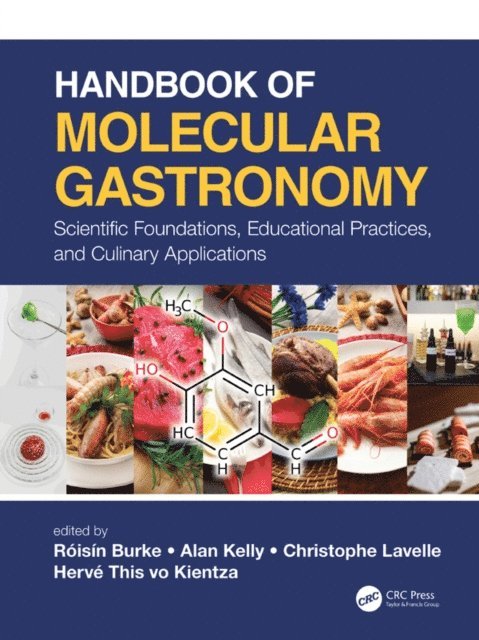
Handbook of Molecular Gastronomy
Scientific Foundations, Educational Practices, and Culinary Applications
Häftad, Engelska, 2025
2 411 kr
Skickas inom 10-15 vardagar
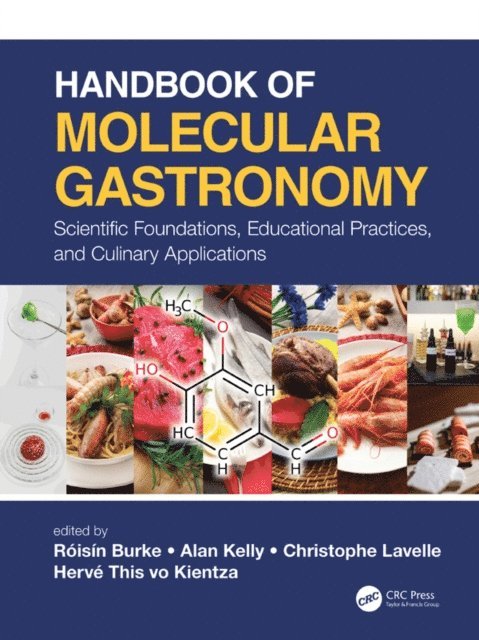
Handbook of Molecular Gastronomy: Scientific Foundations and Culinary Applications presents a unique overview of molecular gastronomy, the scientific discipline dedicated to the study of phenomena that occur during the preparation and consumption of dishes. It deals with the chemistry, biology and physics of food preparation, along with the physiology of food consumption. As such, it represents the first attempt at a comprehensive reference in molecular gastronomy, along with a practical guide, through selected examples, to molecular cuisine and the more recent applications named note by note cuisine. While several books already exist for a general audience, either addressing food science in general in a "light" way and/or dealing with modern cooking techniques and recipes, no book exists so far that encompasses the whole molecular gastronomy field, providing a strong interdisciplinary background in the physics, biology and chemistry of food and food preparation, along with good discussions on creativity and the art of cooking.Features: Gives A–Z coverage to the underlying science (physics, chemistry and biology) and technology, as well as all the key cooking issues (ingredients, tools and methods). Encompasses the science and practice of molecular gastronomy in the most accessible and up-to-date reference available. Contains a final section with unique recipes by famous chefs.The book is organized in three parts. The first and main part is about the scientific discipline of molecular and physical gastronomy; it is organized as an encyclopedia, with entries in alphabetical order, gathering the contributions of more than 100 authors, all leading scientists in food sciences, providing a broad overview of the most recent research in molecular gastronomy. The second part addresses educational applications of molecular gastronomy, from primary schools to universities. The third part provides some innovative recipes by chefs from various parts of the world.The authors have made a particular pedagogical effort in proposing several educational levels, from elementary introduction to deep scientific formalism, in order to satisfy the broadest possible audience (scientists and non-scientists). This new resource should be very useful to food scientists and chefs, as well as food and culinary science students and all lay people interested in gastronomy.
721 kr
Skickas inom 10-15 vardagar
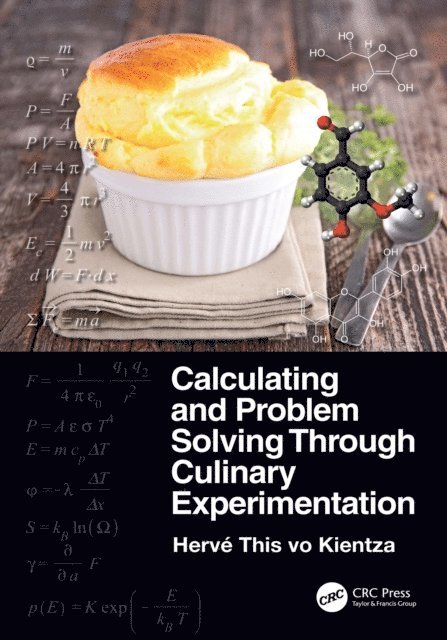
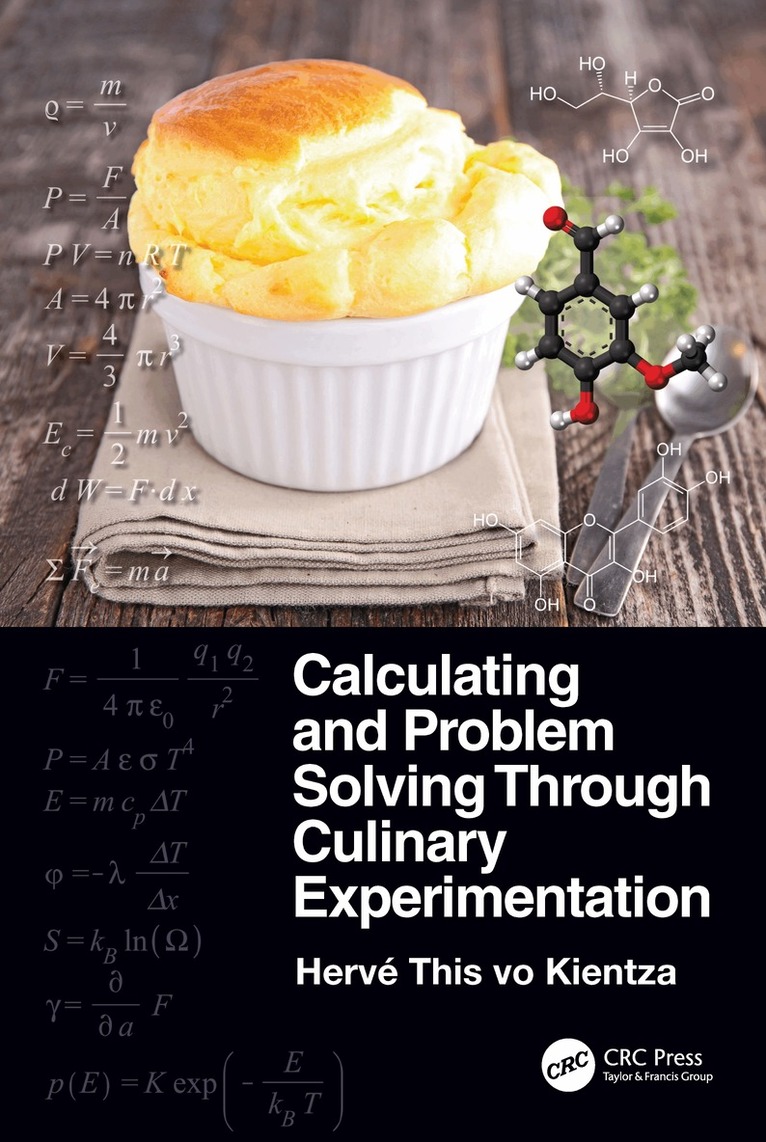
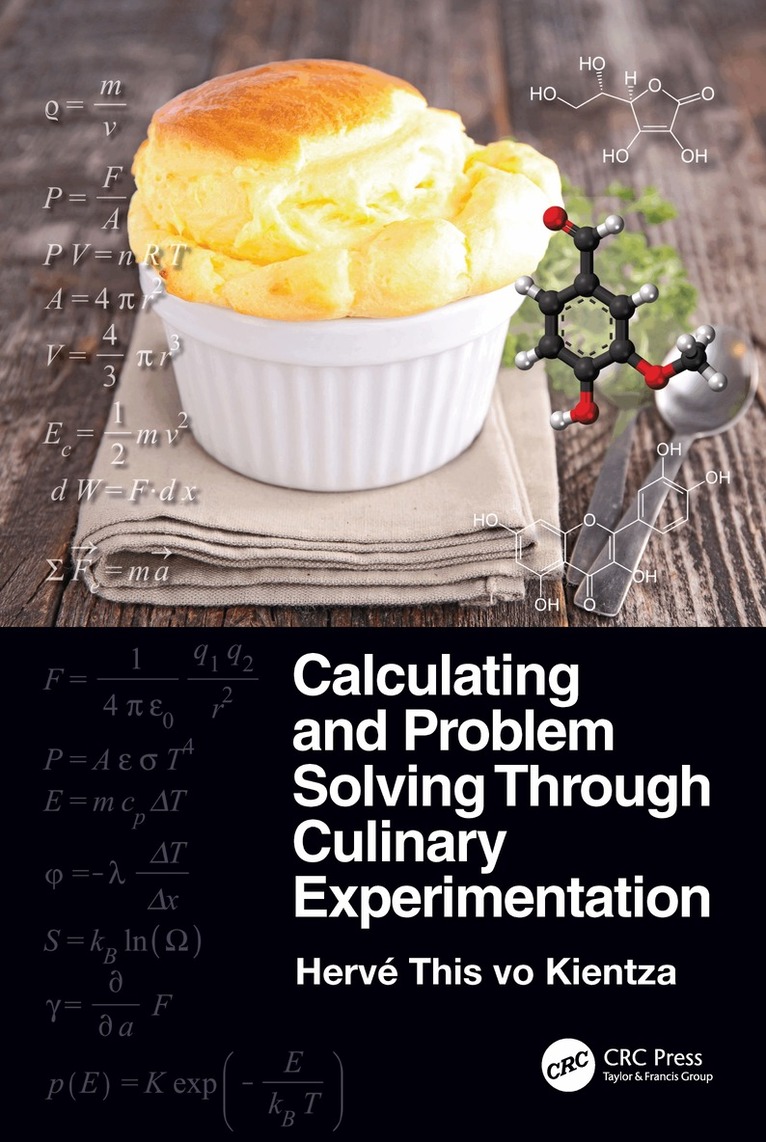
While many books proliferate elucidating the science behind the transformations during cooking, none teach the concepts of physics chemistry through problem solving based on culinary experiments as this one by renowned chemist and one of the founders of molecular gastronomy.Calculating and Problem Solving Through Culinary Experimentation offers an appealing approach to teaching experimental design and scientific calculations.Given the fact that culinary phenomena need physics and chemistry to be interpreted, there are strong and legitimate reasons for introducing molecular gastronomy in scientific curriculum. As any scientific discipline, molecular gastronomy is based on experiments (to observe the phenomena to be studied) and calculation (to fit the many data obtained by quantitative characterization of the studied phenomena), but also for making the theoretical work without which no real science is done, including refuting consequences of the introduced theories. Often, no difficult calculations are needed, and many physicists, in particular, make their first steps in understanding phenomena with very crude calculations. Indeed, they simply apply what they learned, before moving to more difficult math.In this book, the students are invited first to make simple experiments in order to get a clear idea of the (culinary) phenomena that they will be invited to investigate, and then are asked simple questions about the phenomena, for which they have to transform their knowledge into skills, using a clear strategy that is explained throughout. Indeed, the is "problem solving based on experiments", and all this about food and cooking.Key Features:Introduces readers to tips for experimental workShows how simple scientific knowledge can be applied in understanding questionsProvides a sound method ("strategy") for calculation in physics and chemistryPresents important definitions and laws for physical chemistryGives confidence in one’s calculation skill and problem solving skillsExplore physical and chemical phenomena that occur during cookingA unique mix of culinary arts and correct calculations, this book is useful to students as well as professors in chemistry, physics, biology, food science and technology.
1 929 kr
Skickas inom 10-15 vardagar
While many books proliferate elucidating the science behind the transformations during cooking, none teach the concepts of physics chemistry through problem solving based on culinary experiments as this one by renowned chemist and one of the founders of molecular gastronomy.Calculating and Problem Solving Through Culinary Experimentation offers an appealing approach to teaching experimental design and scientific calculations.Given the fact that culinary phenomena need physics and chemistry to be interpreted, there are strong and legitimate reasons for introducing molecular gastronomy in scientific curriculum. As any scientific discipline, molecular gastronomy is based on experiments (to observe the phenomena to be studied) and calculation (to fit the many data obtained by quantitative characterization of the studied phenomena), but also for making the theoretical work without which no real science is done, including refuting consequences of the introduced theories. Often, no difficult calculations are needed, and many physicists, in particular, make their first steps in understanding phenomena with very crude calculations. Indeed, they simply apply what they learned, before moving to more difficult math.In this book, the students are invited first to make simple experiments in order to get a clear idea of the (culinary) phenomena that they will be invited to investigate, and then are asked simple questions about the phenomena, for which they have to transform their knowledge into skills, using a clear strategy that is explained throughout. Indeed, the is "problem solving based on experiments", and all this about food and cooking.Key Features:Introduces readers to tips for experimental workShows how simple scientific knowledge can be applied in understanding questionsProvides a sound method ("strategy") for calculation in physics and chemistryPresents important definitions and laws for physical chemistryGives confidence in one’s calculation skill and problem solving skillsExplore physical and chemical phenomena that occur during cookingA unique mix of culinary arts and correct calculations, this book is useful to students as well as professors in chemistry, physics, biology, food science and technology.
Handbook of Molecular Gastronomy
Scientific Foundations, Educational Practices, and Culinary Applications
Inbunden, Engelska, 2021
3 329 kr
Skickas inom 10-15 vardagar
Handbook of Molecular Gastronomy: Scientific Foundations and Culinary Applications presents a unique overview of molecular gastronomy, the scientific discipline dedicated to the study of phenomena that occur during the preparation and consumption of dishes. It deals with the chemistry, biology and physics of food preparation, along with the physiology of food consumption. As such, it represents the first attempt at a comprehensive reference in molecular gastronomy, along with a practical guide, through selected examples, to molecular cuisine and the more recent applications named note by note cuisine. While several books already exist for a general audience, either addressing food science in general in a "light" way and/or dealing with modern cooking techniques and recipes, no book exists so far that encompasses the whole molecular gastronomy field, providing a strong interdisciplinary background in the physics, biology and chemistry of food and food preparation, along with good discussions on creativity and the art of cooking.Features: Gives A–Z coverage to the underlying science (physics, chemistry and biology) and technology, as well as all the key cooking issues (ingredients, tools and methods). Encompasses the science and practice of molecular gastronomy in the most accessible and up-to-date reference available. Contains a final section with unique recipes by famous chefs.The book is organized in three parts. The first and main part is about the scientific discipline of molecular and physical gastronomy; it is organized as an encyclopedia, with entries in alphabetical order, gathering the contributions of more than 100 authors, all leading scientists in food sciences, providing a broad overview of the most recent research in molecular gastronomy. The second part addresses educational applications of molecular gastronomy, from primary schools to universities. The third part provides some innovative recipes by chefs from various parts of the world.The authors have made a particular pedagogical effort in proposing several educational levels, from elementary introduction to deep scientific formalism, in order to satisfy the broadest possible audience (scientists and non-scientists). This new resource should be very useful to food scientists and chefs, as well as food and culinary science students and all lay people interested in gastronomy.
1 064 kr
Skickas inom 10-15 vardagar
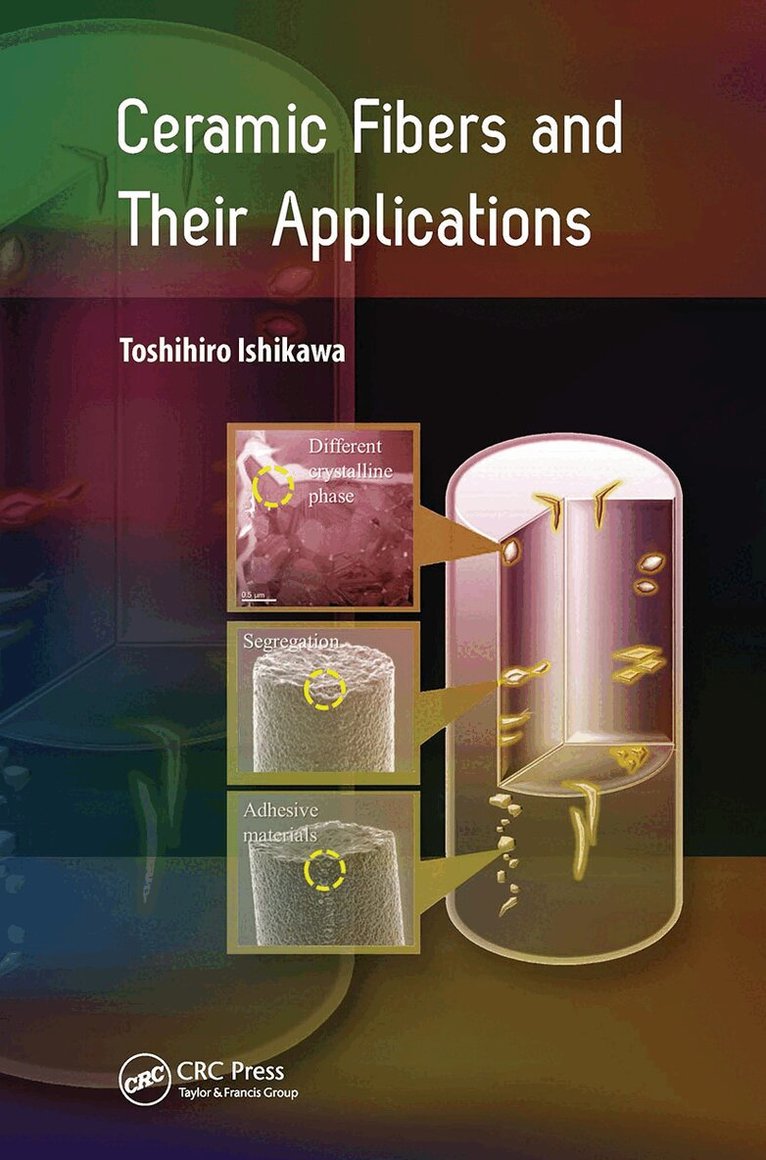
To date, several polymer-derived ceramic fibers have been developed all over the world, out of which SiC fibers synthesized from polycarbosilane and their derivatives have achieved highest heat resistance and show excellent mechanical properties. Their use in ceramic matrix composite materials has resulted in high-temperature stability and light weight, which show great promise in next-generation applications, such as aerospace engines. This book presents polymer-derived ceramic fibers from a historical viewpoint; basic information about them, such as production process, fine structures, and physical properties; their applications; and prospects of future inorganic fibers.