Hickmann Maya Hickmann – författare
Visar alla böcker från författaren Hickmann Maya Hickmann. Handla med fri frakt och snabb leverans.
5 produkter
5 produkter
E-bok
Engelska, 20181 353 kr
Läs direkt efter köp
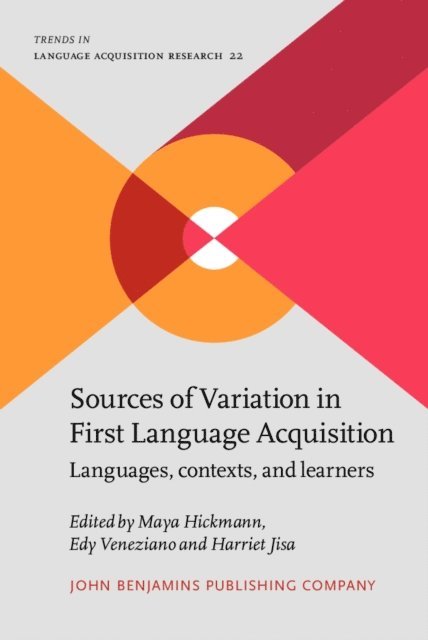
Developmental research has long focused on regularities in language acquisition, minimizing factors that might be responsible for variation. Although researchers are now increasingly concerned with one or another of these factors, this volume brings together research on three different sources of variation: language-specific properties, the nature of the input to children across contexts, and several aspects of the learners themselves. Chapters explore these sources of variation within an interdisciplinary and comparative approach allying theories and methodologies stemming from linguistics, psycholinguistics, developmental psychology, and neuroscience. The comparative perspective involves different languages, contexts of use, types of learners (first/second language acquisition, monolingual/bilingual learners, autism, language impairment), as well as vocal and visuo-gestural communicative modalities (co-verbal gestures, sign language acquisition). The volume points to the need to enhance interdisciplinary research using complementary methodologies to further examine sources of variation and to integrate variation into a more general developmental theory.
E-bok
PDF, Engelska, 20131 117 kr
Läs direkt efter köp
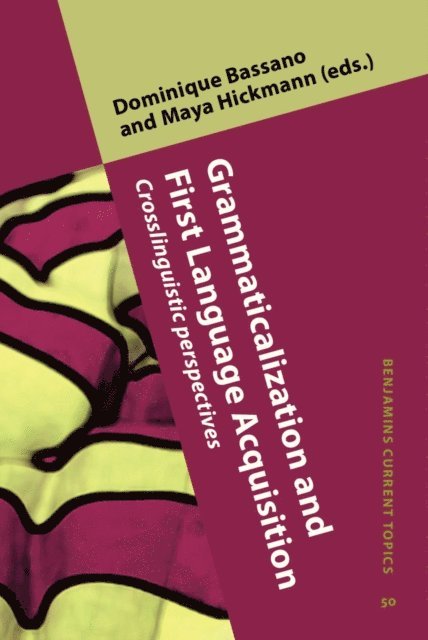
Grammaticalization and lexicalization are at the heart of first language acquisition. Understanding how these processes begin and evolve is a major challenge for current theories and has implications for applications in teaching or clinical contexts. This volume examines the relative weight of cognitive and linguistic determinants of acquisition with particular attention to two questions. The first one concerns the origins of grammar and the processes underlying its development. Is grammatical knowledge innate or constructed by the child? Is it modular or does it interact with other capacities? How can we account for continuity and discontinuity in development? What is the role of input? Second, considerable variation is observed in lexical and grammatical development across child languages. Is the process of acquisition similar in all children or do language-specific factors impact its rhythm and course? Do typological factors determine children’s reliance on lexical or grammatical means of expression in some domains? Originally published in Language, Interaction and Acquisition - Langage, Interaction et Acquisition 2:1 (2011).
E-bok
PDF, Engelska, 20101 305 kr
Läs direkt efter köp
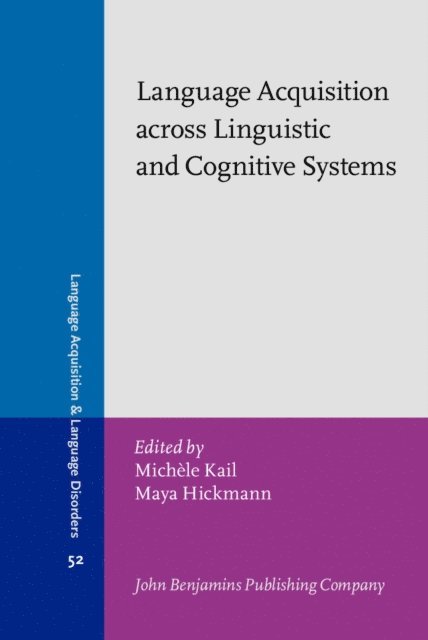
How and why do all children learn language? Why do some have difficulties while others are early language learners? What are the consequences of early bilingualism? Is it possible to reach native-like competence in a foreign language? Although we still cannot fully answer these questions, research during the last two decades has begun to solve some pieces of the puzzle. This book proposes an interdisciplinary collection of writings from some of the best specialists across several fields in cognitive science, offering a wide sample of recent advances in the study of first language acquisition, bilingualism, second language acquisition, and disorders of oral language. It is addressed to all researchers and students interested in language acquisition, as well as to teachers, clinicians and parents, who will find therein many new findings and varied methodological approaches, as well as challenging questions that are still debated and in need of further research.
E-bok
PDF, Engelska, 20071 588 kr
Läs direkt efter köp
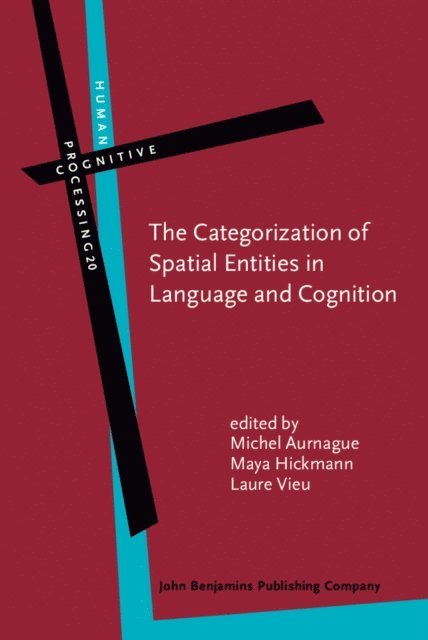
Despite a growing interest for space in language, most research has focused on spatial markers specifying the static or dynamic relationships among entities (verbs, prepositions, postpositions, case markings...). Little attention has been paid to the very properties of spatial entities, their status in linguistic descriptions, and their implications for spatial cognition and its development in children. This topic is at the center of this book, that opens a new field by sketching some major theoretical and methodological directions for future research on spatial entities. Brought together linguistic descriptions of spatial systems, formal accounts of linguistic data, and experimental findings from psycholinguistic studies, all couched within a wide cross-linguistic perspective. Such an interdisciplinary approach provides a rich overview of the many questions that remain unanswered in relation to spatial entities, while also throwing a new light on previous research focusing on related topics concerning space and/or the relation between language and cognition.
E-bok
PDF, Engelska, 20061 588 kr
Läs direkt efter köp
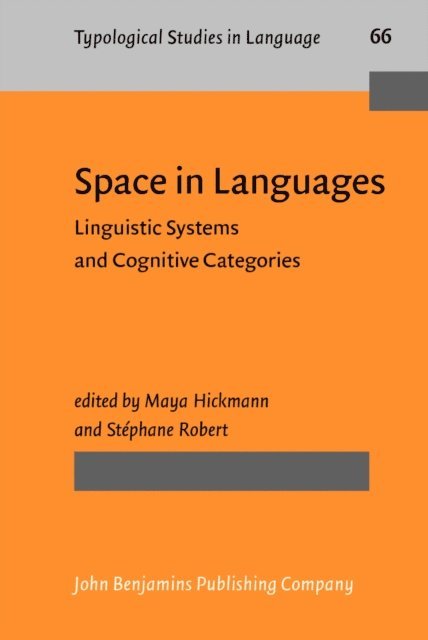
Space is presently the focus of much research and debate across disciplines, including linguistics, anthropology, psychology, and philosophy. One strong feature of this collection is to bring together theoretical and empirical contributions from these varied scientific traditions, with the collective aim of addressing fundamental questions at the forefront of the current literature: the nature of space in language, the linguistic relativity of space, the relation between spatial language and cognition. Linguistic analyses highlight the multidimensional and heterogeneous nature of space, while also showing the existence of a set of types, parameters, and principles organizing the considerable diversity of linguistic systems and accounting for mechanisms of diachronic change. Findings concerning spatial perception and cognition suggest the existence of two distinct systems governing linguistic and non-linguistic representations, that only partially overlap in some pathologies, but they also show the strong impact of language-specific factors on the course of language acquisition and cognitive development.