Robert Stephane Robert – författare
Visar alla böcker från författaren Robert Stephane Robert. Handla med fri frakt och snabb leverans.
2 produkter
2 produkter
E-bok
PDF, Engelska, 19991 306 kr
Läs direkt efter köp
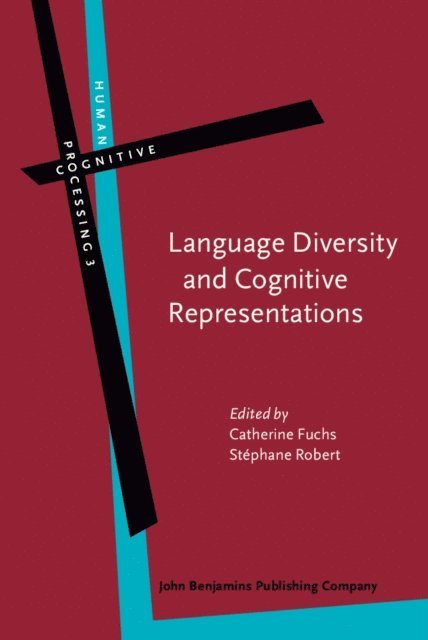
Significant new developments in brain activity research have revived the debate on the universality of language and its neural basis. Within this debate, the question of language diversity and its implications for cognition remains central and controversial. It is here investigated in an original multimodal approach, covering various aspects of cross-linguistic variation, differences between spoken, signed and drum languages, between normal speech and pathological speech, and also between language and music, as revealed in electric brain activity associated with language processing. The various contributions (linguistic, anthropological, psychological and neurophysical) on the nature and status of variation and invariants in language provides evidence for complex interactions between language-specific processes and general cognitive faculties. This overview of some recent trends in cognitive linguistics opens up a promising new research area in the humanities as well as in the cognitive sciences.
E-bok
PDF, Engelska, 20061 646 kr
Läs direkt efter köp
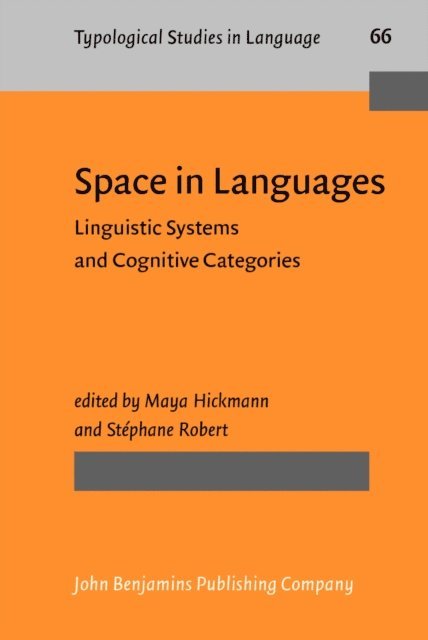
Space is presently the focus of much research and debate across disciplines, including linguistics, anthropology, psychology, and philosophy. One strong feature of this collection is to bring together theoretical and empirical contributions from these varied scientific traditions, with the collective aim of addressing fundamental questions at the forefront of the current literature: the nature of space in language, the linguistic relativity of space, the relation between spatial language and cognition. Linguistic analyses highlight the multidimensional and heterogeneous nature of space, while also showing the existence of a set of types, parameters, and principles organizing the considerable diversity of linguistic systems and accounting for mechanisms of diachronic change. Findings concerning spatial perception and cognition suggest the existence of two distinct systems governing linguistic and non-linguistic representations, that only partially overlap in some pathologies, but they also show the strong impact of language-specific factors on the course of language acquisition and cognitive development.