Hilton Kramer - Böcker
Visar alla böcker från författaren Hilton Kramer. Handla med fri frakt och snabb leverans.
10 produkter
10 produkter
345 kr
Skickas inom 10-15 vardagar
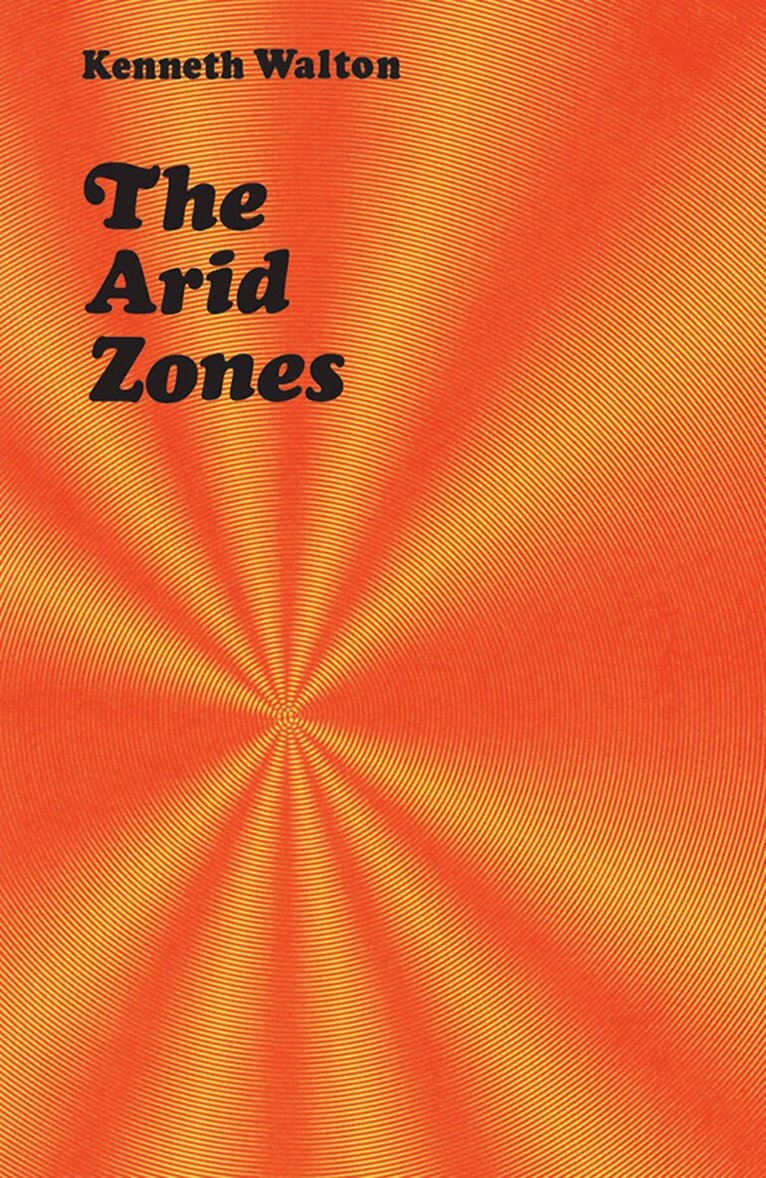
The hot and temperate deserts and their marginal steppe lands comprise one-third of the land surface of the world and are an increasingly critical area for the economic wellbeing of world populations. The remarkable mechanisms of floral, faunal, and human adaptation to the distinct and difficult environment of these arid zones, as well as the potential of modern technology for facilitating adaptation, are described and explained by Walton in the light of our most recent knowledge of the phenomena and processes involved.Beginning with a clarification of the definitions of arid and semi-arid regions and with the delineation of techniques for measuring the degree of aridity in these areas, the author shows that there is wide variation among the arid zones in landscape and climate and that there are numerous local and microclimates within any single arid region. The life cycles of the plants and animals of the arid zones are described and the water resources, including problems of salinity, mineral contamination, and the construction of reservoirs, are examined. Extensive treatment is given to potential agricultural adaptations and to pastoralism as the most widespread response to dry land. A final chapter summarizes attempts at adaptation to prevailing drought and discusses the kinds of future development that the author deems most likely in arid zones.Throughout the book emphasis is placed on specific, detailed analysis, with adequate tables and formulas for in-depth understanding of particular aspects of aridity. Examples from both Old and New Worlds are used to demonstrate the spheres in which progress is being made and to show the mistakes in past and present land use in arid areas. An essential supplement for courses in physical geography, the book will be useful in many area studies and in studies of economic development.
2 166 kr
Skickas inom 10-15 vardagar
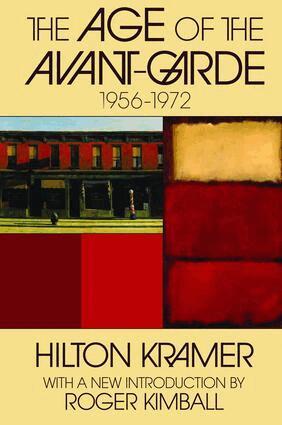
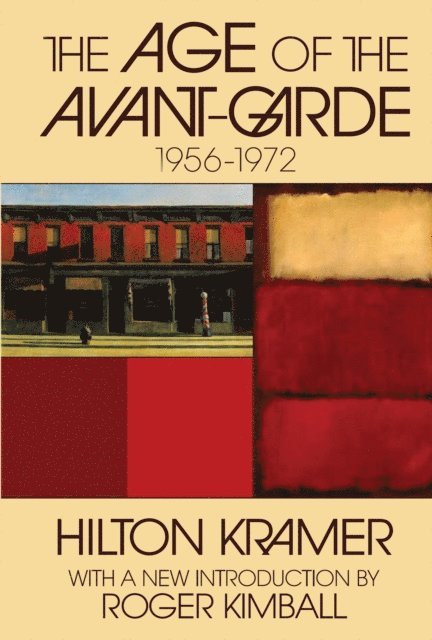
Hilton Kramer, well known as perhaps the most perceptive, courageous, and influential art critic in America, is also the founder and co-editor (with Roger Kimball) of The New Criterion. This comprehensive book collects a sizable selection of his early essays and reviews published in Artforum, Commentary, Arts Magazine, The New York Review of Books, and The Times, and thus constituted his first complete statement about art and the art world.The principal focus is on the artists and movements of the last hundred years: the Age of the Avant-Garde that begins in the nineteenth century with Realism and Impressionism. Most of the major artists of this rich period, from Monet and Degas to Jackson Pollock and Claes Oldenburg, are discussed and often drastically revaluated. A brilliant introductory essay traces the rise and fall of the avant-garde as a historical phenomenon, and examines some of the cultural problems which the collapse of the avant-garde poses for the future of art. In addition, there are chapters on art critics, museums, the relation of avant-garde art to radical politics, and on the growth of photography as a fine art.This collection is not intended to be the last word on one of the greatest as well as one of the most complex periods in the history of the artistic imagination. The essays and reviews gathered here were written in response to particular occasions and for specific deadlines--in the conviction that a start in the arduous task of critical revaluation needed to be made, not because a critical theory prescribed it but because our experience compelled it!
548 kr
Skickas inom 10-15 vardagar
The hot and temperate deserts and their marginal steppe lands comprise one-third of the land surface of the world and are an increasingly critical area for the economic wellbeing of world populations. The remarkable mechanisms of floral, faunal, and human adaptation to the distinct and difficult environment of these arid zones, as well as the potential of modern technology for facilitating adaptation, are described and explained by Walton in the light of our most recent knowledge of the phenomena and processes involved.Beginning with a clarification of the definitions of arid and semi-arid regions and with the delineation of techniques for measuring the degree of aridity in these areas, the author shows that there is wide variation among the arid zones in landscape and climate and that there are numerous local and microclimates within any single arid region. The life cycles of the plants and animals of the arid zones are described and the water resources, including problems of salinity, mineral contamination, and the construction of reservoirs, are examined. Extensive treatment is given to potential agricultural adaptations and to pastoralism as the most widespread response to dry land. A final chapter summarizes attempts at adaptation to prevailing drought and discusses the kinds of future development that the author deems most likely in arid zones.Throughout the book emphasis is placed on specific, detailed analysis, with adequate tables and formulas for in-depth understanding of particular aspects of aridity. Examples from both Old and New Worlds are used to demonstrate the spheres in which progress is being made and to show the mistakes in past and present land use in arid areas. An essential supplement for courses in physical geography, the book will be useful in many area studies and in studies of economic development.
704 kr
Skickas inom 10-15 vardagar
Hilton Kramer, well known as perhaps the most perceptive, courageous, and influential art critic in America, is also the founder and co-editor (with Roger Kimball) of The New Criterion. This comprehensive book collects a sizable selection of his early essays and reviews published in Artforum, Commentary, Arts Magazine, The New York Review of Books, and The Times, and thus constituted his first complete statement about art and the art world.The principal focus is on the artists and movements of the last hundred years: the Age of the Avant-Garde that begins in the nineteenth century with Realism and Impressionism. Most of the major artists of this rich period, from Monet and Degas to Jackson Pollock and Claes Oldenburg, are discussed and often drastically revaluated. A brilliant introductory essay traces the rise and fall of the avant-garde as a historical phenomenon, and examines some of the cultural problems which the collapse of the avant-garde poses for the future of art. In addition, there are chapters on art critics, museums, the relation of avant-garde art to radical politics, and on the growth of photography as a fine art.This collection is not intended to be the last word on one of the greatest as well as one of the most complex periods in the history of the artistic imagination. The essays and reviews gathered here were written in response to particular occasions and for specific deadlines--in the conviction that a start in the arduous task of critical revaluation needed to be made, not because a critical theory prescribed it but because our experience compelled it!
362 kr
Skickas inom 3-6 vardagar
195 kr
Tillfälligt slut
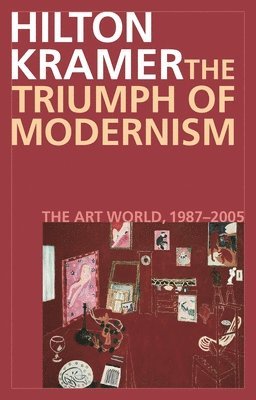
Widely acknowledged as the most authoritative art critic of his generation, Hilton Kramer advanced his comments and judgments largely in the form of essays and short pieces. Thus this first collection of his work to appear in twenty years is a signal event for the art world and for criticism generally.The Triumph of Modernism not only traces the vicissitudes of the art scene but diagnoses the state of modernism and its vital legacy in the postmodern world. Mr. Kramer bracingly updates his incisive critique of the artists, critics, institutions, and movements that have formed the basis for modern art. Appearing for the first time in greatly expanded form is his consideration of the foundations of modern abstract painting and the future of abstraction.The aesthetic intelligence that Mr. Kramer brings to bear on certain tired assumptions about modernism—many of them derived from methodologies and politics that have little to do with art—helps rescue the artwork itself and its appreciation from the very institutions, such as the art museum and the academy, that purport to foster it. Always clear-eyed and vastly illuminating, Hilton Kramer’s art criticism remains among the very finest written in the past hundred years. Readers of The Triumph of Modernism will be treated to an exhilarating experience.
Betrayal of Liberalism
How the Disciples of Freedom and Equality Helped Foster the Illiberal Politics of Coercion and Control
Häftad, Engelska, 1999
207 kr
Skickas inom 10-15 vardagar
In this incisive collection of essays which appeared originally in The New Criterion, ten distinguished critics and observers examine the origins and prospects of liberalism, from its roots in thinkers such as Rousseau and Mill to its troubled legacy in twentieth-century pursuits, and its compromising effects in the moral and intellectual life of our culture. Its contributors include Roger Scruton, Keith Windschuttle, Hadley Arkes, Robert Conquest, Jean Bethke Elshtain, Robert Kagan, John Silber, John O'Sullivan, Hilton Kramer, and Roger Kimball. Genuinely provocative. —Kirkus Reviews
167 kr
Skickas inom 10-15 vardagar
Ten distinguished critics reflect on the direction of our society, emphasizing both the dangers that threaten our institutions and the vivifying survivals that are worthy of being cherished and nurtured. Contributors include Robert H. Bork, Anthony Daniels, Roger Kimball, Hilton Kramer, Kenneth Minogue, Eric Ormsby, David Pryce-Jones, Diana Schaub, Mark Steyn, and Keith Windschuttle.
213 kr
Skickas inom 10-15 vardagar
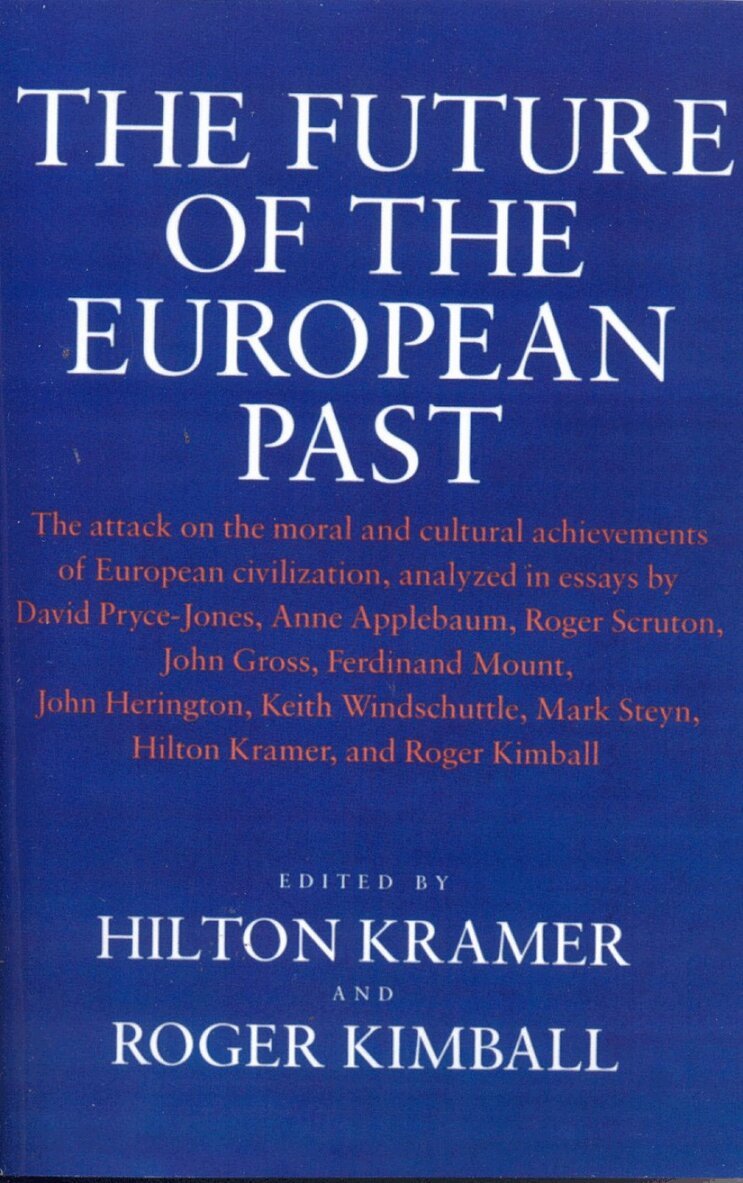
It is no longer news that the history of the European past and its role in shaping American cultural life is under severe attack. In virtually every university that offers a liberal arts curriculum, in every arts institution that deals with European classics, in the offices of every publication that engages in intellectual pursuits, the discussion of the past has become the principal battleground for mapping out the future of our culture. In this provocative and insightful collection of essays first published in The New Criterion, ten distinguished critics reflect on the fate of Europe’s cultural and political legacy as we approach the turn of the century. On subjects ranging from the collapse of communism and its implications for European society, to the study of the classics, to the prospects for serious music and art, these essays offer analyses marked by wit, independence, and commanding intelligence. The contributors include David Pryce-Jones, Anne Applebaum, Roger Scruton, John Gross, Ferdinand Mount, John Herington, Keith Windschuttle, Mark Steyn, Hilton Kramer, and Roger Kimball. The Future of the European Past is a major contribution to the debate over some of the most pressing cultural issues of our time.
151 kr
Tillfälligt slut
In a series of penetrating reflections on the United States and its institutions in the post-9/11 world, this book offers some answers to questions that people at home and abroad have begun to ask about our country. How did it attain its international preeminence? What exactly is this richest, most powerful of countries made of? Where will its unmatched influence lead? Military historian Frederick Kagan discusses the future of our armed forces and the challenges they will face in defending America's unique position. David B. Hart shows how religion, with all its variety and occasional excess, is "alive and striving in America, with the power to shelter many virtues under its promises of supernatural grace." From the future of the law to the future of higher education, from music to the visual arts, Lengthened Shadows provides a unique situation report on American culture today. Writers and thinkers such as Robert Bork, Hilton Kramer, Roger Kimball and Mark Steyn offer a probing assessment of the institutions that organize our lives--their health, their influence and their prospects--at the beginning of what some commentators are calling "the next American century."