Howard Goldfine - Böcker
Visar alla böcker från författaren Howard Goldfine. Handla med fri frakt och snabb leverans.
3 produkter
3 produkter
1 578 kr
Skickas inom 10-15 vardagar
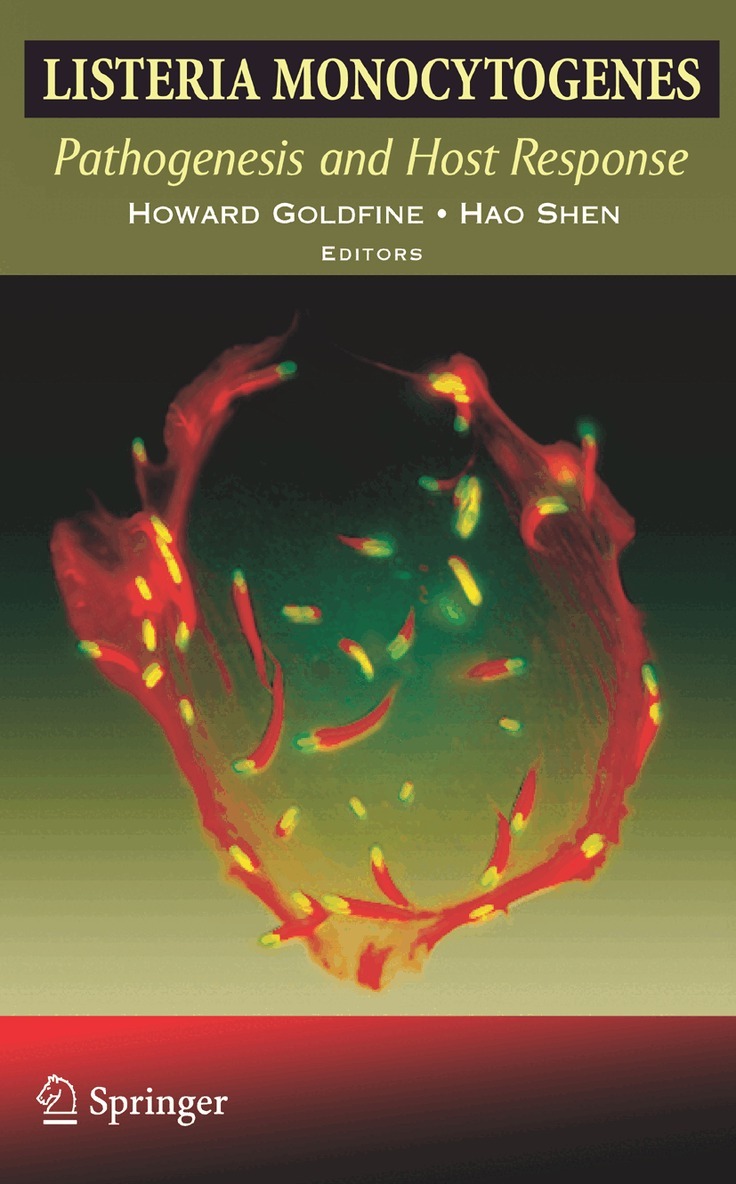
We are at the beginning of the third decade of studies at the molecular level on the pathogenesis of Listeria monocytogenes and the response of the host to its infections. It is a good time to survey the wealth of information that these studies have revealed and to think about perspectives for a more complete understanding of this important pathogen. During the past 20 years, L. mono- togenes has emerged from relative obscurity to being one of the most intensely studied bacterial pathogens. In the opening chapter, Daniel A. Portnoy provides a personal and historical account of the development of our understanding at the molecular level of invasion of the host cell, growth in the cytosol, and ce- to-cell spread by means of actin polymerization-powered motility. We are also fortunate to have contributions from Pascale Cossart and Werner Goebel and their colleagues. These pioneering investigators continue to make major cont- butions to the molecular description of almost every aspect of L. monocytogenes pathogenesis. All chapters in this book have been written by experts who have contributed widely to this field. We are extremely grateful for the efforts of all contributors who have provided contemporary accounts of the status of various aspects of L. monocytogenes pathogenesis and the host response. Their positive responses to this effort are deeply appreciated. Any specialist volume in the biological sciences can only provide a snapshot of the field at the time of its publication.
1 625 kr
Skickas inom 10-15 vardagar
We are at the beginning of the third decade of studies at the molecular level on the pathogenesis of Listeria monocytogenes and the response of the host to its infections. It is a good time to survey the wealth of information that these studies have revealed and to think about perspectives for a more complete understanding of this important pathogen. During the past 20 years, L. mono- togenes has emerged from relative obscurity to being one of the most intensely studied bacterial pathogens. In the opening chapter, Daniel A. Portnoy provides a personal and historical account of the development of our understanding at the molecular level of invasion of the host cell, growth in the cytosol, and ce- to-cell spread by means of actin polymerization-powered motility. We are also fortunate to have contributions from Pascale Cossart and Werner Goebel and their colleagues. These pioneering investigators continue to make major cont- butions to the molecular description of almost every aspect of L. monocytogenes pathogenesis. All chapters in this book have been written by experts who have contributed widely to this field. We are extremely grateful for the efforts of all contributors who have provided contemporary accounts of the status of various aspects of L. monocytogenes pathogenesis and the host response. Their positive responses to this effort are deeply appreciated. Any specialist volume in the biological sciences can only provide a snapshot of the field at the time of its publication.
Health Consequences of Microbial Interactions with Hydrocarbons, Oils, and Lipids
Inbunden, Engelska, 2020
4 155 kr
Skickas inom 10-15 vardagar
This book is a compilation of the most relevant molecular mechanisms and cellular processes that are involved in the infection processes in relation to lipid metabolism. The authors are international experts in the field of infection biology. Readers will understand infection metabolism and the contribution of lipids and lipid-protein interaction to lipids.Microbial lipids play an important role in almost all cellular phenomena. Microbial infections also contain an important virulence component in microbial lipids. The secretion of lipid vesicles that contain virulence factors, the assembly of lipid membrane microdomains harboring signal transduction pathways relate to infection process and the number of lipid-protein interactions that are necessary for the internalization of pathogens to host cells are some examples of the importance of lipids and lipid metabolism in the development of infections.