Huasheng Zhao – författare
Visar alla böcker från författaren Huasheng Zhao. Handla med fri frakt och snabb leverans.
5 produkter
Central Asia: Views from Washington, Moscow, and Beijing
Views from Washington, Moscow, and Beijing
Av Eugene B. Rumer, Dmitri Trenin m. fl.
Inbunden, 2007
3063 kr
Lägg i varukorg
The disintegration of the Soviet Union in 1991 rapidly and irrevocably transformed Central Asia's political landscape. This region of five sovereign states with a population of some fifty million people quickly became a major focus of interest and influence for competing poles of power. The eminent …
Central Asia: Views from Washington, Moscow, and Beijing
Views from Washington, Moscow, and Beijing
Av Eugene B. Rumer, Dmitri Trenin m. fl.
Häftad, 2007
822 kr
Lägg i varukorg
The disintegration of the Soviet Union in 1991 rapidly and irrevocably transformed Central Asia's political landscape. This region of five sovereign states with a population of some fifty million people quickly became a major focus of interest and influence for competing poles of power. The eminent …
Central Asia: Views from Washington, Moscow, and Beijing
Views from Washington, Moscow, and Beijing
Av Huasheng Zhao, Dmitri Trenin m. fl.
E-bok, 2016
970 kr
Lägg i varukorg
The disintegration of the Soviet Union in 1991 rapidly and irrevocably transformed Central Asia''s political landscape. This region of five sovereign states with a population of some fifty million people quickly became a major focus of interest and influence for competing poles of power. The …
Central Asia: Views from Washington, Moscow, and Beijing
Views from Washington, Moscow, and Beijing
Av Huasheng Zhao, Dmitri Trenin m. fl.
E-bok, 2016
970 kr
Lägg i varukorg
The disintegration of the Soviet Union in 1991 rapidly and irrevocably transformed Central Asia''s political landscape. This region of five sovereign states with a population of some fifty million people quickly became a major focus of interest and influence for competing poles of power. The …
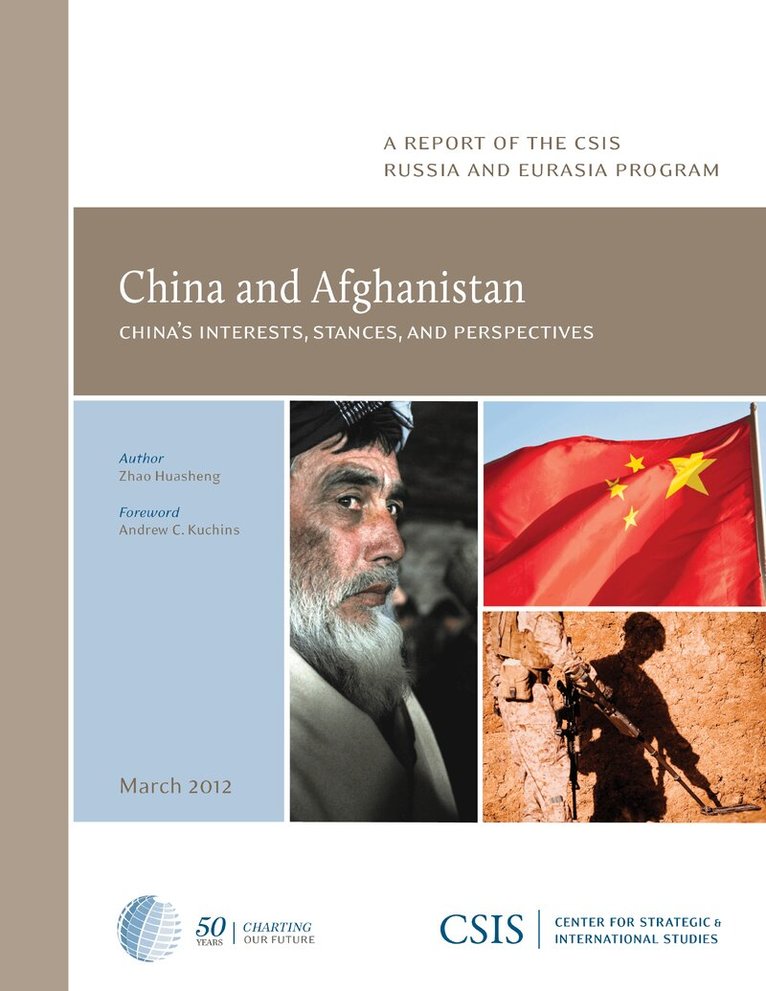
China and Afghanistan
China's Interests, Stances, and Perspectives
Häftad, 2012
398 kr
Tillfälligt slut
Because China is principally interested in preventing the destabilization of Xinjiang Province, it has broadly deferred to the United States and its Western allies who are leading military efforts, political reconciliation, and economic reconstruction in Afghanistan. Author Zhao Huasheng writes …