Hugh F. Cline – författare
Visar alla böcker från författaren Hugh F. Cline. Handla med fri frakt och snabb leverans.
11 produkter
Classroom Dynamics
Implementing a Technology-Based Learning Environment
Av Ellen B. Mandinach, Hugh F. Cline
Inbunden, 1993
742 kr
Lägg i varukorg
This book reports an attempt to introduce change in schools using a computer-based curriculum innovation for teaching higher-order thinking skills to middle and high school students. One of the volume's themes is the extraordinary complexity and difficulty of facilitating such change in schools. A …
Classroom Dynamics
Implementing a Technology-Based Learning Environment
Av Hugh F. Cline, Ellen B. Mandinach
E-bok, 2013
428 kr
Lägg i varukorg
This book reports an attempt to introduce change in schools using a computer-based curriculum innovation for teaching higher-order thinking skills to middle and high school students. One of the volume''s themes is the extraordinary complexity and difficulty of facilitating such change in schools. A …
Classroom Dynamics
Implementing a Technology-Based Learning Environment
Av Hugh F. Cline, Ellen B. Mandinach
E-bok, 2013
438 kr
Lägg i varukorg
This book reports an attempt to introduce change in schools using a computer-based curriculum innovation for teaching higher-order thinking skills to middle and high school students. One of the volume''s themes is the extraordinary complexity and difficulty of facilitating such change in schools. A …
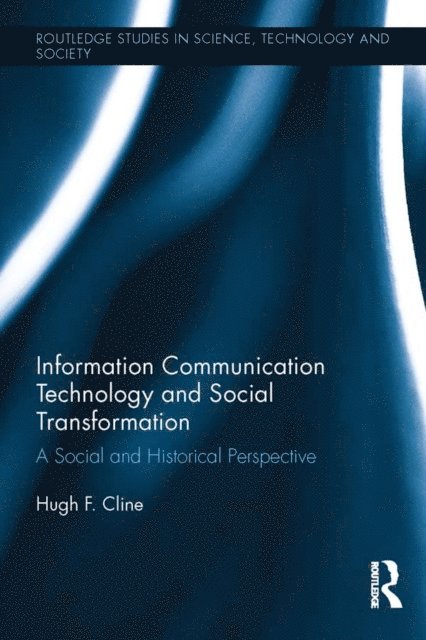
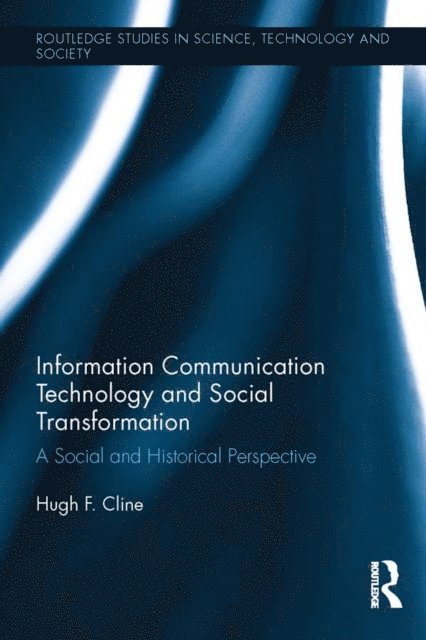
Information Communication Technology and Social Transformation
A Social and Historical Perspective
Inbunden, 2014
1826 kr
Lägg i varukorg
This book argues that information communication technologies are not creating new forms of social structure, but rather altering long-standing institutions and amplifying existing trends of social change that have their origins in ancient times. Using a comparative historical perspective, it …
Information Communication Technology and Social Transformation
A Social and Historical Perspective
Häftad, 2015
502 kr
Lägg i varukorg
This book argues that information communication technologies are not creating new forms of social structure, but rather altering long-standing institutions and amplifying existing trends of social change that have their origins in ancient times. Using a comparative historical perspective, it …
Classroom Dynamics
Implementing a Technology-Based Learning Environment
Av Ellen B. Mandinach, Hugh F. Cline
Häftad, 2016
374 kr
Lägg i varukorg
This book reports an attempt to introduce change in schools using a computer-based curriculum innovation for teaching higher-order thinking skills to middle and high school students. One of the volume's themes is the extraordinary complexity and difficulty of facilitating such change in schools. A …
Information Communication Technology and Social Transformation
A Social and Historical Perspective
E-bok, 2014
589 kr
Lägg i varukorg
This book argues that information communication technologies are not creating new forms of social structure, but rather altering long-standing institutions and amplifying existing trends of social change that have their origins in ancient times. Using a comparative historical perspective, it …
Information Communication Technology and Social Transformation
A Social and Historical Perspective
E-bok, 2014
607 kr
Lägg i varukorg
This book argues that information communication technologies are not creating new forms of social structure, but rather altering long-standing institutions and amplifying existing trends of social change that have their origins in ancient times. Using a comparative historical perspective, it …
Scandinavian Prison Study
Av Stanton Wheeler, Hugh F. Cline m. fl.
Inbunden, 2020
1106 kr
Lägg i varukorg
This book presents the formerly-unpublished manuscript by Wheeler and Cline detailing the landmark, comparative prisons study they conducted in the 1960s which examined fifteen Scandinavian prisons and nearly 2000 inmates across four Nordic countries. At the time, it was the largest comparative …
Scandinavian Prison Study
Av Hugh F. Cline, Stanton Wheeler m. fl.
E-bok, 2019
1570 kr
Lägg i varukorg
This book presents the formerly-unpublished manuscript by Wheeler and Cline detailing the landmark, comparative prisons study they conducted in the 1960s which examined fifteen Scandinavian prisons and nearly 2000 inmates across four Nordic countries. At the time, it was the largest comparative …
Scandinavian Prison Study
Av Stanton Wheeler, Hugh F. Cline m. fl.
Häftad, 2021
1106 kr
Lägg i varukorg
This book presents the formerly-unpublished manuscript by Wheeler and Cline detailing the landmark, comparative prisons study they conducted in the 1960s which examined fifteen Scandinavian prisons and nearly 2000 inmates across four Nordic countries. At the time, it was the largest comparative …