Hugues SA(c)raphin – författare
1 882 kr
Läs direkt efter köp
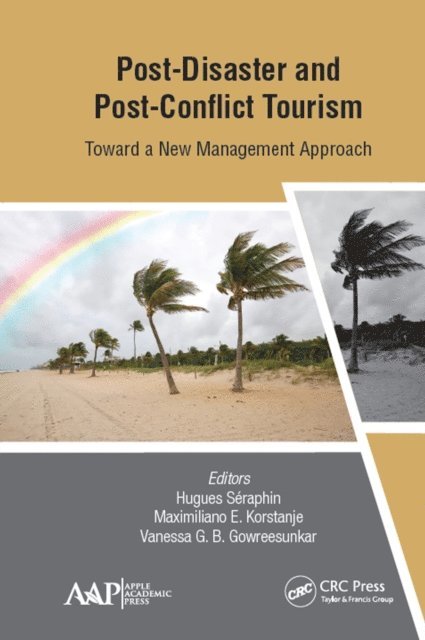
Post-disaster and post-conflict tourism has recently emerged as a prominent topic of research and considers new risks that jeopardize tourism travel to destinations that have recently experienced climate-related disasters, civil conflicts, and other challenges. This volume presents a host of innovative strategies that could be adopted by post-colonial, post-conflict, and post-disaster destinations to encourage travel and tourism in these areas.
Policymakers are focusing their efforts on identifying and eradicating external and/or internal risks in order to protect the tourism industry in their regions, in line with a new spirit that is clearly orientated toward mitigating risks. This capacity of adaptation suggests two important things that are at the heart of this book. On the one hand, tourism serves as a resilient mechanism that is helping destinations in their recovery strategy. On another hand, this raises ethical issues related to tourism consumption.
1 950 kr
Läs direkt efter köp
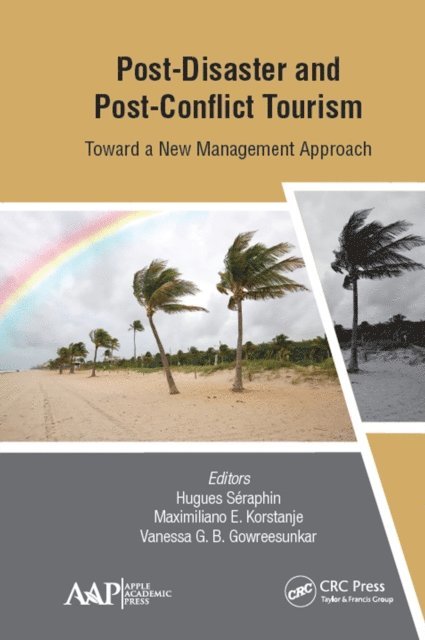
Post-disaster and post-conflict tourism has recently emerged as a prominent topic of research and considers new risks that jeopardize tourism travel to destinations that have recently experienced climate-related disasters, civil conflicts, and other challenges. This volume presents a host of innovative strategies that could be adopted by post-colonial, post-conflict, and post-disaster destinations to encourage travel and tourism in these areas.
Policymakers are focusing their efforts on identifying and eradicating external and/or internal risks in order to protect the tourism industry in their regions, in line with a new spirit that is clearly orientated toward mitigating risks. This capacity of adaptation suggests two important things that are at the heart of this book. On the one hand, tourism serves as a resilient mechanism that is helping destinations in their recovery strategy. On another hand, this raises ethical issues related to tourism consumption.
752 kr
Läs direkt efter köp
Since 2017, the term ‘overtourism’ has become the buzzword for destinations suffering the strain of tourism. It is a critical issue for the 21st century and beyond, and to date has only been examined from a tourism industry perspective. This book takes a different stand by investigating overtourism from a tourism education perspective.
The recent global COVID-19 pandemic was expected to halt travel and, arguably, overtourism. However, industry experts and researchers share the opinion that instead of declining, overtourism is simply experiencing a shift, with a swarm of ‘second home’ and domestic travel that is likely to engulf many tourism destinations. Against this backdrop, the issue of overtourism remains relevant and studies on ways to cultivate responsible consumer mindsets to deal with overtourism and other sustainability issues in the tourism industry are called for. This book focuses on education as a transformative and strategic tool to tackle overtourism and related negative impacts. It presents original research on the topics of overtourism, education, and sustainability, and puts forward a range of practical and transformative tourism education strategies to mitigate overtourism and to promote the sustainable development of destinations.
This book will be of great interest to upper-level students, researchers, and academics in tourism, development studies, cultural studies, and sustainability, as well as professionals in the field of tourism management.
752 kr
Läs direkt efter köp
Since 2017, the term ‘overtourism’ has become the buzzword for destinations suffering the strain of tourism. It is a critical issue for the 21st century and beyond, and to date has only been examined from a tourism industry perspective. This book takes a different stand by investigating overtourism from a tourism education perspective.
The recent global COVID-19 pandemic was expected to halt travel and, arguably, overtourism. However, industry experts and researchers share the opinion that instead of declining, overtourism is simply experiencing a shift, with a swarm of ‘second home’ and domestic travel that is likely to engulf many tourism destinations. Against this backdrop, the issue of overtourism remains relevant and studies on ways to cultivate responsible consumer mindsets to deal with overtourism and other sustainability issues in the tourism industry are called for. This book focuses on education as a transformative and strategic tool to tackle overtourism and related negative impacts. It presents original research on the topics of overtourism, education, and sustainability, and puts forward a range of practical and transformative tourism education strategies to mitigate overtourism and to promote the sustainable development of destinations.
This book will be of great interest to upper-level students, researchers, and academics in tourism, development studies, cultural studies, and sustainability, as well as professionals in the field of tourism management.
2 268 kr
Läs direkt efter köp
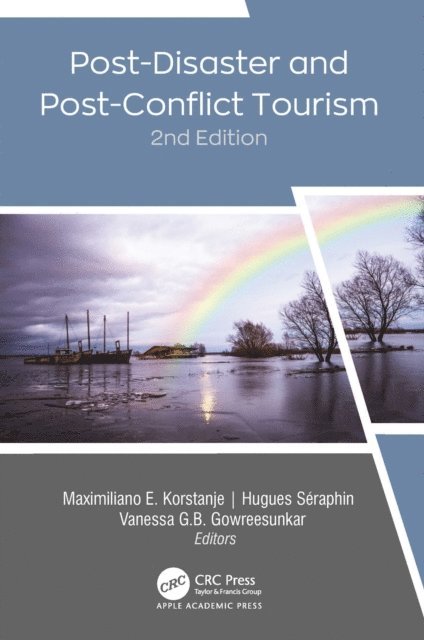
This new volume, Post-Disaster and Post-Conflict Tourism, now going into its 2nd edition, takes an in-depth look at how global geopolitical tensions and global threats affect the tourism industry and offers tools and strategies for meeting these challenges.
The book is updated with chapters that include new research, studies, and experiences, many of which consider the fall-out from the COVID-19 pandemic on tourism. It also includes five brand new chapters, for over 50 new pages of text.
With chapters by well-versed scholars who have worked as experts in post-disaster and post-conflict tourism, the book presents a host of case scenarios along with innovative strategies that can be implemented by postcolonial, post-conflict, and post-disaster destinations to encourage travel and tourism in these areas. Topics include using tourism as a vehicle for economic recovery, educating tourists at the pre-visit stage, developing and employing postcolonial branding and self-branding, using sports tourism and food events as a marketing strategy, the ethics revolving around post-disaster consumption, and much more. The new chapters discuss tourism in the age of the coronavirus pandemic and its dramatic disruptive effect on the tourism industry. The authors delve into post-COVID tourism marketing, health and wellness education and practices, ethical considerations for tourism operators, and more. A chapter also considers the challenges of sustainable supply chain management in tour operations.
With contributions from experts in this emerging field, this volume is a rich resource for travel and tourism professionals, policymakers, researchers, and others. It creates a bridge between the conceptual discussions around "dark consumption" (tourism directed to places that are identified with death and suffering) and the urgency to develop empirical models that support destination marketing organizations in a rapidly changing world.
2 268 kr
Läs direkt efter köp
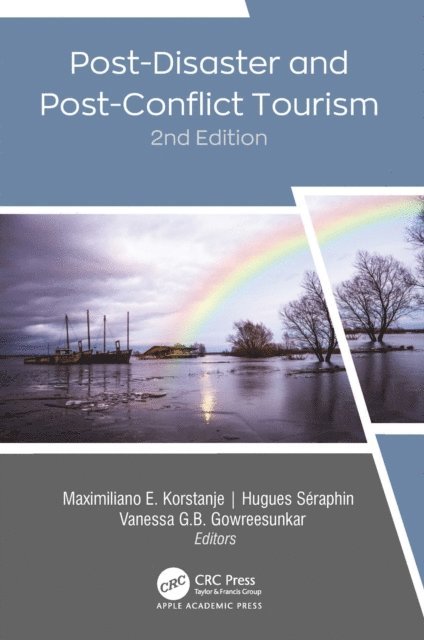
This new volume, Post-Disaster and Post-Conflict Tourism, now going into its 2nd edition, takes an in-depth look at how global geopolitical tensions and global threats affect the tourism industry and offers tools and strategies for meeting these challenges.
The book is updated with chapters that include new research, studies, and experiences, many of which consider the fall-out from the COVID-19 pandemic on tourism. It also includes five brand new chapters, for over 50 new pages of text.
With chapters by well-versed scholars who have worked as experts in post-disaster and post-conflict tourism, the book presents a host of case scenarios along with innovative strategies that can be implemented by postcolonial, post-conflict, and post-disaster destinations to encourage travel and tourism in these areas. Topics include using tourism as a vehicle for economic recovery, educating tourists at the pre-visit stage, developing and employing postcolonial branding and self-branding, using sports tourism and food events as a marketing strategy, the ethics revolving around post-disaster consumption, and much more. The new chapters discuss tourism in the age of the coronavirus pandemic and its dramatic disruptive effect on the tourism industry. The authors delve into post-COVID tourism marketing, health and wellness education and practices, ethical considerations for tourism operators, and more. A chapter also considers the challenges of sustainable supply chain management in tour operations.
With contributions from experts in this emerging field, this volume is a rich resource for travel and tourism professionals, policymakers, researchers, and others. It creates a bridge between the conceptual discussions around "dark consumption" (tourism directed to places that are identified with death and suffering) and the urgency to develop empirical models that support destination marketing organizations in a rapidly changing world.
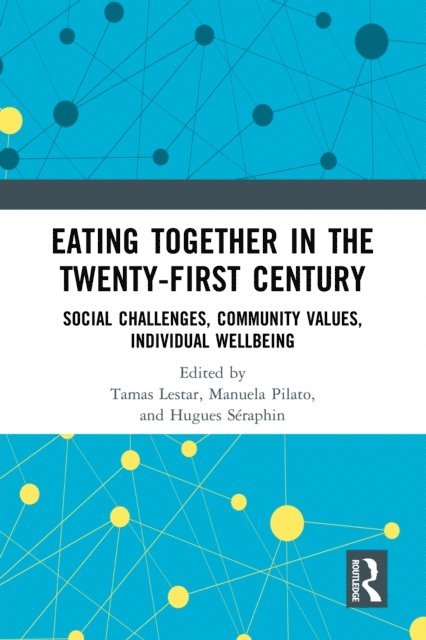
Eating Together in the Twenty-first Century
Social Challenges, Community Values, Individual Wellbeing
723 kr
Läs direkt efter köp
This book provides in-depth perspectives on communal food and dining practices. In doing so, it challenges less sustainable lifestyles that are encouraged by a social system based on unlimited economic growth.
In considering the diverse societal settings in which individuals and communities eat, the book offers opportunities to reflect on the concept of belongingness, or the lack of it, when eating. It examines what, how, and why we eat together and considers what the future of our food and eating may look like. A wide range of themes are explored, with examples from Finland, Algeria, Europe, and Asia drawing on topics such as and cases for interdisciplinary research, such as environmental impact, social inclusion, happiness, health, and well-being, to name a few of the areas where the importance of eating together is stressed across disciplines. The book explores the lived experience of diners and the contexts in which commensality takes place in the family circle and in communities. It emphasises how the practice of eating together plays a crucial role in satisfying deep-seated social needs.
The book bridges the gap between science, governance, professional practice, and everyday dieters to provide hands-on benefits and insights. It will be of interest to researchers and policymakers in the areas of food studies, food policy, cultural studies, gastronomy tourism, psychology, global health, religion, and spirituality.
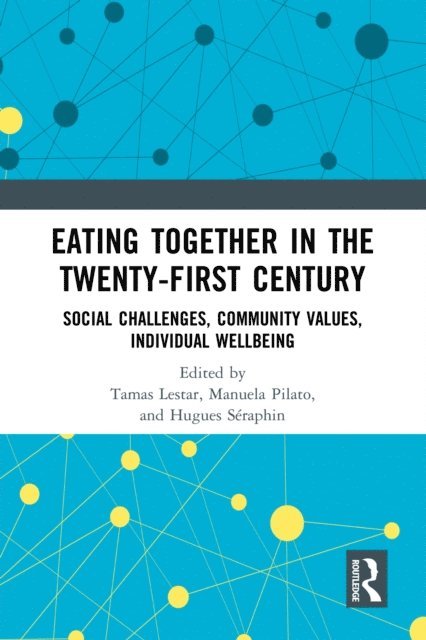
Eating Together in the Twenty-first Century
Social Challenges, Community Values, Individual Wellbeing
723 kr
Läs direkt efter köp
This book provides in-depth perspectives on communal food and dining practices. In doing so, it challenges less sustainable lifestyles that are encouraged by a social system based on unlimited economic growth.
In considering the diverse societal settings in which individuals and communities eat, the book offers opportunities to reflect on the concept of belongingness, or the lack of it, when eating. It examines what, how, and why we eat together and considers what the future of our food and eating may look like. A wide range of themes are explored, with examples from Finland, Algeria, Europe, and Asia drawing on topics such as and cases for interdisciplinary research, such as environmental impact, social inclusion, happiness, health, and well-being, to name a few of the areas where the importance of eating together is stressed across disciplines. The book explores the lived experience of diners and the contexts in which commensality takes place in the family circle and in communities. It emphasises how the practice of eating together plays a crucial role in satisfying deep-seated social needs.
The book bridges the gap between science, governance, professional practice, and everyday dieters to provide hands-on benefits and insights. It will be of interest to researchers and policymakers in the areas of food studies, food policy, cultural studies, gastronomy tourism, psychology, global health, religion, and spirituality.
360 kr
Läs direkt efter köp
This timely and topical book presents a unique critical exploration of the sociology of single travel and theory of consumption in relation to loneliness and tourism.
Logically structured and interdisciplinary in scope, this book introduces disrupting questions around the convergence of the post-modern self in relation to solo travel post-pandemic, with chapters exploring topics such as romantic loneliness, the benefits and drawbacks of single travel in a globalized world, the influence of technology on solo travel and the impact of sex tourism. International case studies and examples are given throughout and the book is richly illustrated and data-led. The volume looks to the future, exploring relevant trends and the development of new products and services in the next few years.
This volume is a pivotal resource for students, scholars and academics with an interest in tourism and mobility studies, international relations, development economics, crisis management, sociology and public policy. The book may also be of professional interest to practitioners and policymakers dedicated to tourism sociology and sociology of tourism consumption.
360 kr
Läs direkt efter köp
This timely and topical book presents a unique critical exploration of the sociology of single travel and theory of consumption in relation to loneliness and tourism.
Logically structured and interdisciplinary in scope, this book introduces disrupting questions around the convergence of the post-modern self in relation to solo travel post-pandemic, with chapters exploring topics such as romantic loneliness, the benefits and drawbacks of single travel in a globalized world, the influence of technology on solo travel and the impact of sex tourism. International case studies and examples are given throughout and the book is richly illustrated and data-led. The volume looks to the future, exploring relevant trends and the development of new products and services in the next few years.
This volume is a pivotal resource for students, scholars and academics with an interest in tourism and mobility studies, international relations, development economics, crisis management, sociology and public policy. The book may also be of professional interest to practitioners and policymakers dedicated to tourism sociology and sociology of tourism consumption.