I Rockmore - Böcker
Visar alla böcker från författaren I Rockmore. Handla med fri frakt och snabb leverans.
4 produkter
4 produkter
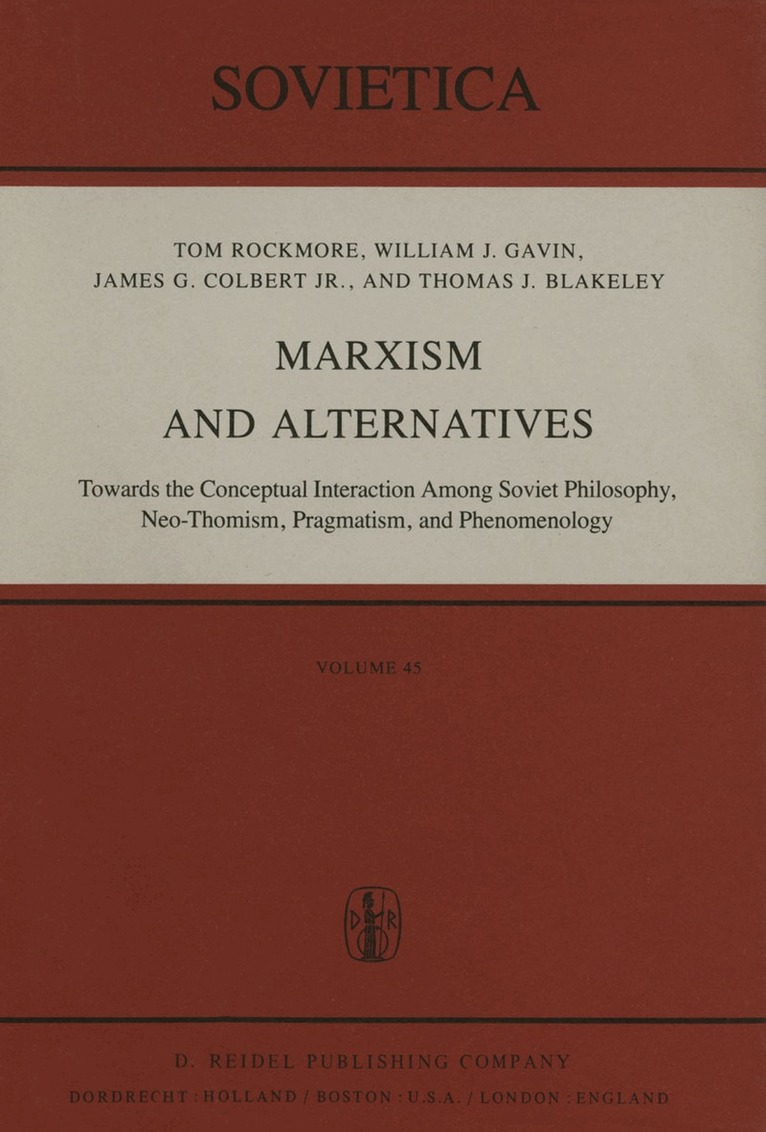
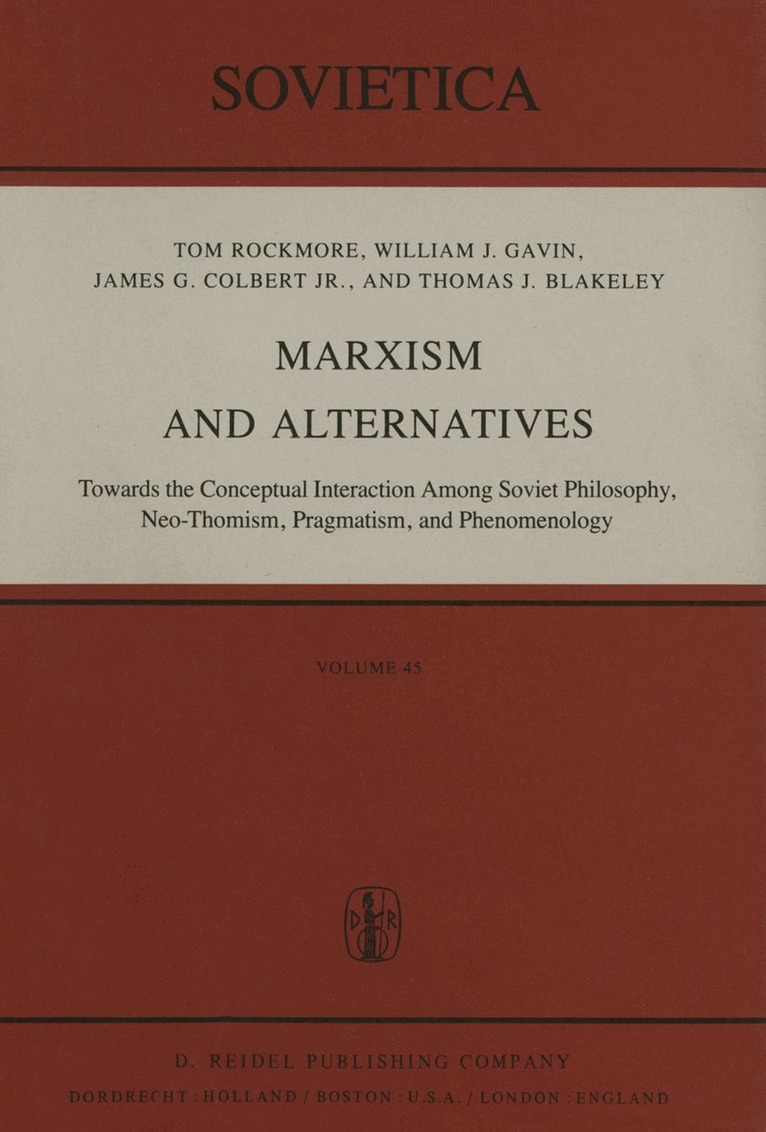
Marxism and Alternatives
Towards the Conceptual Interaction Among Soviet Philosophy, Neo-Thomism, Pragmatism, and Phenomenology
Inbunden, Engelska, 1981
2 110 kr
Skickas inom 10-15 vardagar
Contemporary philosophy is by its nature pluralistic, to a perhaps greater extent than at any moment of the preceding tradition, in that there are multiple forms of thought competing for a position on the center of the philosophic stage. The reasons for this conceptual proliferation are numerous. But certainly one factor is the increasing development of contemporary means of publication and communication, which in turn make possible the rapid dissemination of ideas as well as an informed reaction to them. And this in turn has increased the possibility for serious philosophic exchange by enhancing the available opportunities for the interaction of competing forms of thought. But, although informed philosophic interaction has in principle become increasingly possible in recent years, the frequency, scope and quality of such discussion has often been less than satisfactory. Contemporary philosophic viewpoints tend not to interact in a Hegelian manner, as complementary aspects of a totally satisfactory and a-perspectival view, facets of a singly and all-embracing true position. Rather, contemporary philosophic viewpoints tend to portray themselves as mutually exclusive alternatives only occasionally willing to acknowledge the possible validity or even the intrinsic interest of other perspectives. Thus, although the multiplication of different forms of philosophy in principle means that there are greater possibilities for meaning ful exchange between them, in practice the tendency of each of the various philosophic positions to raise claims to philosophic truth from its point of view alone has had the effect of impeding such interaction.
1 584 kr
Skickas inom 10-15 vardagar
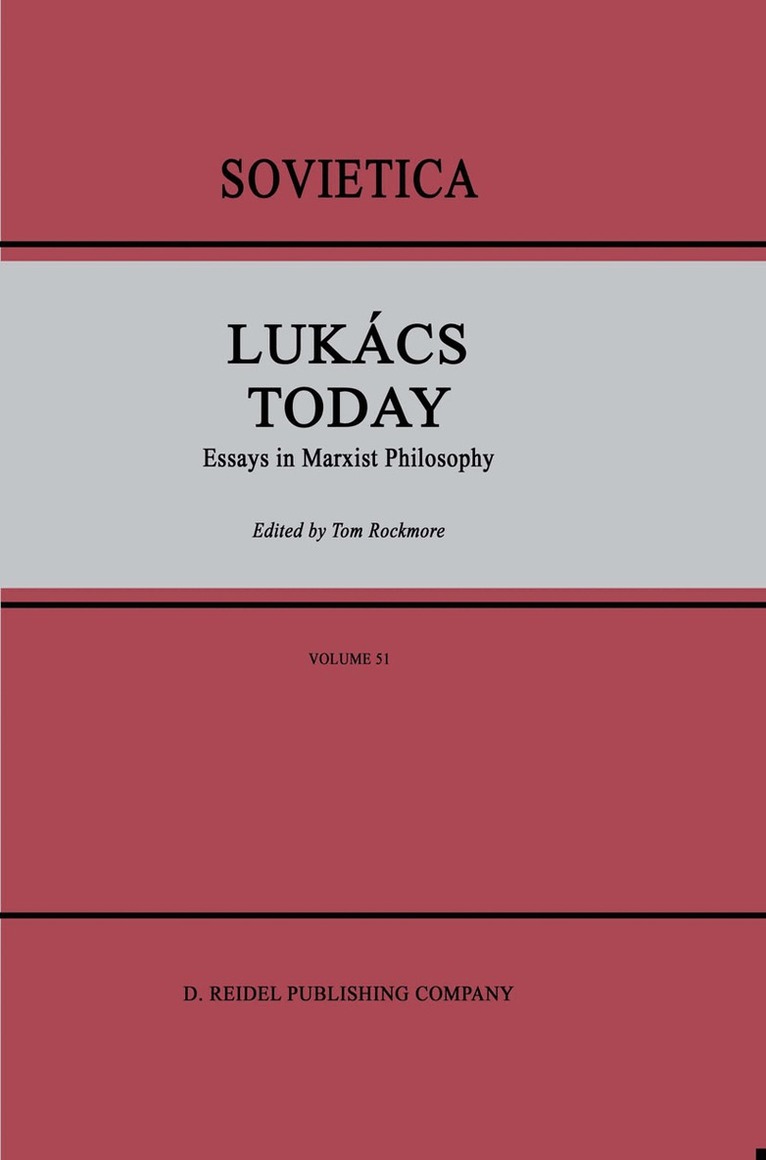
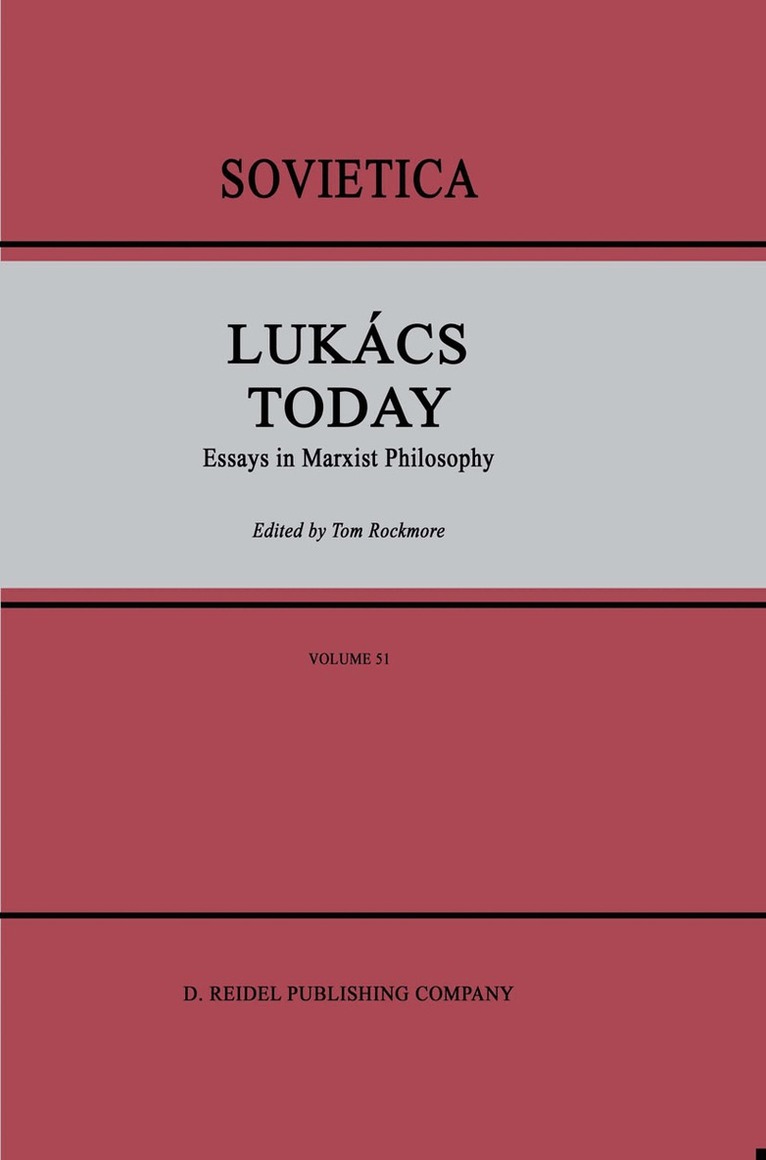
As this century nears an end, it has become increasingly clear that Georg Lukacs is one of the most ta.1ented intellectuals of our time, not only in the Marxist tradition, but in general. Lukacs' name is well known, and his views are increasingly attracting attention; but it cannot be said that his thought has so far been widely studied, or that it has been studied to the degree its place in the Marxist tradition warrants or its intrinsic interest demands. In the relatively short period since Lukacs' death, there have been a number of books and many articles devoted to his work. But, despite some efforts in that direction, there is still no adequate treatment of his work as a whole, surely a formidable task.! If, as I believe, Lukacs is the most important Marxist philosopher since Marx, and one of the most influential intellectual figures of this century, then surely his ideas are worth scrutinizing frequently and in detail. This is not the place to provide a general description either of Lukacs' life or of his work. Descriptions of his life, especially his early career, are widely available. For present purposes, it will suffice to provide only the barest mention of some biographical facts, together with a brief account of some items in his bibliography.
Marxism and Alternatives
Towards the Conceptual Interaction Among Soviet Philosophy, Neo-Thomism, Pragmatism, and Phenomenology
Häftad, Engelska, 2011
2 110 kr
Skickas inom 10-15 vardagar
Contemporary philosophy is by its nature pluralistic, to a perhaps greater extent than at any moment of the preceding tradition, in that there are multiple forms of thought competing for a position on the center of the philosophic stage. The reasons for this conceptual proliferation are numerous. But certainly one factor is the increasing development of contemporary means of publication and communication, which in turn make possible the rapid dissemination of ideas as well as an informed reaction to them. And this in turn has increased the possibility for serious philosophic exchange by enhancing the available opportunities for the interaction of competing forms of thought. But, although informed philosophic interaction has in principle become increasingly possible in recent years, the frequency, scope and quality of such discussion has often been less than satisfactory. Contemporary philosophic viewpoints tend not to interact in a Hegelian manner, as complementary aspects of a totally satisfactory and a-perspectival view, facets of a singly and all-embracing true position. Rather, contemporary philosophic viewpoints tend to portray themselves as mutually exclusive alternatives only occasionally willing to acknowledge the possible validity or even the intrinsic interest of other perspectives. Thus, although the multiplication of different forms of philosophy in principle means that there are greater possibilities for meaning ful exchange between them, in practice the tendency of each of the various philosophic positions to raise claims to philosophic truth from its point of view alone has had the effect of impeding such interaction.
1 584 kr
Skickas inom 10-15 vardagar
As this century nears an end, it has become increasingly clear that Georg Lukacs is one of the most ta.1ented intellectuals of our time, not only in the Marxist tradition, but in general. Lukacs' name is well known, and his views are increasingly attracting attention; but it cannot be said that his thought has so far been widely studied, or that it has been studied to the degree its place in the Marxist tradition warrants or its intrinsic interest demands. In the relatively short period since Lukacs' death, there have been a number of books and many articles devoted to his work. But, despite some efforts in that direction, there is still no adequate treatment of his work as a whole, surely a formidable task.! If, as I believe, Lukacs is the most important Marxist philosopher since Marx, and one of the most influential intellectual figures of this century, then surely his ideas are worth scrutinizing frequently and in detail. This is not the place to provide a general description either of Lukacs' life or of his work. Descriptions of his life, especially his early career, are widely available. For present purposes, it will suffice to provide only the barest mention of some biographical facts, together with a brief account of some items in his bibliography.