Ian Convery - Böcker
Visar alla böcker från författaren Ian Convery. Handla med fri frakt och snabb leverans.
9 produkter
9 produkter
2 779 kr
Skickas inom 10-15 vardagar
This handbook provides a comprehensive overview of the history, theory, and current practices of rewilding. Rewilding offers a transformational paradigm shift in conservation thinking, and as such is increasingly of interest to academics, policymakers, and practitioners. However, as a rapidly emerging area of conservation, the term has often been defined and used in a variety of different ways (both temporally and spatially). There is, therefore, the need for a comprehensive assessment of this field, and the Routledge Handbook of Rewilding fills this lacuna. The handbook is organised into four sections to reflect key areas of rewilding theory, practice, and debate: the evolution of rewilding, theoretical and practical underpinnings, applications and impacts, and the ethics and philosophy of rewilding. Drawing on a range of international case studies the handbook addresses many of the key issues, including land acquisition and longer-term planning, transitioning from restoration (human-led, nature enabled) to rewilding (nature-led, human enabled), and the role of political and social transformational change. Led by an editorial team who have extensive experience researching and practising rewilding, this handbook is essential reading for students, academics and practitioners interested in rewilding, ecological restoration, natural resource management and conservation.
643 kr
Skickas inom 10-15 vardagar
This handbook provides a comprehensive overview of the history, theory, and current practices of rewilding. Rewilding offers a transformational paradigm shift in conservation thinking, and as such is increasingly of interest to academics, policymakers, and practitioners. However, as a rapidly emerging area of conservation, the term has often been defined and used in a variety of different ways (both temporally and spatially). There is, therefore, the need for a comprehensive assessment of this field, and the Routledge Handbook of Rewilding fills this lacuna. The handbook is organised into four sections to reflect key areas of rewilding theory, practice, and debate: the evolution of rewilding, theoretical and practical underpinnings, applications and impacts, and the ethics and philosophy of rewilding. Drawing on a range of international case studies the handbook addresses many of the key issues, including land acquisition and longer-term planning, transitioning from restoration (human-led, nature enabled) to rewilding (nature-led, human enabled), and the role of political and social transformational change. Led by an editorial team who have extensive experience researching and practising rewilding, this handbook is essential reading for students, academics and practitioners interested in rewilding, ecological restoration, natural resource management and conservation.
1 400 kr
Skickas inom 7-10 vardagar
Essays investigating the idea of natural heritage and the ways in which it has changed over time.The concepts of nature, culture and heritage are deeply entwined; their threads run together in some of our finest museums, in accounts of exploration and discovery, in the work of artists, poets and writers, and in areas that arecherished and protected because of their landscapes and wildlife. The conservation ethic - placing a value on the natural environment - lies at the heart of the notion of "natural heritage", but we need to question how those values originated, were consolidated and ultimately moulded and changed over time. In a contemporary context the connections between nature and culture have sometimes become lost, fragmented, dislocated or misunderstood; where did "natural heritage" begin and how do we engage with the idea of "nature" today? The essays collected here re-evaluate the role of culture in developing the concept of natural heritage, reflecting on the shifts in its interpretation over the last 300 years.Contributors: Martin Holdgate, Marie Addyman, E. Charles Nelson, Darrell Smith, Andrew Ramsey, Viktor Kouloumpis, Richard Milner, Gina Douglas, Penny Bradshaw, Arthur MacGregor, Chiara Nepi, Hannah Paddon, Stephen Hewitt, Gordon McGregor Reid, Ghillean T Prance, Peter Davis, Christopher Donaldson, Lucy McRobert, Sophie Darlington, Keith Scholey, Paul A. Roncken, Angus Lunn, Juliet Clutton-Brock, Tim Sands, Robert A. Lambert, James Champion, Erwin van Maanen, Heather Prince, Chris Loynes, Julie Taylor, Sarah Elmeligi, Samantha Finn, Owen Nevin, Jared Bowers, Kate Hennessy, Natasha Lyons, Mike Jeffries.
Del 16 - Heritage Matters
Displaced Heritage
Responses to Disaster, Trauma, and Loss
Häftad, Engelska, 2019
361 kr
Skickas inom 7-10 vardagar
Considerations of the effect of trauma on heritage sites.The essays in this volume address the displacement of natural and cultural heritage caused by disasters, whether they be dramatic natural impacts or terrible events unleashed by humankind, including holocaust and genocide. Disasters can be natural or human-made, rapid or slow, great or small, yet the impact is effectively the same; nature, people and cultural heritage are displaced or lost. Yet while heritage and place are at risk from disasters, in time,sites of suffering are sometimes reframed as sites of memory; through this different lens these "difficult" places become heritage sites that attract tourists. Ranging widely chronologically and geographically, the contributors explore the impact of disasters, trauma and suffering on heritage and sense of place, in both theory and practice.Contributors: Kai Erikson, Catherine Roberts, Philip R. Stone, Stephen Miles, Susannah Eckersley, Gerard Corsane, Graeme Were, Jo Besley, Tim Padley, Chia-Li Chen, Jonathan Skinner, Diana Walters, Shalini Sharma, Ellie Land, Rob Morley, Ian Convery, John Welshman, Aron Mazel, Andrew Law, Bryony Onciul, Sarah Elliott, Rebecca Whittle,Will Medd, Maggie Mort, Hugh Deeming, Marion Walker, Clare Twigger-Ross, Gordon Walker, Nigel Watson, Richard Johnson, Esther Edwards, James Gardner, Brij Mohan, Josephine Baxter, Takashi Harada, Arthur McIvor, Rupert Ashmore, Peter Lurz, Marc Ancrenaz, Isabelle Lackman, Özgün Emre Can, Bryndís Snæbjörnsdóttir, Mark Wilson, Pat Caplan, Billy Sinclar, Phil O'Keefe
1 158 kr
Skickas inom 7-10 vardagar
Investigations into the cultural significance of that most familiar and charismatic group of animals, bears.Bears are iconic animals, playing a variety of roles in human culture. They have been portrayed as gods, monsters, kings, fools, brothers, lovers, and dancers; they are seen as protectors of the forest; symbols of masculinity; a comfort for children; and act as symbols for conservation and environmental issues. They also symbolise wilderness, reinforcing and maintaining our connection to the natural world. And stories abound of cultures that gathered berries in the same fields as bears and fished on the same rivers; consequently a wealth of myths, legends and folklore has informed us of our place in the world and the deep connection we have with bears.The essays collected here provide a rich selection of views on the human/bear relationships. They explore how bears are an influence in contemporary art, and how they are represented in the illustrations in children's literature and in museum exhibitions. The connection between bears and native peoples, and how contemporary society lives alongside these animals, provides an understanding of current attitudes and approaches to bear management and conservation. The history of captive bears is brought into contemporary relief by considering the fate of captive bears held in Asian countries for bile production. Other pieces look at how bears feature in gay culture, and are an intrinsic component to researchon the Yeti and Sasquatch. Together, these articles present an insight into the changing face of attitudes towards nature, species survival and the significance of conservation engagement in the twenty-first century. Biologists, historians, anthropologists, cultural theorists, conservationists and museologists will all find riches in the detail presented in this bear cornucopia.OWEN NEVIN is Associate Vice-Chancellor, Gladstone Region, CQUniversity, Australia; IAN CONVERY is Professor of Environment and Society at the University of Cumbria; PETER DAVIS is Emeritus Professor of Museology in the International Centre for Cultural and Heritage Studies at Newcastle University.Contributors: Philip Charles, Melanie Clapham, Ian Convery, Koen Cuyten, Elizabeth O Davis, Peter Davis, Sarah Elmeligi, Beatrice Frank, Barrie K. Gilbert, Jenny Anne Glikman, Tracy Ann Hayes, Mike Jeffries, Jón Jónsson, John Kitchin, Miha Krofel, Gareth Longstaff, Henry McGhie, Jeff Meldrum, Owen T. Nevin, Heather Prince, Lynn Rogers, Kristinn Schram, Bryndís Snæbjörnsdóttir, Russ Van Horn, Mark Wilson, Samantha Young.
1 581 kr
Skickas inom 7-10 vardagar
New insights into the changing human attitudes towards wild nature through the depiction of wolves in human culture and heritage. Few animals arouse such strong opinion as the wolf. It occupies a contested, ambiguous, yet central role in human culture and heritage. It appears as both an inspirational emblem of the wild and an embodiment of evil. Offering a mirror to different human attitudes, beliefs, and values, the wolf is, arguably, the species that plays the greatest role in shaping our views on what nature is or should be. North America and, more recently, Europe have witnessed a remarkable return of the grey wolf (Canis lupus, and its close relative the Eurasian wolf, Canis lupus lupus) to eco-systems. The essays collected here explore aspects of this recovery, and consider the history, literature and myth surrounding this iconic species. There are chapters on wolf taxonomy, including the coywolf, the red wolf, and the many faces of the dingo. We also meet the Tasmanian wolf and encounter Nazi Werewolves from Outer Space. The book explores the challenges of separating fact from fiction and superstition, and our willingness to co-exist with large carnivores in the twenty-first century. Biologists, historians, anthropologists, cultural theorists, conservationists and museologists will all find riches in the detail presented in this wolf collection.
321 kr
Skickas
Investigations into the cultural significance of that most familiar and charismatic group of animals, bears.Bears are iconic animals, playing a variety of roles in human culture. They have been portrayed as gods, monsters, kings, fools, brothers, lovers, and dancers; they are seen as protectors of the forest; symbols of masculinity; a comfort for children; and act as symbols for conservation and environmental issues. They also symbolise wilderness, reinforcing and maintaining our connection to the natural world. And stories abound of cultures that gathered berries in the same fields as bears and fished on the same rivers; consequently a wealth of myths, legends and folklore has informed us of our place in the world and the deep connection we have with bears.The essays collected here provide a rich selection of views on the human/bear relationships. They explore how bears are an influence in contemporary art, and how they are represented in the illustrations in children's literature and in museum exhibitions. The connection between bears and native peoples, and how contemporary society lives alongside these animals, provides an understanding of current attitudes and approaches to bear management and conservation. The history of captive bears is brought into contemporary relief by considering the fate of captive bears held in Asian countries for bile production. Other pieces look at how bears feature in gay culture, and are an intrinsic component to researchon the Yeti and Sasquatch. Together, these articles present an insight into the changing face of attitudes towards nature, species survival and the significance of conservation engagement in the twenty-first century. Biologists, historians, anthropologists, cultural theorists, conservationists and museologists will all find riches in the detail presented in this bear cornucopia.OWEN NEVIN is Associate Vice-Chancellor, Gladstone Region, CQUniversity, Australia; IAN CONVERY is Professor of Environment and Society at the University of Cumbria; PETER DAVIS is Emeritus Professor of Museology in the International Centre for Cultural and Heritage Studies at Newcastle University.Contributors: Philip Charles, Melanie Clapham, Ian Convery, Koen Cuyten, Elizabeth O Davis, Peter Davis, Sarah Elmeligi, Beatrice Frank, Barrie K. Gilbert, Jenny Anne Glikman, Tracy Ann Hayes, Mike Jeffries, Jón Jónsson, John Kitchin, Miha Krofel, Gareth Longstaff, Henry McGhie, Jeff Meldrum, Owen T. Nevin, Heather Prince, Lynn Rogers, Kristinn Schram, Bryndís Snæbjörnsdóttir, Russ Van Horn, Mark Wilson, Samantha Young.
344 kr
Skickas inom 7-10 vardagar
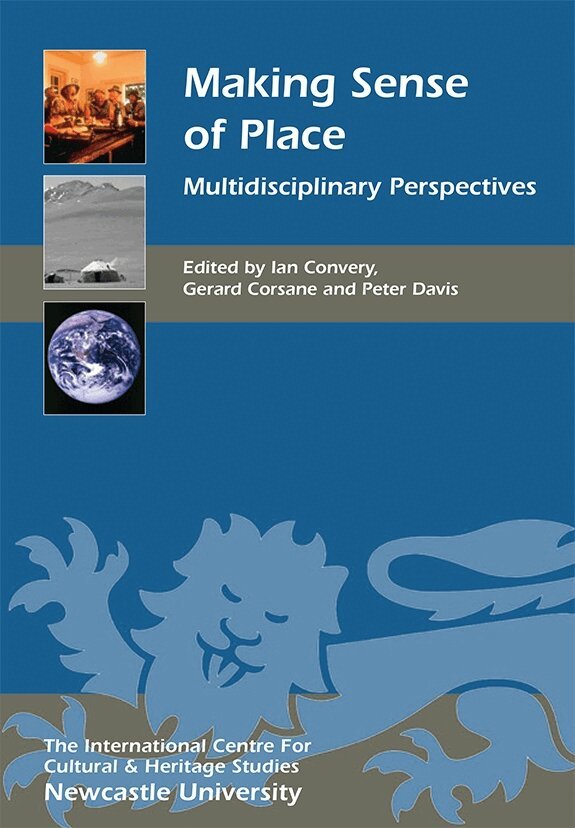
Essays dealing with the question of how "sense of place" is constructed, in a variety of locations and media.The term "sense of place" is an important multidisciplinary concept, used to understand the complex processes through which individuals and groups define themselves and their relationship to their natural and cultural environments, and which over the last twenty years or so has been increasingly defined, theorized and used across diverse disciplines in different ways. Sense of place mediates our relationship with the world and with each other; it providesa profoundly important foundation for individual and community identity. It can be an intimate, deeply personal experience yet also something which we share with others. It is at once recognizable but never constant; rather it isembodied in the flux between familiarity and difference. Research in this area requires culturally and geographically nuanced analyses, approaches that are sensitive to difference and specificity, event and locale.The essayscollected here, drawn from a variety of disciplines (including but not limited to sociology, history, geography, outdoor education, museum and heritage studies, health, and English literature), offer an international perspectiveon the relationship between people and place, via five interlinked sections (Histories, Landscapes and Identities; Rural Sense of Place; Urban Sense of Place; Cultural Landscapes; Conservation, Biodiversity and Tourism).Ian Convery is Reader in Conservation and Forestry, National School of Forestry, University of Cumbria; Gerard Corsane is Senior Lecturer in Heritage, Museum and Galley Studies, International Centre for Cultural and Heritage Studies, Newcastle University; Peter Davis is Professor of Museology, International Centre for Cultural and Heritage Studies, Newcastle University.Contributors: Doreen Massey, Ian Convery, Gerard Corsane, Peter Davis, David Storey, Mark Haywood, Penny Bradshaw, Vincent O'Brien, Michael Woods, Jesse Heley, Carol Richards, Suzie Watkin, Lois Mansfield, Kenesh Djusipov, Tamara Kudaibergonova, Jennifer Rogers, Eunice Simmons, Andrew Weatherall, Amanda Bingley, Michael Clark, Rhiannon Mason, Chris Whitehead, Helen Graham, Christopher Hartworth, Joanne Hartworth, Ian Thompson, Paul Cammack, Philippe Dubé, Josie Baxter, Maggie Roe, Lyn Leader-Elliott, John Studley, Stephanie K.Hawke, D. Jared Bowers, Mark Toogood, Owen T. Nevin, Peter Swain, Rachel M. Dunk, Mary-Ann Smyth, Lisa J. Gibson, Stefaan Dondeyne, Randi Kaarhus, Gaia Allison, Ellie Lindsay, Andrew Ramsay
Del 16 - Heritage Matters
Displaced Heritage
Responses to Disaster, Trauma, and Loss
Inbunden, Engelska, 2014
1 442 kr
Skickas inom 7-10 vardagar
Considerations of the effect of trauma on heritage sites.The essays in this volume address the displacement of natural and cultural heritage caused by disasters, whether they be dramatic natural impacts or terrible events unleashed by humankind, including holocaust and genocide. Disasters can be natural or human-made, rapid or slow, great or small, yet the impact is effectively the same; nature, people and cultural heritage are displaced or lost. Yet while heritage and place are at risk from disasters, in time,sites of suffering are sometimes reframed as sites of memory; through this different lens these "difficult" places become heritage sites that attract tourists. Ranging widely chronologically and geographically, the contributors explore the impact of disasters, trauma and suffering on heritage and sense of place, in both theory and practice.Contributors: Kai Erikson, Catherine Roberts, Philip R. Stone, Stephen Miles, Susannah Eckersley, Gerard Corsane, Graeme Were, Jo Besley, Tim Padley, Chia-Li Chen, Jonathan Skinner, Diana Walters, Shalini Sharma, Ellie Land, Rob Morley, Ian Convery, John Welshman, Aron Mazel, Andrew Law, Bryony Onciul, Sarah Elliott, Rebecca Whittle,Will Medd, Maggie Mort, Hugh Deeming, Marion Walker, Clare Twigger-Ross, Gordon Walker, Nigel Watson, Richard Johnson, Esther Edwards, James Gardner, Brij Mohan, Josephine Baxter, Takashi Harada, Arthur McIvor, Rupert Ashmore, Peter Lurz, Marc Ancrenaz, Isabelle Lackman, Özgün Emre Can, Bryndís Snæbjörnsdóttir, Mark Wilson, Pat Caplan, Billy Sinclar, Phil O'KeefeDigital editions of this book are openly available under the Creative Commons license CC BY-NC-ND.