Steve Carver – författare
994 kr
Skickas inom 7-10 vardagar
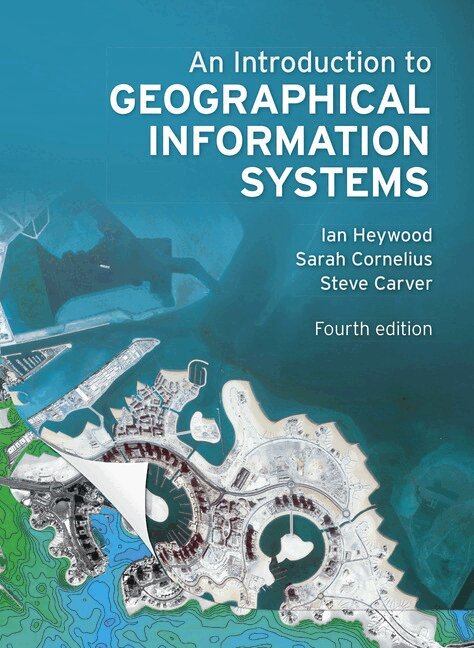
The fourth edition of this highly regarded and successful text continues to provide a clear and accessible introduction to the world of GIS for students and professionals. With an increased focus on the practical applications of GIS, the new edition features a wealth of new multi-disciplinary case studies and examples of GIS in practice, demonstrating how it is used worldwide and within a variety of different industries.
Furthermore, the new edition has been substantially revised and updated to include coverage of the latest advances in GIS such as web and mobile applications.
An Introduction to Geographical Information Systems is suitable for students of Geographical Information studies at all levels, from undergraduate to professionals retraining in GIS.
633 kr
Läs direkt efter köp
The full text downloaded to your computer
With eBooks you can:
search for key concepts, words and phrases make highlights and notes as you study share your notes with friendseBooks are downloaded to your computer and accessible either offline through the Bookshelf (available as a free download), available online and also via the iPad and Android apps.
Upon purchase, you''ll gain instant access to this eBook.
Time limit
The eBooks products do not have an expiry date. You will continue to access your digital ebook products whilst you have your Bookshelf installed.
The 4th Edition of this highly regarded and successful text continues to provide a clear and accessible introduction to the world of GIS for students and professionals. With an increased focus on the practical applications of GIS, the new edition features a wealth of new multi-disciplinary case studies and examples of GIS in practice, demonstrating how it is used worldwide and within a variety of different industries.
Furthermore, the new edition has been substantially revised and updated to include coverage of the latest advances in GIS such as web and mobile applications.
An Introduction to Geographical Information Systems is suitable for students of Geographical Information studies at all levels, from undergraduate to professionals retraining in GIS.
3 322 kr
Skickas inom 10-15 vardagar
698 kr
Skickas inom 10-15 vardagar
740 kr
Skickas inom 10-15 vardagar
3 886 kr
Skickas inom 10-15 vardagar
727 kr
Läs direkt efter köp
This handbook provides a comprehensive overview of the history, theory, and current practices of rewilding.
Rewilding offers a transformational paradigm shift in conservation thinking, and as such is increasingly of interest to academics, policymakers, and practitioners. However, as a rapidly emerging area of conservation, the term has often been defined and used in a variety of different ways (both temporally and spatially). There is, therefore, the need for a comprehensive assessment of this field, and the Routledge Handbook of Rewilding fills this lacuna. The handbook is organised into four sections to reflect key areas of rewilding theory, practice, and debate: the evolution of rewilding, theoretical and practical underpinnings, applications and impacts, and the ethics and philosophy of rewilding. Drawing on a range of international case studies the handbook addresses many of the key issues, including land acquisition and longer-term planning, transitioning from restoration (human-led, nature enabled) to rewilding (nature-led, human enabled), and the role of political and social transformational change.
Led by an editorial team who have extensive experience researching and practising rewilding, this handbook is essential reading for students, academics and practitioners interested in rewilding, ecological restoration, natural resource management and conservation.
727 kr
Läs direkt efter köp
This handbook provides a comprehensive overview of the history, theory, and current practices of rewilding.
Rewilding offers a transformational paradigm shift in conservation thinking, and as such is increasingly of interest to academics, policymakers, and practitioners. However, as a rapidly emerging area of conservation, the term has often been defined and used in a variety of different ways (both temporally and spatially). There is, therefore, the need for a comprehensive assessment of this field, and the Routledge Handbook of Rewilding fills this lacuna. The handbook is organised into four sections to reflect key areas of rewilding theory, practice, and debate: the evolution of rewilding, theoretical and practical underpinnings, applications and impacts, and the ethics and philosophy of rewilding. Drawing on a range of international case studies the handbook addresses many of the key issues, including land acquisition and longer-term planning, transitioning from restoration (human-led, nature enabled) to rewilding (nature-led, human enabled), and the role of political and social transformational change.
Led by an editorial team who have extensive experience researching and practising rewilding, this handbook is essential reading for students, academics and practitioners interested in rewilding, ecological restoration, natural resource management and conservation.
844 kr
Läs direkt efter köp
844 kr
Läs direkt efter köp