Ian Cross – författare
Visar alla böcker från författaren Ian Cross. Handla med fri frakt och snabb leverans.
12 produkter
12 produkter
E-bok
PDF, Engelska, 2016636 kr
Läs direkt efter köp
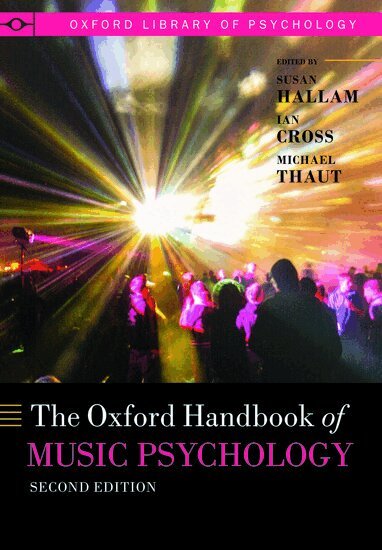
The second edition of The Oxford Handbook of Music Psychology updates the original landmark text and provides a comprehensive review of the latest developments in this fast-growing area of research. Covering both experimental and theoretical perspectives, each of the 11 sections is edited by an internationally recognised authority in the area.The first ten parts present chapters that focus on specific areas of music psychology: the origins and functions of music; music perception, responses to music; music and the brain; musical development; learning musical skills; musical performance; composition and improvisation; the role of music in everyday life; and music therapy. In each part authors critically review the literature, highlight current issues and explore possibilities for the future.The final part examines how, in recent years, the study of music psychology has broadened to include a range of other disciplines. It considers the way that research has developed in relation to technological advances, and points the direction for further development in the field. With contributions from internationally recognised experts across 55 chapters, it is an essential resource for students and researchers in psychology and musicology.
E-bok
Engelska, 2016636 kr
Läs direkt efter köp
The second edition of The Oxford Handbook of Music Psychology updates the original landmark text and provides a comprehensive review of the latest developments in this fast-growing area of research. Covering both experimental and theoretical perspectives, each of the 11 sections is edited by an internationally recognised authority in the area.The first ten parts present chapters that focus on specific areas of music psychology: the origins and functions of music; music perception, responses to music; music and the brain; musical development; learning musical skills; musical performance; composition and improvisation; the role of music in everyday life; and music therapy. In each part authors critically review the literature, highlight current issues and explore possibilities for the future.The final part examines how, in recent years, the study of music psychology has broadened to include a range of other disciplines. It considers the way that research has developed in relation to technological advances, and points the direction for further development in the field. With contributions from internationally recognised experts across 55 chapters, it is an essential resource for students and researchers in psychology and musicology.
E-bok
PDF, Engelska, 2011422 kr
Läs direkt efter köp
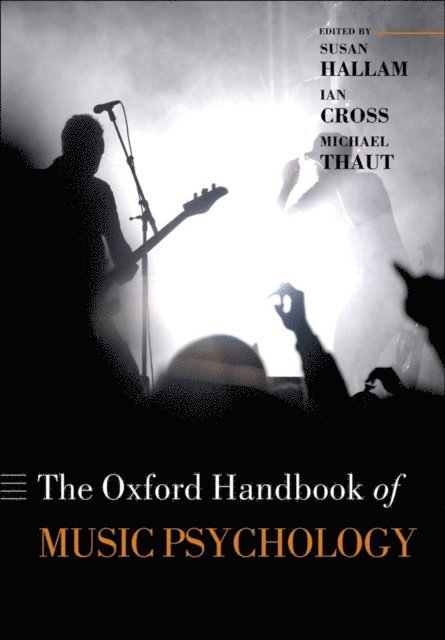
The field of Music Psychology has grown dramatically in the past 20 years, to emerge from being just a minor topic to one of mainstream interest within the brain sciences. However, until now, there has been no comprehensive reference text in the field. The Oxford Handbook of Music Psychology is a landmark text providing, for the first time ever, a comprehensive overview of the latest developments in this fast-growing area of research. With contributions from over fifty experts in the field, the range and depth of coverage is unequalled. All the chapters combine a solid review of the relevant literature with well-reasoned arguments and robust discussions of the major findings, as well as original insights and suggestions for future work. Written by leading experts, the 52 chapters are divided into 11 sections covering both experimental and theoretical perspectives, each edited by an internationally recognised authority Ten sections each present chapters that focus on specific areas of music psychology: - the origins and functions of music- music perception- responses to music- music and the brain- musical development- learning musical skills- musical performance- composition and improvisation- the role of music in our everyday lives - music therapy and conceptual frameworks In each section, expert authors critically review the literature, highlight current issues, and explore possibilities for the future. The final section examines how in recent years the study of music psychology has broadened to include a range of other scientific disciplines. It considers the way that the research has developed in relation to technological advances, fostering links across the field and providing an overview of the areas where the field needs further development in the future.The Oxford Handbook of Music Psychology will be the essential reference text for students and researchers across psychology and neuroscience.
E-bok
Engelska, 2011422 kr
Läs direkt efter köp
The field of Music Psychology has grown dramatically in the past 20 years, to emerge from being just a minor topic to one of mainstream interest within the brain sciences. However, until now, there has been no comprehensive reference text in the field. The Oxford Handbook of Music Psychology is a landmark text providing, for the first time ever, a comprehensive overview of the latest developments in this fast-growing area of research. With contributions from over fifty experts in the field, the range and depth of coverage is unequalled. All the chapters combine a solid review of the relevant literature with well-reasoned arguments and robust discussions of the major findings, as well as original insights and suggestions for future work. Written by leading experts, the 52 chapters are divided into 11 sections covering both experimental and theoretical perspectives, each edited by an internationally recognised authority Ten sections each present chapters that focus on specific areas of music psychology: - the origins and functions of music- music perception- responses to music- music and the brain- musical development- learning musical skills- musical performance- composition and improvisation- the role of music in our everyday lives - music therapy and conceptual frameworks In each section, expert authors critically review the literature, highlight current issues, and explore possibilities for the future. The final section examines how in recent years the study of music psychology has broadened to include a range of other scientific disciplines. It considers the way that the research has developed in relation to technological advances, fostering links across the field and providing an overview of the areas where the field needs further development in the future.The Oxford Handbook of Music Psychology will be the essential reference text for students and researchers across psychology and neuroscience.
E-bok
PDF, Engelska, 2011715 kr
Läs direkt efter köp
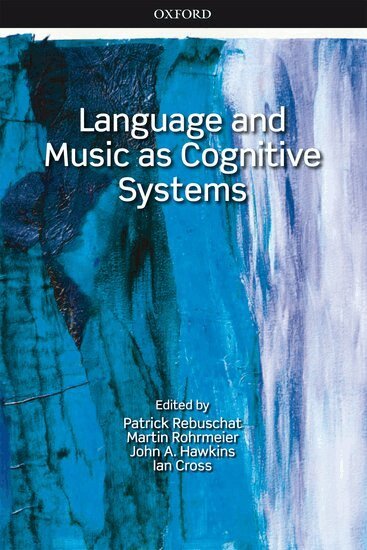
The past 15 years have witnessed an increasing interest in the comparative study of language and music as cognitive systems. Language and music are uniquely human traits, so it is not surprising that this interest spans practically all branches of cognitive science, including psychology, computer science, linguistics, cognitive neuroscience, and education. Underlying the study of language and music is the assumption that the comparison of these two domains can shedlight on the structural and functional properties of each, while also serving as a test case for theories of how the mind and, ultimately, the brain work.This book presents an interdisciplinary study of language and music, bringing together a team of leading specialists across these fields. The volume is structured around four core areas in which the study of music and language has been particularly fruitful: (i) structural comparisons, (ii) evolution, (iii) learning and processing, and (iv) neuroscience. As such it provides a snapshot of the different research strands that have focused on language and music, identifying current trends andmethodologies that have been (or could be) applied to the study of both domains, and outlining future research directions. This volume is valuable in promoting the investigation of language and music by fostering interdisciplinary discussion and collaboration.With an ever increasing interest in both music cognition and language, this book will be valuable for students and researchers of psychology, linguistics, neuroscience, and musicology.
E-bok
Engelska, 2011715 kr
Läs direkt efter köp
The past 15 years have witnessed an increasing interest in the comparative study of language and music as cognitive systems. Language and music are uniquely human traits, so it is not surprising that this interest spans practically all branches of cognitive science, including psychology, computer science, linguistics, cognitive neuroscience, and education. Underlying the study of language and music is the assumption that the comparison of these two domains can shedlight on the structural and functional properties of each, while also serving as a test case for theories of how the mind and, ultimately, the brain work.This book presents an interdisciplinary study of language and music, bringing together a team of leading specialists across these fields. The volume is structured around four core areas in which the study of music and language has been particularly fruitful: (i) structural comparisons, (ii) evolution, (iii) learning and processing, and (iv) neuroscience. As such it provides a snapshot of the different research strands that have focused on language and music, identifying current trends andmethodologies that have been (or could be) applied to the study of both domains, and outlining future research directions. This volume is valuable in promoting the investigation of language and music by fostering interdisciplinary discussion and collaboration.With an ever increasing interest in both music cognition and language, this book will be valuable for students and researchers of psychology, linguistics, neuroscience, and musicology.
Häftad, Engelska, 2017
849 kr
Skickas
The second edition of The Oxford Handbook of Music Psychology updates the original landmark text and provides a comprehensive review of the latest developments in this fast-growing area of research. Covering both experimental and theoretical perspectives, each of the 11 sections is edited by an internationally recognised authority in the area.The first ten parts present chapters that focus on specific areas of music psychology: the origins and functions of music; music perception, responses to music; music and the brain; musical development; learning musical skills; musical performance; composition and improvisation; the role of music in everyday life; and music therapy. In each part authors critically review the literature, highlight current issues and explore possibilities for the future.The final part examines how, in recent years, the study of music psychology has broadened to include a range of other disciplines. It considers the way that research has developed in relation to technological advances, and points the direction for further development in the field. With contributions from internationally recognised experts across 55 chapters, it is an essential resource for students and researchers in psychology and musicology.
Häftad, Engelska, 2011
1 164 kr
Skickas inom 7-10 vardagar
The past 15 years have witnessed an increasing interest in the comparative study of language and music as cognitive systems. Language and music are uniquely human traits, so it is not surprising that this interest spans practically all branches of cognitive science, including psychology, computer science, linguistics, cognitive neuroscience, and education. Underlying the study of language and music is the assumption that the comparison of these two domains can shed light on the structural and functional properties of each, while also serving as a test case for theories of how the mind and, ultimately, the brain work.This book presents an interdisciplinary study of language and music, bringing together a team of leading specialists across these fields. The volume is structured around four core areas in which the study of music and language has been particularly fruitful: (i) structural comparisons, (ii) evolution, (iii) learning and processing, and (iv) neuroscience. As such it provides a snapshot of the different research strands that have focused on language and music, identifying current trends and methodologies that have been (or could be) applied to the study of both domains, and outlining future research directions. This volume is valuable in promoting the investigation of language and music by fostering interdisciplinary discussion and collaboration.With an ever increasing interest in both music cognition and language, this book will be valuable for students and researchers of psychology, linguistics, neuroscience, and musicology.
E-bok
Engelska, 20042 164 kr
Läs direkt efter köp
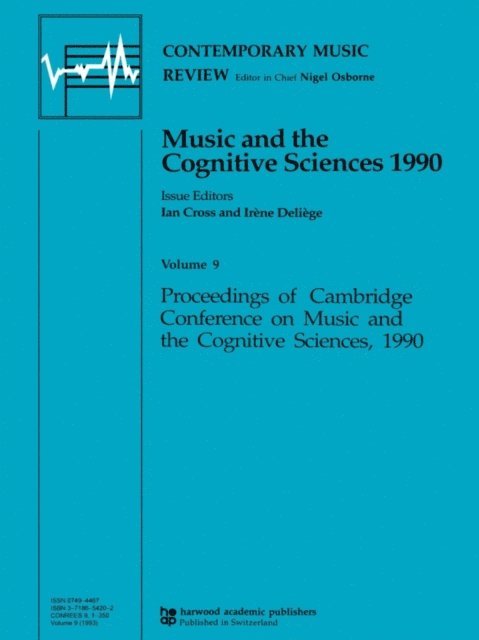
This issue comprises the twenty-five papers presented at the Second Music and the Cognitive Sciences conference held at Cambridge University in 1990.
E-bok
PDF, Engelska, 20042 164 kr
Läs direkt efter köp
This issue comprises the twenty-five papers presented at the Second Music and the Cognitive Sciences conference held at Cambridge University in 1990.
Inbunden, Engelska, 2017
2 919 kr
Skickas inom 10-15 vardagar
This issue comprises the twenty-five papers presented at the Second Music and the Cognitive Sciences conference held at Cambridge University in 1990.
Häftad, Engelska, 1994
1 827 kr
Skickas inom 10-15 vardagar
This issue comprises the twenty-five papers presented at the Second Music and the Cognitive Sciences conference held at Cambridge University in 1990.