Ian Morris – författare
Visar alla böcker från författaren Ian Morris. Handla med fri frakt och snabb leverans.
52 produkter
Why The West Rules - For Now
The Patterns of History and what they reveal about the Future
Av Ian Morris
Häftad, 2011
171 kr
Lägg i varukorg
In the middle of the eighteenth century, British entrepreneurs unleashed the astounding energies of steam and coal and the world changed forever. Factories, railways and gunboats then propelled the West's rise to power, and computers and nuclear weapons in the twentieth century secured its global …
War: What is it good for?
The role of conflict in civilisation, from primates to robots
Av Ian Morris
Häftad, 2015
171 kr
Lägg i varukorg
War is one of the greatest human evils. It has ruined livelihoods, provoked unspeakable atrocities and left countless millions dead. It has caused economic chaos and widespread deprivation. And the misery it causes poisons foreign policy for future generations. But, argues bestselling historian Ian …
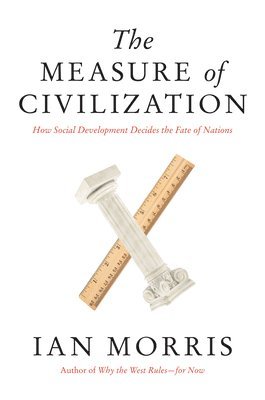
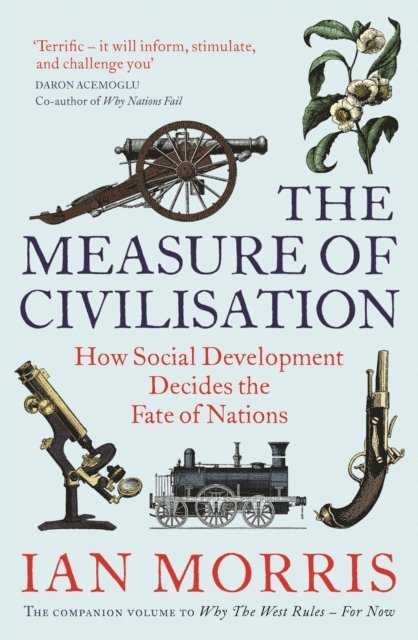
The Measure of Civilization
How Social Development Decides the Fate of Nations
Av Ian Morris
Inbunden, 2013
457 kr
Lägg i varukorg
Over the years, there have been fierce debates over how civilizations develop and why the West became so powerful. Using a numerical index of social development that compares societies in different times and places, the author gives a sweeping examination of Eastern and Western development across …
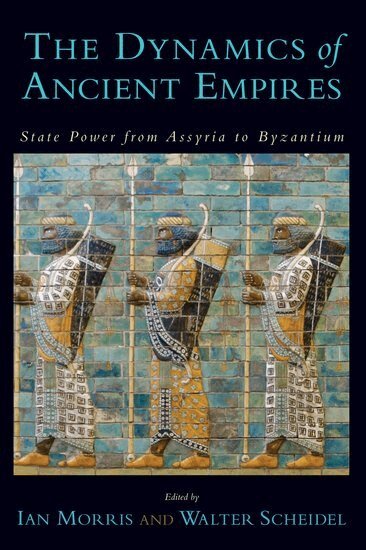
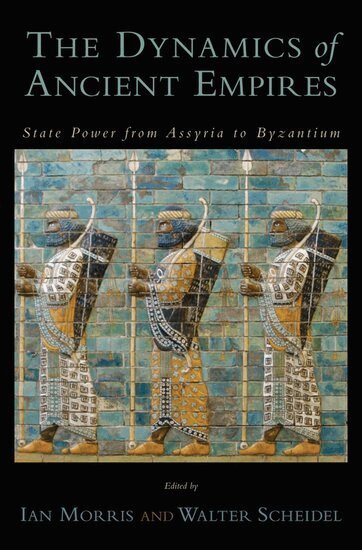
The Dynamics of Ancient Empires
State Power from Assyria to Byzantium
Av Ian Morris, Walter Scheidel
Häftad, 2010
854 kr
Lägg i varukorg
Transcending ethnic, linguistic, and religious boundaries, early empires shaped thousands of years of world history. Yet despite the global prominence of empire, individual cases are often studied in isolation. This series seeks to change the terms of the debate by promoting cross-cultural, …
Foragers, Farmers, and Fossil Fuels
How Human Values Evolve
Inbunden, 2015
263 kr
Lägg i varukorg
Most people in the world today think democracy and gender equality are good, and that violence and wealth inequality are bad. But most people who lived during the 10,000 years before the nineteenth century thought just the opposite. Drawing on archaeology, anthropology, biology, and history, Ian …
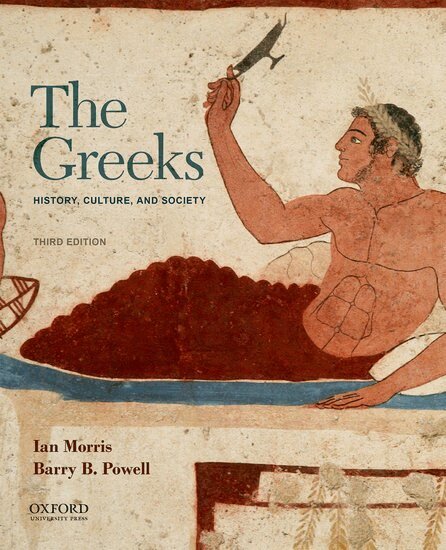
The Greeks
History, Culture, and Society
Av Ian Morris, Barry B. Powell
Häftad, 2022
1211 kr
Tillfälligt slut
In The Greeks, Ian Morris and Barry B. Powell try to see ancient Greece as a whole: not just a narrative of events or an overview of culture, but history and culture taken together. From ancient Greece comes the modern conviction that through open discussion and the exercise of reason a society of …
Geography Is Destiny
Britain and the World, a 10,000 Year History
Av Ian Morris
Häftad, 2023
149 kr
Lägg i varukorg
'Ian Morris has established himself as a leader in making big history interesting and understandable' Jared Diamond, author of Guns, Germs and Steel'Morris succeeds triumphantly at cramming 10,000 years of history into a single book' Robert Colvile, The TimesFor hundreds of years, Britannia ruled …
Why the West Rules For Now
The Patterns of History, and What They Reveal About the Future
Av Ian Morris
Häftad, 2011
339 kr
Lägg i varukorg
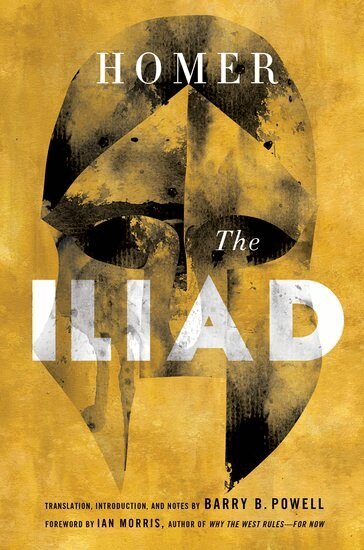
The Iliad
Av Homer, Ian Morris
Inbunden, 2013
471 kr
Lägg i varukorg
Homer's Iliad is one of the foundational texts of Western Civilization. The timelessness of its story, of men battling fate amidst the horrors of war, still stirs the imaginations of readers year after year. What is offered here is the first translation by someone who is both an eminent scholar and …
Measure of Civilisation
How Social Development Decides the Fate of Nations
Av Ian Morris
E-bok, 2013
162 kr
Lägg i varukorg
In Why the West Rules - For Now Ian Morris argues that to understand the development of East and West, we need to look beyond ''long-term lock-in'' theories (that suggest it was inevitable) and ''short-term accident'' theories. Instead, we need to measure social development - a group''s ability to …
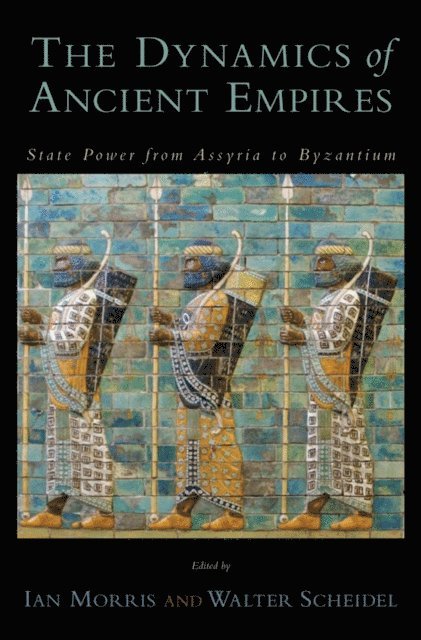
The Dynamics of Ancient Empires
State Power from Assyria to Byzantium
Av Ian Morris, Walter Scheidel m. fl.
Inbunden, 2009
2422 kr
Lägg i varukorg
The world's first known empires took shape in Mesopotamia between the eastern shores of the Mediterranean Sea and the Persian Gulf, beginning around 2350 BCE. The next 2,500 years witnessed sustained imperial growth, bringing a growing share of humanity under the control of ever-fewer states. Two …
Greeks
History, Culture, and Society
Av Barry B. Powell, Ian Morris
E-bok, 2021
697 kr
Lägg i varukorg
In The Greeks, Ian Morris and Barry B. Powell try to see ancient Greece as a whole: not just a narrative of events or an overview of culture, but history and culture taken together. From ancient Greece comes the modern conviction that through open discussion and the exercise of reason a society of …
Dynamics of Ancient Empires
State Power from Assyria to Byzantium
Av Walter Scheidel, Ian Morris
E-bok, 2009
661 kr
Lägg i varukorg
The world''s first known empires took shape in Mesopotamia between the eastern shores of the Mediterranean Sea and the Persian Gulf, beginning around 2350 BCE. The next 2,500 years witnessed sustained imperial growth, bringing a growing share of humanity under the control of ever-fewer states. Two …
Dynamics of Ancient Empires
State Power from Assyria to Byzantium
Av Walter Scheidel, Ian Morris
E-bok, 2009
661 kr
Lägg i varukorg
The world''s first known empires took shape in Mesopotamia between the eastern shores of the Mediterranean Sea and the Persian Gulf, beginning around 2350 BCE. The next 2,500 years witnessed sustained imperial growth, bringing a growing share of humanity under the control of ever-fewer states. Two …
Little Magazine in Contemporary America
Häftad, 2015
308 kr
Lägg i varukorg
Little magazines have often showcased the best new writing in America. Historically, they have served the dual functions of representing the avant-garde of literary expression while also helping many emerging writers become established authors. Although the changing technology and increasingly …
Little Magazine in Contemporary America
Inbunden, 2015
879 kr
Lägg i varukorg
Little magazines have often showcased the best new writing in America. Historically, they have served the dual functions of representing the avant-garde of literary expression while also helping many emerging writers become established authors. Although the changing technology and increasingly …
Initial Steps in Rebuilding the Health Sector in East Timor
Av Jim Tulloch, Fadia Saadah m. fl.
E-bok, 2003
407 kr
Lägg i varukorg
In May 2002 Timor Leste (East Timor) emerged as a new nation after centuries of foreign rule and decades of struggle for independence. Its birth was a painful one; a United Nations-brokered Popular Consultation in August 1999, in which an overwhelming majority of the people opted for independence, …
Initial Steps in Rebuilding the Health Sector in East Timor
Av Jim Tulloch, Fadia Saadah m. fl.
E-bok, 2003
286 kr
Lägg i varukorg
In May 2002 Timor Leste (East Timor) emerged as a new nation after centuries of foreign rule and decades of struggle for independence. Its birth was a painful one; a United Nations-brokered Popular Consultation in August 1999, in which an overwhelming majority of the people opted for independence, …
Geography Is Destiny
Britain and the World: A 10,000-Year History
Av Ian Morris
E-bok, 2022
205 kr
Lägg i varukorg
In the wake of Brexit, Ian Morris chronicles the ten-thousand-year history of Britain''s relationship to Europe as it has changed in the context of a globalizing world. When Britain voted to leave the European Union in 2016, the 48 percent who wanted to stay and the 52 percent who wanted to go each …
Death-Ritual and Social Structure in Classical Antiquity
Av Ian Morris, P. A. Cartledge
Häftad, 1992
687 kr
Lägg i varukorg
In this innovative book Dr Morris seeks to show the many ways in which the excavated remains of burials can and should be a major source of evidence for social historians of the ancient Graeco-Roman world. Burials have a far wider geographical and social range than the surviving literary texts, …
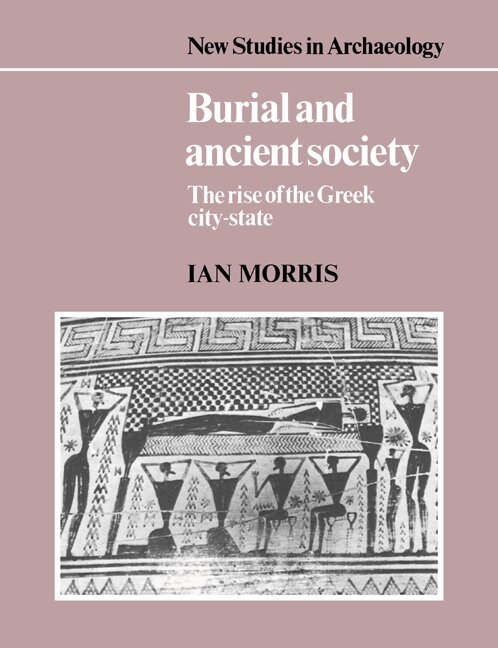
Burial and Ancient Society
The Rise of the Greek City-State
Av Ian Morris, Colin Renfrew m. fl.
Häftad, 1990
636 kr
Lägg i varukorg
This study of the changing relationships between burial rituals and social structure in Early Iron Age Greece will be required reading for all archaeologists working with burial evidence, in whatever period. This book differs from many topical studies of state formation in that unique and …
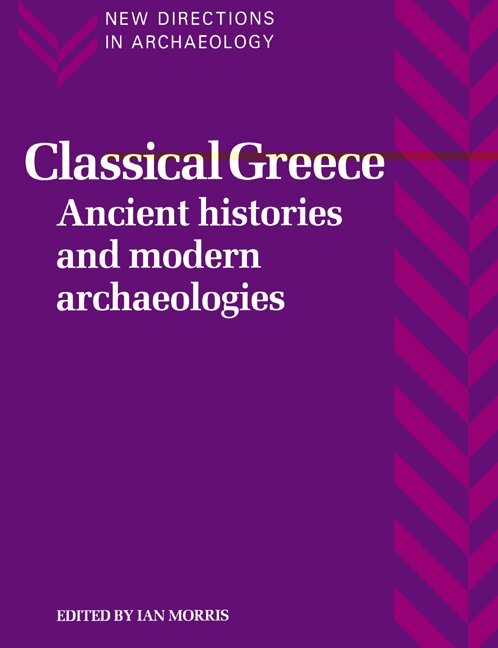
Classical Greece
Ancient Histories and Modern Archaeologies
Av Ian Morris
Häftad, 1994
677 kr
Lägg i varukorg
The archaeology of classical Greece developed in the shadow of Greek historical scholarship, and it has restricted itself too modestly to the study of individual artefacts. A wide variety of modern developments in archaeology have been neglected, and classical archaeology has become something of a …
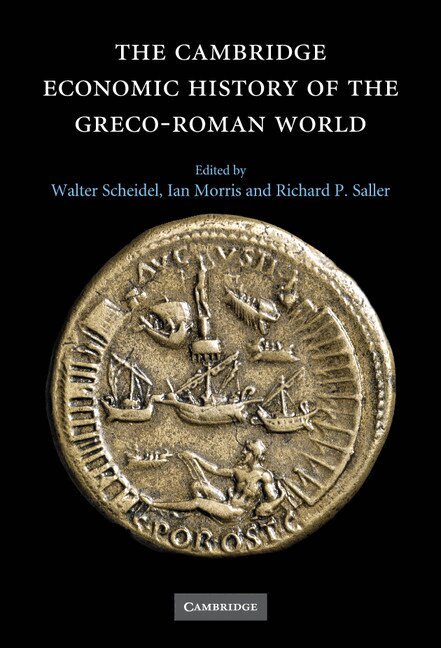
The Cambridge Economic History of the Greco-Roman World
Av Walter Scheidel, Ian Morris m. fl.
Inbunden, 2007
3875 kr
Lägg i varukorg
In this, the first comprehensive one-volume survey of the economies of classical antiquity, twenty-eight chapters summarise the current state of scholarship in their specialised fields and sketch new directions for research. The approach taken is both thematic, with chapters on the underlying …
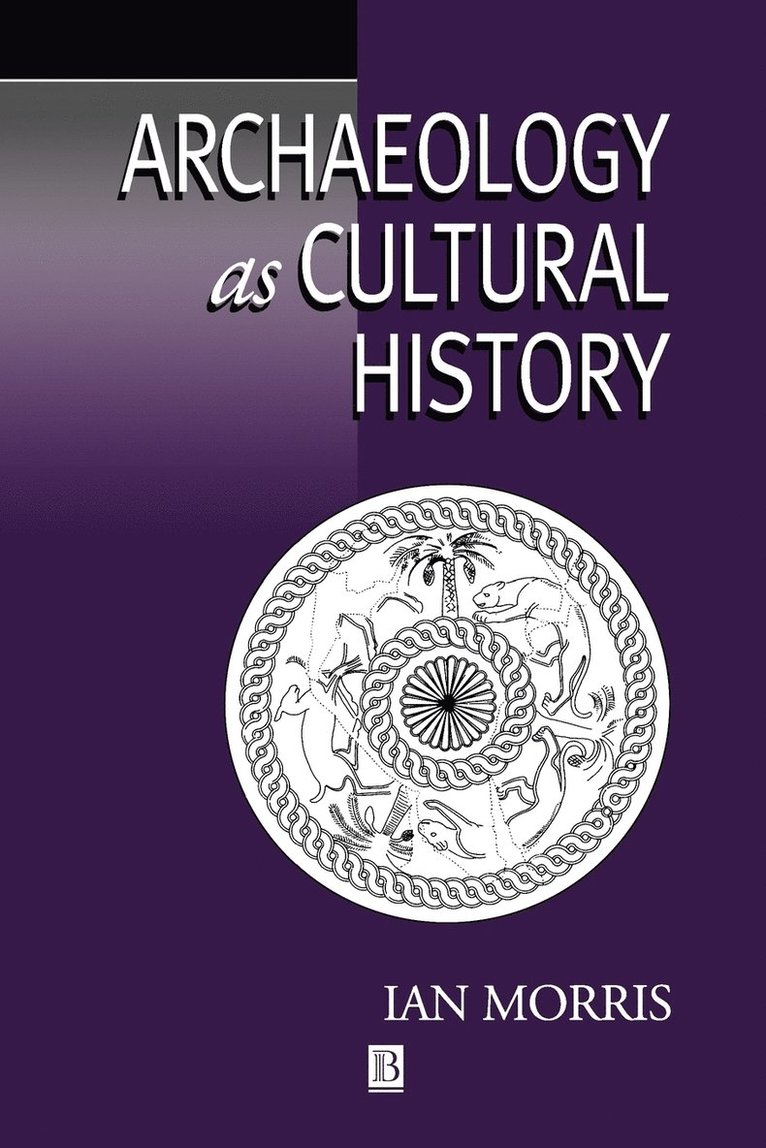
Archaeology as Cultural History
Words and Things in Iron Age Greece
Av Ian Morris
Häftad, 2000
756 kr
Lägg i varukorg
This book shows the reader how much archaeologists can learn from recent developments in cultural history.
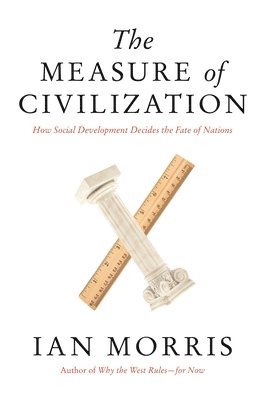
The Measure of Civilization
How Social Development Decides the Fate of Nations
Av Ian Morris
Häftad, 2014
238 kr
Lägg i varukorg
In the last thirty years, there have been fierce debates over how civilizations develop and why the West became so powerful. This book presents a way of investigating these questions and provides tools for assessing the long-term growth of societies.
Foragers, Farmers, and Fossil Fuels
How Human Values Evolve
Häftad, 2017
220 kr
Lägg i varukorg
Most people in the world today think democracy and gender equality are good, and that violence and wealth inequality are bad. But most people who lived during the 10,000 years before the nineteenth century thought just the opposite. Drawing on archaeology, anthropology, biology, and history, Ian …
Ancient Economy
Evidence and Models
Häftad, 2007
354 kr
Lägg i varukorg
Historians and archaeologists normally assume that the economies of ancient Greece and Rome between about 1000 BC and AD 500 were distinct from those of Egypt and the Near East. However, very different kinds of evidence survive from each of these areas, and specialists have, as a result, developed …
When Bad Things Happen to Rich People
Av Ian Morris
Häftad, 2014
219 kr
Lägg i varukorg
When Bad Things Happen to Rich People is a novel of social satire, a black comedy set in Chicago in the summer of 1995. The novel's protagonist, Nix Walters, is an adjunct instructor of English at a communications college in the loop with few prospects for advancement. He had become a literary …
The Cambridge Economic History of the Greco-Roman World
Av Walter Scheidel, Ian Morris m. fl.
Häftad, 2012
955 kr
Lägg i varukorg
In this, the first comprehensive one-volume survey of the economies of classical antiquity, twenty-eight chapters summarise the current state of scholarship in their specialised fields and sketch new directions for research. The approach taken is both thematic, with chapters on the underlying …