Ignacio Acosta – författare
Visar alla böcker från författaren Ignacio Acosta. Handla med fri frakt och snabb leverans.
4 produkter
4 produkter
E-bok
PDF, Engelska, 2023209 kr
Läs direkt efter köp
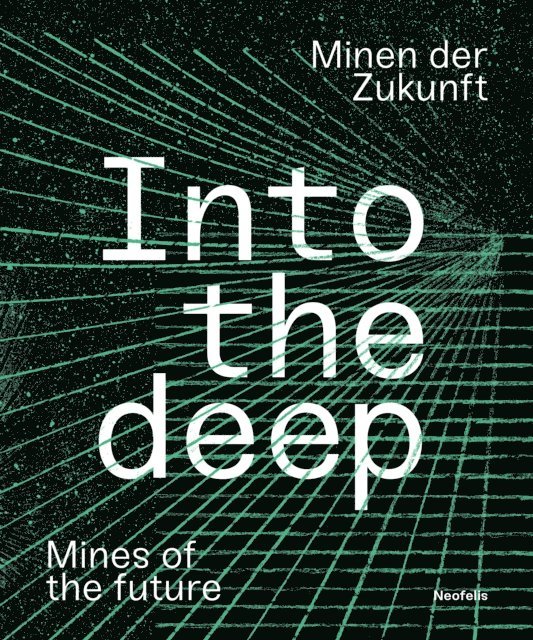
Der Abbau von Rohstoffen entwickelt sich in den letzten Jahrzehnten immer stärker zu einem ökologischen, ökonomischen, politischen und sozialen Problem mit globalen Auswirkungen. Extensive Abbaupraktiken und die Ausbeutung von Öko- und Sozialsystemen stellen eine der größten Umweltbelastungen unserer Zeit dar. Ihre Folgen sind vielerorts dramatisch, dennoch wird der Kampf um Ressourcen unvermindert fortgeführt. Da die Ressourcen auf der Erde endlich sind, wird nach immer neuen, teils surreal anmutenden Standorten gesucht, so wie beim Deep Sea Mining und Deep Space Mining.Into the deep wirft einen kritischen Blick auf die Geschichte und Gegenwart der Extraktion von Rohstoffen, die untrennbar mit Umweltzerstörung und Kolonialismus verbunden ist. Die vielschichtigen Zusammenhänge des Rohstoffabbaus in der Tiefsee und im Weltall werden beleuchtet, ebenso wie Formen von Widerstand und Aktivismus gegen die Ausbeutung von Menschen und Umwelt. In Anlehnung an die Industriegeschichte Friedrichshafens gerät zudem der Rohstoff Aluminium in den Fokus, das Metall des Fliegens, das bei seiner energieaufwändigen Gewinnung aus dem Gestein Bauxit neben Umweltschäden auch das giftige Abfallprodukt Rotschlamm verursacht.Mit Beiträgen von Ignacio Acosta, Agnes Bidmon, Jürgen Bleibler, Bureau d''études (Léonore Bonaccini & Xavier Fourt), Michael David, El Laboratorio de Artes Gráficas del Desierto de Atacama (LAGDA), Claudia Emmert, Charlotte Ickler, Armin Linke, Ina Neddermeyer, Kristina Õllek, Bethany Rigby, Frauke Stengel und Caroline Wind.***In recent decades, the extraction of raw materials has increasingly developed into an ecological, economic, political, and social problem of global proportions. Large-scale mining operations and the exploitation of ecological and social systems are one of the most serious threats facing the environment today. In many places, the effects are catastrophic and yet the fight over resources continues unabated. Since the resources on Earth are finite, there is a constant search for new mining sites that sometimes seem surreal, such as with deep-sea mining and deep-space mining.Into the deep takes a critical look at the history and present of the extraction of resources, which are inextricably linked to environmental destruction and colonialism. The many-layered complexities of mining for raw materials in the deep sea and in space are examined, as well as forms of resistance and activism against the exploitation of people and the environment. Drawing on Friedrichshafen''s history of industrialism, the exhibition also focuses on the raw material aluminium, the metal of flight, which requires large amounts of energy to be extracted from the rock bauxite and not only causes environmental damage, but also produces the toxic waste product red mud.With contributions by Ignacio Acosta, Agnes Bidmon, Jürgen Bleibler, Bureau d''études (Léonore Bonaccini & Xavier Fourt), Michael David, El Laboratorio de Artes Gráficas del Desierto de Atacama (LAGDA), Claudia Emmert, Charlotte Ickler, Armin Linke, Ina Neddermeyer, Kristina Õllek, Bethany Rigby, Frauke Stengel, and Caroline Wind.
E-bok
PDF, Engelska, 2020258 kr
Läs direkt efter köp
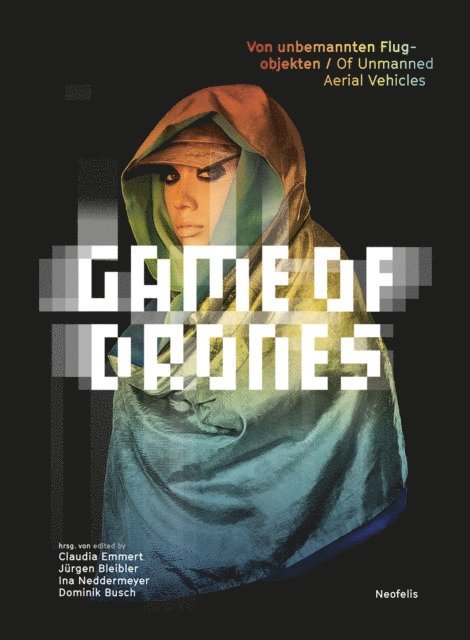
Drohnen sind unbemannte Flugobjekte, deren Größen so unterschiedlich sind wie ihr Aussehen und ihre Nutzung. Eingesetzt werden sie für unterschiedlichste zivile Zwecke: u.a. um schwer zugängliche Gebiete zu erreichen, zur Kontrolle von Grenzen, Überwachung, Datensammlung sowie in der Landwirtschaft und im Dienstleistungssektor. Sie liefern Künstler*innen, Fotograf*innen und Filmemacher*innen eindrucksvolle Aufnahmen und haben die Bildästhetik der Gegenwart revolutioniert.Drohnen gelten aber auch als die wichtigste Kriegstechnologie seit der Erfindung der Atombombe. Gegenwärtig sind Drohnen noch keine autonom operierenden Systeme, in Kombination mit Künstlicher Intelligenz können sie aber zu unheimlichen Waffen werden. Dieser Ausbau zu lernenden und autonom agierenden Maschinen wirft auch ethische Fragen auf.Die Publikation führt die Inhalte der Ausstellung Game of Drones. Von unbemannten Flugobjekten und einer Fachtagung im Zeppelin Museum Friedrichshafen zusammen, die verschiedene Aspekte historischer, aktueller und zukünftiger Drohnentechnologien in vertiefter Form analysieren. Verhandelt wurden gesellschaftlich relevante Fragestellungen anhand technikhistorischer Exponate und ausgewählter Werke internationaler Künstler*innen, die Drohnentechnologien auf unterschiedlichste Weise kritisch reflektieren.Heutige Drohnen sind Weiterentwicklungen von unbemannten Ballonen, Fernlenkwaffen und Modellflugzeugen. Ausgehend von dieser historischen Verortung beschäftigt sich die Publikation mit dem Einsatz von Drohnen und ihrer hybriden Funktion als Spielzeug, Kriegstechnologie und Wirtschaftsfaktor. Als eine Technologie, die absolute Gegensätze vereint, wird deren Widersprüchlichkeit in all ihren Facetten aufgezeigt: vom Überwachungsapparat zum Instrument des Widerstands und Protests, vom animistisch beseelten Objekt bis hin zum Einsatz in der strategischen Kriegsführung. Reflektiert werden dabei auch zukünftige Entwicklungen, wie Fragen zu transhumanem Bewusstsein und Künstlicher Intelligenz.
Häftad, Engelska, 2026
368 kr
Skickas inom 5-8 vardagar
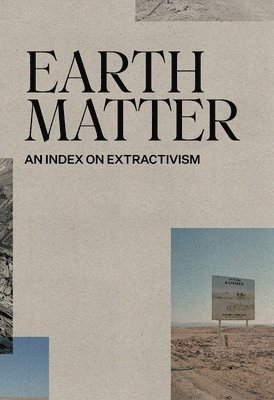
The culmination of over a decade of collaborative research exploring the global impact of extractivism, tied to the Traces of Nitrate project. Earth Matter delves into the history of extractivism in Chile, beginning with the nitrate mines in the Atacama Desert in the nineteenth century and extending to the ongoing extraction of copper, lithium, and water. Through photography, video, archival research, and personal interviews, artist-researchers Xavier Ribas, Ignacio Acosta, and activist-writer Louise Purbrick examine the interconnected forces that bind Chile’s natural resources to global capital, particularly in the financial district of London.This publication offers a critical analysis of how extractivist practices have shaped both historical and contemporary life, while anticipating future forms of exploitation. An index of terms explores past and present facts, documents, sites, projects, politicians, activists, NGOs, and critical writings, forming a Benjaminian constellation that readers can connect and decipher at their own pace.The book includes essays by scientist Cristina Dorador on life in extreme climates, politician and environmentalist Sara Larraín on the legal protection of glaciers, political theory professor Robert Nichols on the history of land expropriation related to extractivism, and art curator Carles Guerra. Earth Matter provides a comprehensive map of the forces driving the increasingly hegemonic system of resource extraction. It reflects not only on past struggles but also on the ongoing fight for justice in the face of an unrelenting global economy.Traces of Nitrate is an arts research collective led by Ignacio Acosta, Louise Purbrick, and Xavier Ribas, committed to documenting the extraction of minerals from Chile and their transformation in global capitalist systems. Through writing, photography, video, and sound, they seek to reveal the ecological and colonial legacies of mining and advocate for environmental justice.
Häftad, Engelska, 2019
362 kr
Skickas inom 5-8 vardagar