Igor Klatzo – författare
Visar alla böcker från författaren Igor Klatzo. Handla med fri frakt och snabb leverans.
8 produkter
8 produkter
Häftad, Engelska, 1997
1 114 kr
Skickas inom 10-15 vardagar
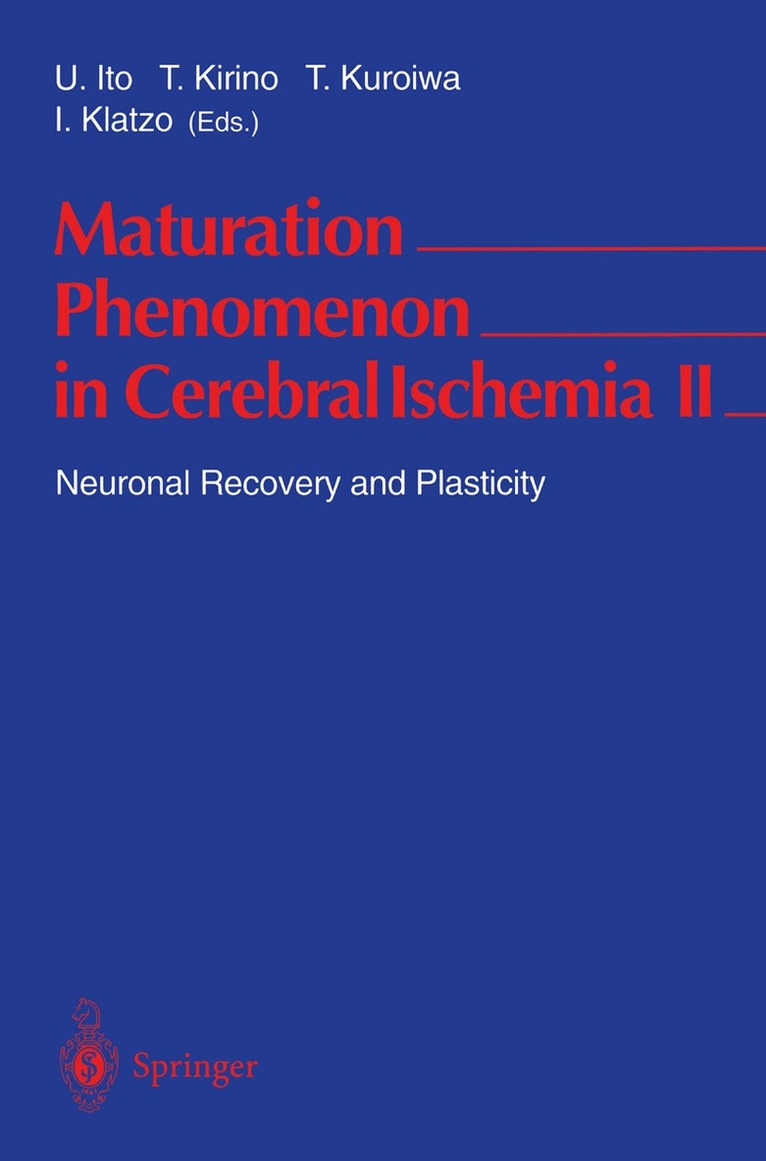
After an ischemic injury many nerve cells of the brain which are not killed outright may suffer delayed death or recovery. This fact has led to the concept of "maturation phenomenon" of neuronal injuries. Since the 1st International Symposium on Maturation Phenomenon in 1990, developments, particularly in molecular biology, have been bringing new information about the molecular nature and mechanisms of cell death. This text contains the presentations of the 2nd International Symposium held in Tokyo in April 1996. The latest developments in maturation phenomenon and the present status of investigation are described.
Häftad, Engelska, 1999
1 114 kr
Skickas inom 10-15 vardagar
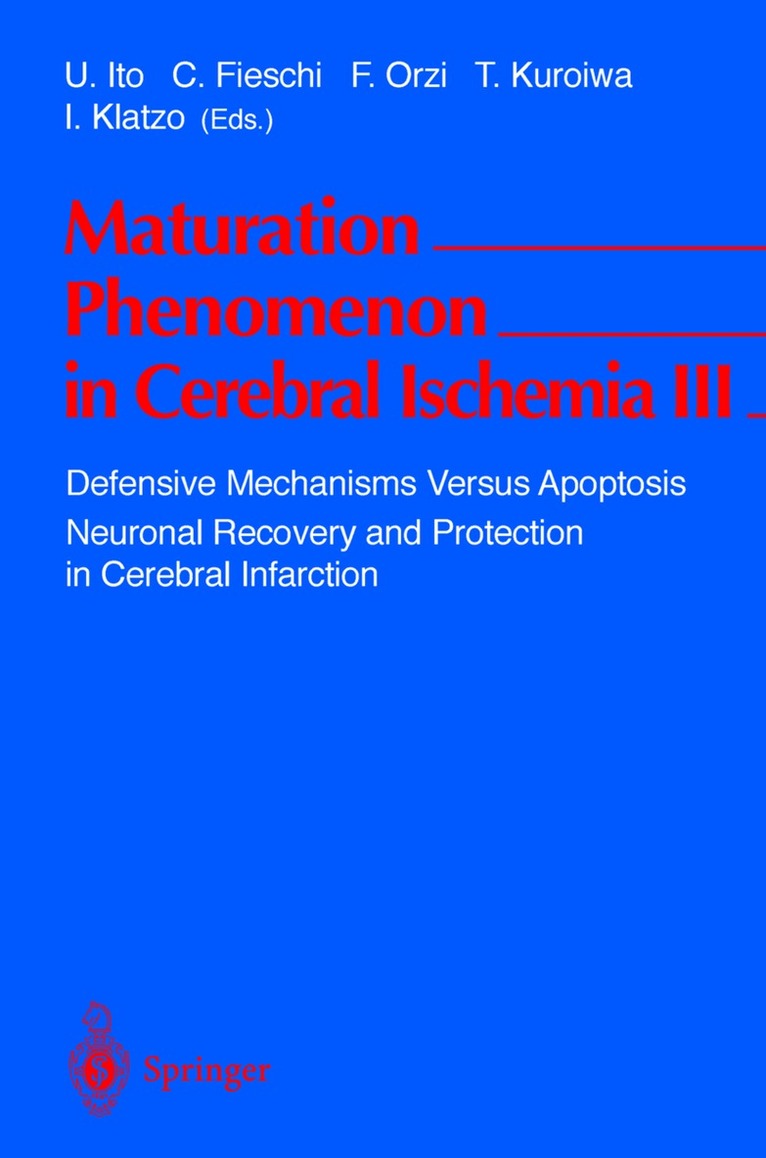
The maturation phenomenon refers to postischemic changes that develop hours or days following an ischemic insult. The delayed neuronal death of CA1 pyramidical cells of the hippocampus is a classic example. The report of the phenomenon has boosted research in this field, as it became evident that ischemic damage is not a sudden event but a process potentially susceptible to therapeutic intervention. In September 1990, the first international symposium on "Maturation Phenomenon in Cerebral Ischemia" was held in Tokyo. The second symposium was organized in Tokyo in March/April 1996. Since then, new developments have rapidly delivered information about the molecular nature and dynamics of mechanisms concerning cell death and recovery. This book contains the presentations of the 3rd international symposium held in Pozilly/Italy in April 1998. It outlines the present status of the investigation and provides further stimulation for research in this field.
E-bok
PDF, Engelska, 20121 408 kr
Läs direkt efter köp
The Maturation Phenomenon, described by Ito et al. in 1975 [3) on the basis of his to logical observations in the hippocampus as well as other portions of the cerebral hemisphere, refers to the hours or days of delay in the development of pathological changes in various parameters of ischemic injury following the restoration of blood flow to the ischemic brain. There is a direct relationship between the intensity of ischemic insult and the speed and rate of maturation of ischemic injury, a lesser intensity being associated with slower and less severe development of the lesions. The delayed neuronal death of CAl pyramidal cells of the hippocampus [8) is a classic example. In the cerebral cortex, with increasing intensity of the ischemic insult, the maturation phenomenon of ischemic injuries intensifies, seamlessly, from less exten sive to more extensive disseminated selective neuronal necrosis (DSNN), and then further to cerebral infarction upon reaching a critical threshold [1,2,4,6,7). We also have found that following ischemic insults just under the threshold level required to induce infarction, only disseminated selective neuronal necrosis (DSNN) progresses, while following ischemic insults at the threshold level, initially only DSNN develops, followed by the evolution of a gradually enlarging infarcted focus [5, 7). The reporting of this phenomenon boosted research in the field, as it became evi dent that ischemic damage is not a sudden event, but a process potentially susceptible to therapeutic intervention.
E-bok
PDF, Engelska, 20121 408 kr
Läs direkt efter köp
Many nerve cells of the brain which are not killed outright may suffer delayed death or recovery after ischemic insult. This fact has led to the concept of "maturation phenomenon" of neuronal injuries. Since the 1st International Symposium on Maturation Phenomenon in 1990, new developments, particularly in molecular biology, have been rapidly bringing new information about molecular nature and mechanisms of cell death. This book contains the presentations of the 2nd International Symposium held in Tokyo in April 1996. The latest developments in maturation phenomenon and the present status of investigation are described and further stimulation of research in this field is provided.
E-bok
PDF, Engelska, 20121 408 kr
Läs direkt efter köp
Häftad, Engelska, 2011
1 114 kr
Skickas inom 10-15 vardagar
The first International Symposium on Brain Edema was organized by Dr. Klatzo and Dr. Seitelberger and held in Vienna in 1965. The second Symposium was held in Mainz in 1972 and organized by Dr. H. J. Reulen and Dr. K. Schiirmann, the third in Montreal in 1976 by Dr. H. M. Pap- pius, the fourth in Berlin in 1979 by Dr. J. Cervos-Navarro, and the fifth in Groningen in 1982 by Dr. K. G. Go. This volume contains the papers presented at the 6th International Sym- posium on Brain Edema, held in Tokyo, Japan, November 7-10, 1984. The invited lectures by Dr. I. Klatzo, Dr. A. Hirano, Dr. S. I. Rapoport, Dr. B. K. Siesj6, Dr. H. M. Pappi us, Dr. K. A. Hossmann, and Dr. D. M. Long are included as special chapters. On behalf of the organizing committee, I wish to express my deep ap- preciation to all the participants for their contribution toward making this meeting so fruitful and significant. Moreover, the great success of this Sym- posium depended on the high quality of the invited lectures and presen- tations by experts in various fields, as well as on the free and enthusiastic discussion.I was deeply impressed with the papers presented by all the authors, who endeavored to elucidate their subjects. The editors have made only minor corrections and rearrangements, since prompt publi- cation was considered to be important.
E-bok
PDF, Engelska, 20121 408 kr
Läs direkt efter köp
The Symposium on Brain Edema has been organized by the Osterreichische Arbeitsgemeinschaft fur Neuropathologie and by the Problem Commission for Neuropathology of the World Federa tion of Neurology. We would like to express our thanks to Dr. L. van Bogaert, president of the W.F.N., for his great interest in the design of this conference and for his energetic support. One of the aims ofthe Problem Commission for Neuropathology has been to contribute to the advances in various problems which are becoming ripe for elucidation by experts in different fields. The idea of the Symposium on Brain Edema has as its background a compelling necessity to elucidate this subject which is clinically so important and neuropathologic ally so poorly understood. It was hoped that this could be achieved by a multidisciplinary approach involving a variety of aspects to be discussed and correlated. Brain edema, being an abnormal cerebral condition, belongs basically to the sphere of neuropathology, but to be successful in our endeavors we had to apply neuropathology in its most modern and widest terms. By this we understand that such neuropathology includes the study of all abnormal phenomena in the nervous tissue related to the structural alterations, and by "structural" we mean not only tissual or cellular ones but also changes on ultrastructural and molecular levels. Thus we needed close and integrated coopera tion of experts in fields such as neurohistology, histochemistry, electron microscopy, neurochemistry, and neurophysiology.
Häftad, Engelska, 2012
1 114 kr
Skickas inom 10-15 vardagar
The Symposium on Brain Edema has been organized by the Osterreichische Arbeitsgemeinschaft fur Neuropathologie and by the Problem Commission for Neuropathology of the World Federa tion of Neurology. We would like to express our thanks to Dr. L. van Bogaert, president of the W.F.N., for his great interest in the design of this conference and for his energetic support. One of the aims ofthe Problem Commission for Neuropathology has been to contribute to the advances in various problems which are becoming ripe for elucidation by experts in different fields. The idea of the Symposium on Brain Edema has as its background a compelling necessity to elucidate this subject which is clinically so important and neuropathologic ally so poorly understood. It was hoped that this could be achieved by a multidisciplinary approach involving a variety of aspects to be discussed and correlated. Brain edema, being an abnormal cerebral condition, belongs basically to the sphere of neuropathology, but to be successful in our endeavors we had to apply neuropathology in its most modern and widest terms. By this we understand that such neuropathology includes the study of all abnormal phenomena in the nervous tissue related to the structural alterations, and by "structural" we mean not only tissual or cellular ones but also changes on ultrastructural and molecular levels. Thus we needed close and integrated coopera tion of experts in fields such as neurohistology, histochemistry, electron microscopy, neurochemistry, and neurophysiology.