Umeo Ito – författare
Visar alla böcker från författaren Umeo Ito. Handla med fri frakt och snabb leverans.
9 produkter
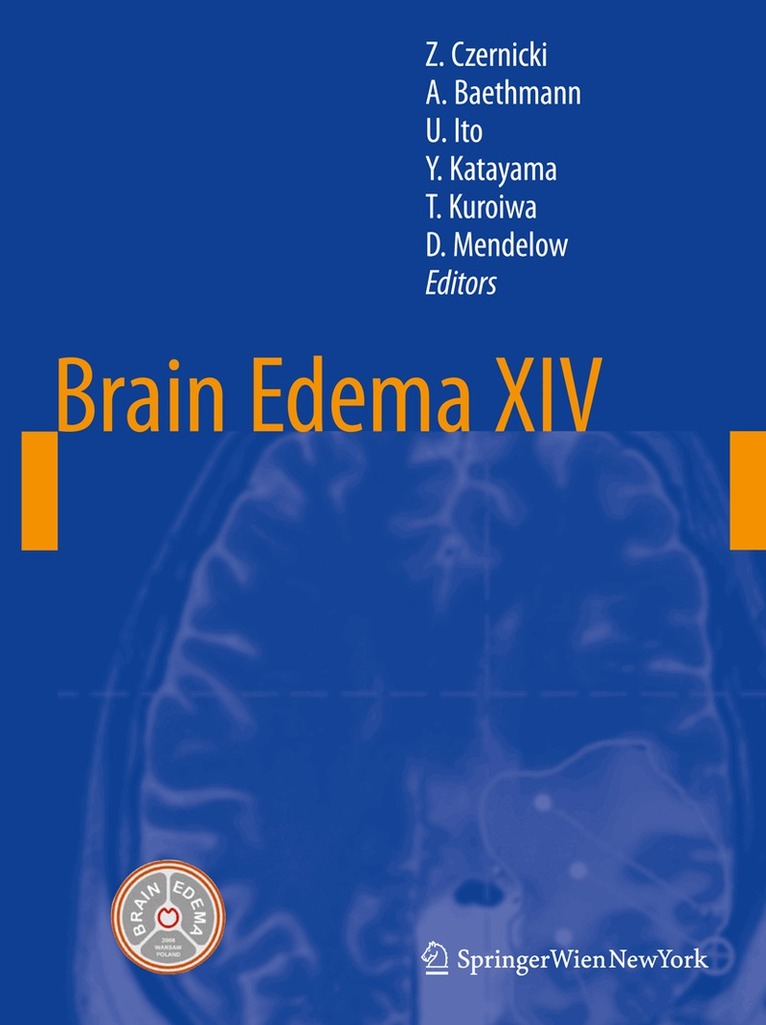
Brain Edema XIV
Av Zbigniew Czernicki, Alexander Baethmann m. fl.
Inbunden, 2009
2250 kr
Lägg i varukorg
The XIV International Symposium on Brain Edema and Brain Tissue Injury took place in Warsaw, Poland, on 11–14 June 2008. Two prominent members of the International Society for Brain Edema: Dr. Igor Klatzo and Dr. Julien Hoff have passed away after the last 2005 Symposium in Ann Arbor, USA. Dr. Igor …
Brain Edema XIV
Av Alexander David Mendelow, Toshihiko Kuroiwa m. fl.
E-bok, 2009
3013 kr
Lägg i varukorg
The XIV International Symposium on Brain Edema and Brain Tissue Injury took place in Warsaw, Poland, on 11–14 June 2008. Two prominent members of the International Society for Brain Edema: Dr. Igor Klatzo and Dr. Julien Hoff have passed away after the last 2005 Symposium in Ann Arbor, USA. Dr. Igor …
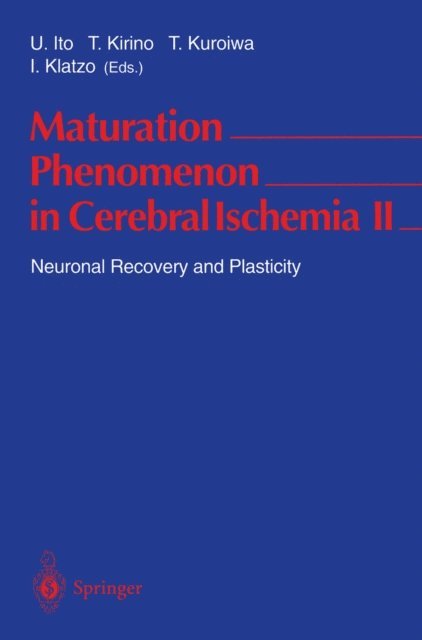
Maturation Phenomenon in Cerebral Ischemia II
Neuronal Recovery and Plasticity
Av Umeo Ito, Takaaki Kirino m. fl.
Häftad, 1997
1129 kr
Lägg i varukorg
After an ischemic injury many nerve cells of the brain which are not killed outright may suffer delayed death or recovery. This fact has led to the concept of "maturation phenomenon" of neuronal injuries. Since the 1st International Symposium on Maturation Phenomenon in 1990, developments, …
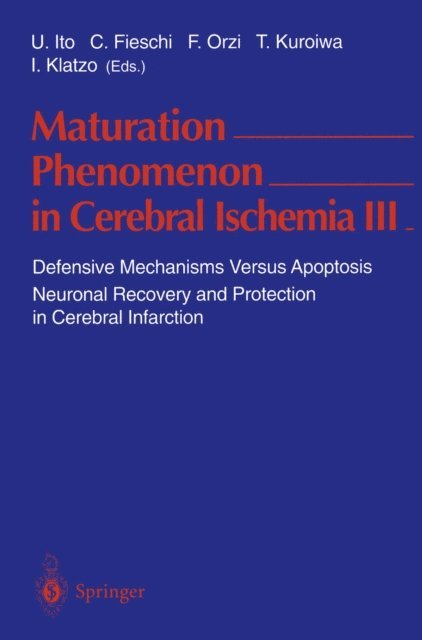
Maturation Phenomenon in Cerebral Ischemia III
Defensive Mechanisms Versus Apoptosis Neuronal Recovery and Protection in Cerebral Infarction
Av U. Ito, D. Jenkins m. fl.
Häftad, 1999
1129 kr
Lägg i varukorg
The maturation phenomenon refers to postischemic changes that develop hours or days following an ischemic insult. The delayed neuronal death of CA1 pyramidical cells of the hippocampus is a classic example. The report of the phenomenon has boosted research in this field, as it became evident that …
Maturation Phenomenon in Cerebral Ischemia III
Defensive Mechanisms Versus Apoptosis Neuronal Recovery and Protection in Cerebral Infarction
Av Igor Klatzo, Toshihiko Kuroiwa m. fl.
E-bok, 2012
1470 kr
Lägg i varukorg
The Maturation Phenomenon, described by Ito et al. in 1975 [3) on the basis of his to logical observations in the hippocampus as well as other portions of the cerebral hemisphere, refers to the hours or days of delay in the development of pathological changes in various parameters of ischemic …
Maturation Phenomenon in Cerebral Ischemia II
Neuronal Recovery and Plasticity
Av Igor Klatzo, Toshihiko Kuroiwa m. fl.
E-bok, 2012
1502 kr
Lägg i varukorg
Many nerve cells of the brain which are not killed outright may suffer delayed death or recovery after ischemic insult. This fact has led to the concept of "maturation phenomenon" of neuronal injuries. Since the 1st International Symposium on Maturation Phenomenon in 1990, new developments, …
Brain Edema XIV
Av Zbigniew Czernicki, Alexander Baethmann m. fl.
Häftad, 2012
2250 kr
Lägg i varukorg
The XIV International Symposium on Brain Edema and Brain Tissue Injury took place in Warsaw, Poland, on 11–14 June 2008. Two prominent members of the International Society for Brain Edema: Dr. Igor Klatzo and Dr. Julien Hoff have passed away after the last 2005 Symposium in Ann Arbor, USA. Dr. Igor …
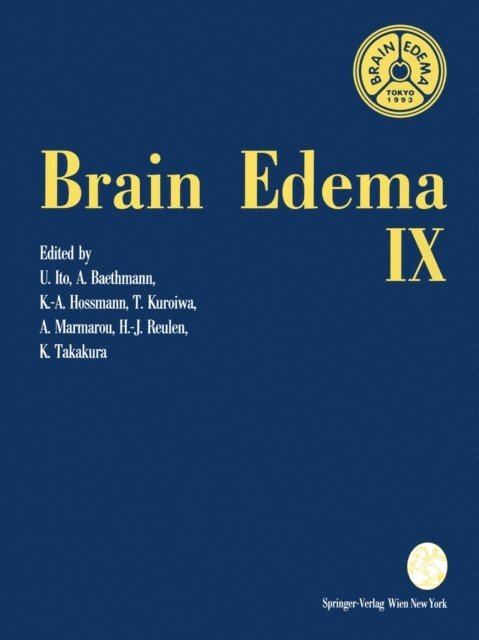
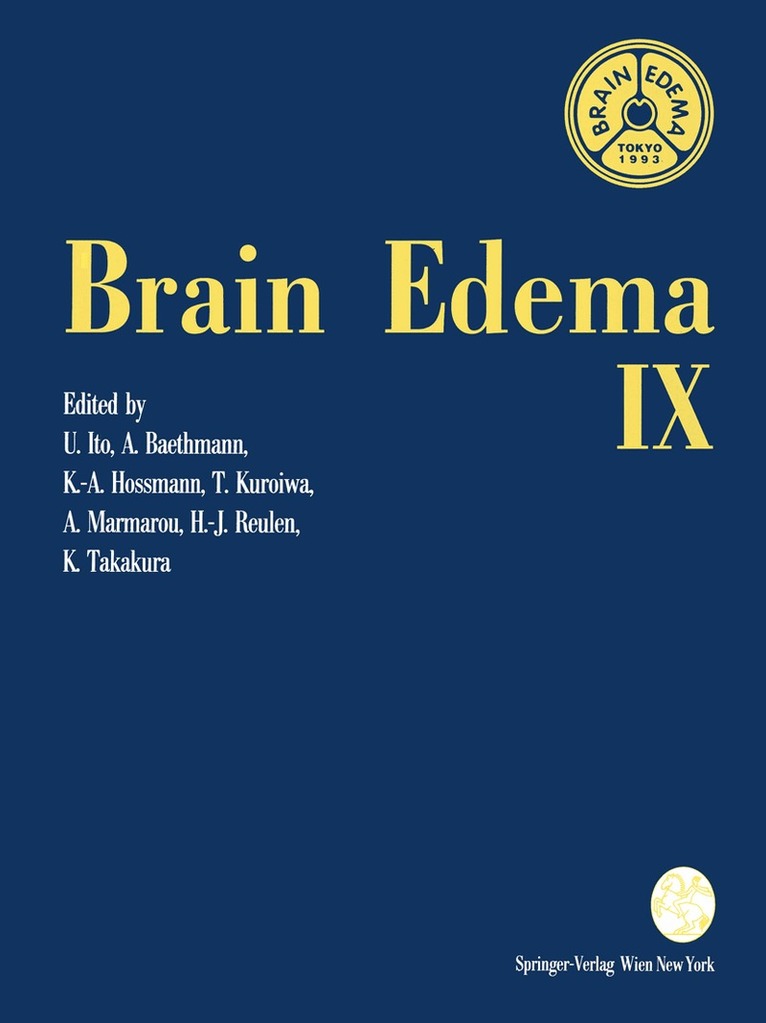
Brain Edema IX
Proceedings of the Ninth International Symposium Tokyo, May 16–19, 1993
Av Kintomo Takakura, Hans-J. Reulen m. fl.
E-bok, 2012
755 kr
Lägg i varukorg
The first international symposium on brain edema was held in Vienna/ Austria in 1965 followed by altogether eight meetings since. The most recent was organized in Y okohama by the Department of Neurosurgery of the Musashino Red Cross Hospital, Tokyo. The continuing interest of both, clinicians and …
Brain Edema IX
Proceedings of the Ninth International Symposium Tokyo, May 16–19, 1993
Av Umeo Ito, Alexander Baethmann m. fl.
Häftad, 2012
566 kr
Lägg i varukorg
The first international symposium on brain edema was held in Vienna/ Austria in 1965 followed by altogether eight meetings since. The most recent was organized in Y okohama by the Department of Neurosurgery of the Musashino Red Cross Hospital, Tokyo. The continuing interest of both, clinicians and …