III Sullivan, C. W. - Böcker
Visar alla böcker från författaren III Sullivan, C. W.. Handla med fri frakt och snabb leverans.
3 produkter
3 produkter
1 160 kr
Skickas inom 10-15 vardagar
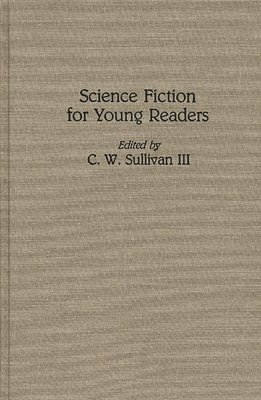
In this collection of essays, authorities on a wide range of topics related to science fiction discuss themes and particular works of special interest to young readers. The chapters cover the founding works of science fiction for young readers, specific authors and their works, and science fiction as a vehicle for exploring philosophical, religious, and social ideas. Essays discuss the literary and thematic elements of science fiction and shed light on the evolution of science fiction as a genre for young readers.The volume begins with a section of essays on the origins of science fiction as a genre for young readers. In this section are chapters on such topics as Victor Appleton's Tom Swift series, the contributions of Madeleine L'Engle, the impact and influence of Isaac Asimov, and the significance of Robert A. Heinlein. The second section contains chapters on particular themes, authors, and literary works. By approaching works and authors through particular themes, the chapters in this section offer a comprehensive view of the achievements of individual writers and demonstrate how certain themes bind together a particular author's works. The third section, on science fiction as a vehicle for ideas, steps away from the literary and stylistic devices of science fiction and looks beyond the genre to the larger ideas that science fiction conveys.
1 160 kr
Skickas inom 10-15 vardagar
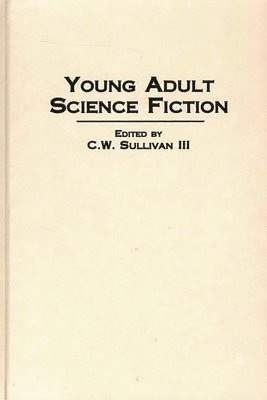
At the close of the nineteenth century, American youths developed a growing interest in electricity and its applications, machines, and gadgetry. When authors and publishers recognized the extent of this interest in technology, they sought to create reading materials that would meet this market need. The result was science fiction written especially for young adults. While critics tended to neglect young adult science fiction for decades, they gradually came to recognize its practical and cultural value. Science fiction inspired many young adults to study science and engineering and helped foster technological innovation. At the same time, these works also explored cultural and social concerns more commonly associated with serious literature. Nor was young adult science fiction a peculiarly American phenomenon: authors in other countries likewise wrote science fiction for young adult readers. This book examines young adult science fiction in the U.S. and several other countries and explores issues central to the genre.The first part of the book treats the larger contexts of young adult science fiction and includes chapters on its history and development. Included are discussions of science fiction for young adults in the U.S. and in Canada, Great Britain, Germany, and Australia. These chapters are written by expert contributors and chart the history of young adult science fiction from the nineteenth century to the present. The second section of the book considers topics of special interest to young adult science fiction. Some of the chapters look at particular forms and expressions of science fiction, such as films and comic books. Others treat particular topics, such as the portrayal of women in Robert Heinlein's works and representations of war in young adult science fiction. Yet another chapter studies the young adult science fiction novel as a coming-of-age story and thus helps distinguish the genre from science fiction written for adult readers. All chapters reflect current research, and the volume concludes with extensive bibliographies.
409 kr
Skickas inom 5-8 vardagar
J. R. R. Tolkien is arguably the most influential fantasy writer of all time--his world building and epic mythology have changed Western audiences' imaginations and the entire fantasy genre. This book is the first wide-ranging Christian Platonic reading on Tolkien's fiction. This analysis, written for scholars and general Tolkien enthusiasts alike, discusses how his fiction is constructed on levels of language, myth and textuality that have a background in the Greek philosopher Plato's texts and early Christian philosophy influenced by Plato. It discusses the concepts of ideal and real, creation and existence, and fall and struggle as central elements of Tolkien's fiction, focusing on The Hobbit, The Lord of the Rings, The Silmarillion and The History of Middle-earth. Reading Tolkien's fiction as a depiction of ideal and real, from the vision of creation to the process of realization, illuminates a part of Tolkien's aesthetics and mythology that previous studies have overlooked.