Ilana van Wyk – författare
Visar alla böcker från författaren Ilana van Wyk. Handla med fri frakt och snabb leverans.
7 produkter
7 produkter
Del 47 - The International African Library
The Universal Church of the Kingdom of God in South Africa
A Church of Strangers
Inbunden, Engelska, 2014
1 277 kr
Skickas inom 7-10 vardagar
The Universal Church of the Kingdom of God (UCKG), a church of Brazilian origin, has been enormously successful in establishing branches and attracting followers in post-apartheid South Africa. Unlike other Pentecostal Charismatic Churches (PCC), the UCKG insists that relationships with God be devoid of 'emotions', that socialisation between members be kept to a minimum and that charity and fellowship are 'useless' in materialising God's blessings. Instead, the UCKG urges members to sacrifice large sums of money to God for delivering wealth, health, social harmony and happiness. While outsiders condemn these rituals as empty or manipulative, this book shows that they are locally meaningful, demand sincerity to work, have limits and are informed by local ideas about human bodies, agency and ontological balance. As an ethnography of people rather than of institutions, this book offers fresh insights into the mass PCC movement that has swept across Africa since the early 1990s.
Del 47 - The International African Library
The Universal Church of the Kingdom of God in South Africa
A Church of Strangers
Häftad, Engelska, 2016
462 kr
Skickas inom 7-10 vardagar
The Universal Church of the Kingdom of God (UCKG), a church of Brazilian origin, has been enormously successful in establishing branches and attracting followers in post-apartheid South Africa. Unlike other Pentecostal Charismatic Churches (PCC), the UCKG insists that relationships with God be devoid of 'emotions', that socialisation between members be kept to a minimum and that charity and fellowship are 'useless' in materialising God's blessings. Instead, the UCKG urges members to sacrifice large sums of money to God for delivering wealth, health, social harmony and happiness. While outsiders condemn these rituals as empty or manipulative, this book shows that they are locally meaningful, demand sincerity to work, have limits and are informed by local ideas about human bodies, agency and ontological balance. As an ethnography of people rather than of institutions, this book offers fresh insights into the mass PCC movement that has swept across Africa since the early 1990s.
Häftad, Engelska, 2019
374 kr
Skickas inom 5-8 vardagar
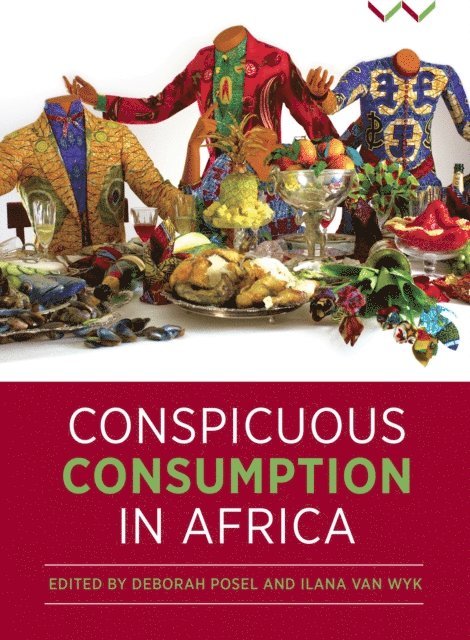
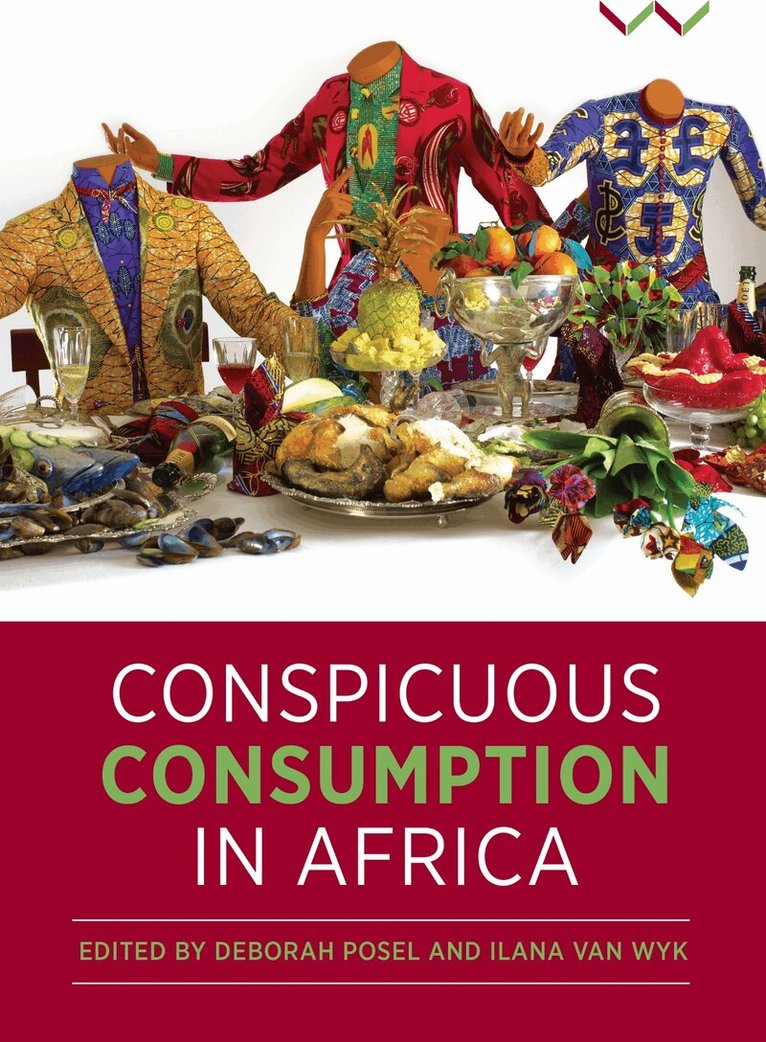
A collection of essays examining cultures of consumption on the African continentFrom early department stores in Cape Town to gendered histories of sartorial success in urban Togo, contestations over expense accounts at an apartheid state enterprise, elite wealth and political corruption in Angola and Zambia, the role of popular religion in the political intransigence of Jacob Zuma, funerals of big men in Cameroon, youth cultures of consumption in Niger and South Africa, queer consumption in Cape Town, middle-class food consumption in Durban and the consumption of luxury handcrafted beads, this collection of essays explores the ways in which conspicuous consumption is foregrounded in various African contexts and historical moments. The essays in Conspicuous Consumption in Africa put Thorstein Veblen's concept under robust critical scrutiny, delving into the pleasures, stresses and challenges of consuming in its religious, generational, gendered and racialised aspects, revealing conspicuous consumption as a layered set of practices, textures and relations. This volume shows how central and revealing conspicuous consumption can be to fathoming the history of Africa's projects of modernity, and their global lineages and legacies. In its grounded, up-close case studies, it is likely to feed into current public debates on the nature and future of African societies – South African society in particular.
E-bok
PDF, Engelska, 2019373 kr
Läs direkt efter köp
From early department stores in Cape Town to gendered histories of sartorial success in urban Togo, contestations over expense accounts at an apartheid state enterprise, elite wealth and political corruption in Angola and Zambia, the role of popular religion in the political intransigence of Jacob Zuma, funerals of big men in Cameroon, youth cultures of consumption in Niger and South Africa, queer consumption in Cape Town, middle-class food consumption in Durban and the consumption of luxury handcrafted beads, this collection of essays explores the ways in which conspicuous consumption is foregrounded in various African contexts and historical moments. In 1899, Thorstein Veblen coined the phrase ‘conspicuous consumption’ to describe status-seeking in the obscenely unequal world of late-nineteenth century America. Many of the aspects he described in The Theory of the Leisure Class are still evident in our world today. While Veblen’s crude denunciation of material extravagance finds echoes in media exposés about the lifestyles of the rich worldwide, it is particularly recognisable in reporting on Africa. Here, images of conspicuous consumption have long circulated in local and global media as indictments of political corruption and signs of moral depravity. The essays in Conspicuous Consumption in Africa put Veblen’s concept under robust critical scrutiny, drawing on theorists like Mbembe, Guyer and Bayart by way of critique or addition. They delve into the pleasures, stresses and challenges of consuming in its religious, generational, gendered and racialised aspects, revealing conspicuous consumption as a layered set of practices, textures and relations. The authors resist the trap of easy moralisation, pointing to more complex ethical and political registers of analysis and judgement. This volume shows how central and revealing conspicuous consumption can be to fathoming the history of Africa’s projects of modernity, and their global lineages and legacies. In its grounded, up-close case studies, it is likely to feed into current public debates on the nature and future of African societies – South African society in particular.
E-bok
Engelska, 2019373 kr
Läs direkt efter köp
From early department stores in Cape Town to gendered histories of sartorial success in urban Togo, contestations over expense accounts at an apartheid state enterprise, elite wealth and political corruption in Angola and Zambia, the role of popular religion in the political intransigence of Jacob Zuma, funerals of big men in Cameroon, youth cultures of consumption in Niger and South Africa, queer consumption in Cape Town, middle-class food consumption in Durban and the consumption of luxury handcrafted beads, this collection of essays explores the ways in which conspicuous consumption is foregrounded in various African contexts and historical moments. In 1899, Thorstein Veblen coined the phrase ‘conspicuous consumption’ to describe status-seeking in the obscenely unequal world of late-nineteenth century America. Many of the aspects he described in The Theory of the Leisure Class are still evident in our world today. While Veblen’s crude denunciation of material extravagance finds echoes in media exposés about the lifestyles of the rich worldwide, it is particularly recognisable in reporting on Africa. Here, images of conspicuous consumption have long circulated in local and global media as indictments of political corruption and signs of moral depravity. The essays in Conspicuous Consumption in Africa put Veblen’s concept under robust critical scrutiny, drawing on theorists like Mbembe, Guyer and Bayart by way of critique or addition. They delve into the pleasures, stresses and challenges of consuming in its religious, generational, gendered and racialised aspects, revealing conspicuous consumption as a layered set of practices, textures and relations. The authors resist the trap of easy moralisation, pointing to more complex ethical and political registers of analysis and judgement. This volume shows how central and revealing conspicuous consumption can be to fathoming the history of Africa’s projects of modernity, and their global lineages and legacies. In its grounded, up-close case studies, it is likely to feed into current public debates on the nature and future of African societies – South African society in particular.
E-bok
PDF, Engelska, 2022573 kr
Läs direkt efter köp
In this book, Ilana van Wyk and Jimmy Pieterse interrogate the question of political subjectivity and its role in the making of anthropology and anthropologists by revisiting the pitched battles between so-called liberal social anthropologists and conservative, nationalist volkekundiges in South Africa. They pay particular attention to the social and cultural lives of two men who were central proponents of South African anthropology''s ''two tales''; Kees van der Waal, a former volkekundige, and John Sharp, once one of volkekunde''s fiercest critics. Through a series of conversations with Kees and John, they show that the issues that once divided a local field still animate the ways in which centres and peripheries of global anthropology relate to one another and to foundational questions about the discipline''s epistemology and political positionality.
Häftad, Engelska, 2022
501 kr
Skickas inom 5-8 vardagar