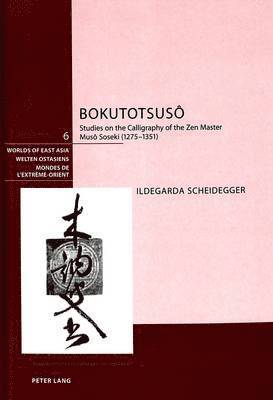
Musô Soseki (1275-1351), one of the most important Zen patriarchs of the early fourteenth century in Japan, devoted his life to spreading Buddhist wisdom in his writings. As a member of the Gozan movement, he belonged to the literary elite and had a profound knowledge of Chinese und Japanese poetry. He left behind numerous calligraphies, among them those now housed in the temples Engakuji and Zuizenji in Kamakura and in Tenryûji and Saihôji in Kyoto. Musô signed many of his calligraphies with his pseudonym Bokutotsusô, which means «the wooden stutterer». Most of Musô’s calligraphies are composed in cursive script and deal with themes of particular interest to him, such as nature and religious education. This book examines how these themes relate to the different stages of Musô’s life. It also analyses his attitude toward calligraphy and the influence of other calligraphers on his artistic development. For this purpose, pivotal calligraphies that reveal Musô’s stylistic development, his aesthetics and underlying message as well as the trajectory of his life have been chosen for closer examination. The research for this book was conducted at the temples that were at the center of Musô’s activities. The first work to discuss Musô’s calligraphy in a Western language, this book offers insights into his texts together with illustrations of Musô’s brushwork.
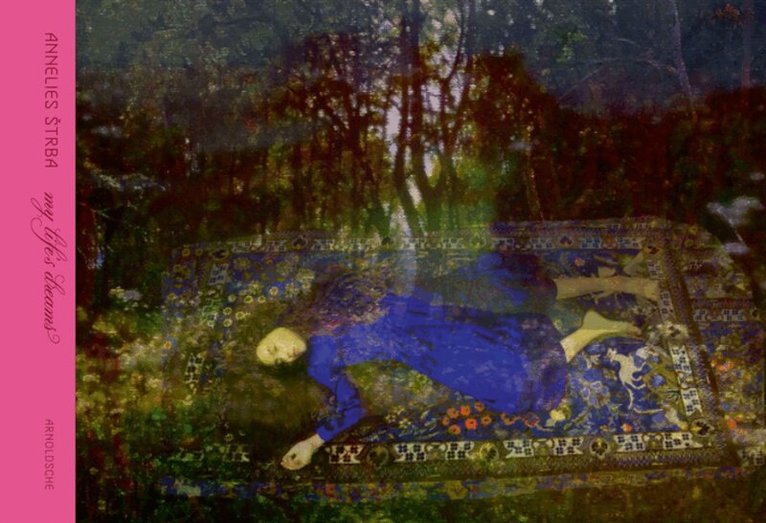
Annelies Strba is undoubtedly one of the most significant and interesting contemporary photography and video artists. Whilst her early works in the 1980s and 1990s took the form of a kind of personal diary, her work experienced its actual artistic emancipation in the middle of the 1990s. From 1997 Strba started using only the video camera, isolating individual film stills as artistic prints and independent works of art. She is moving towards 'fantastical images' with her current work. Owing to the extreme intimacy of her shots, her 'family portraits' succeed in bringing viewers face to face with their own memories and emotions. Intimate and trance-like qualities are a constant feature of her works. The method behind her depictions and their transposition into new realities are a thoroughly unique concept, which she has been pursuing since 2009 and which is virtually unparalleled. Her group of works entitled My Life Dreams, a composition inspired by the world of artificially created stories, appears as the pinnacle of her work so far, but at the same time it is a consistent continuation of all her previous work. Text in English & German.