Imad Antoine Ibrahim - Böcker
Visar alla böcker från författaren Imad Antoine Ibrahim. Handla med fri frakt och snabb leverans.
6 produkter
6 produkter
International Water Law and the Human Right to Water
The Case of Transboundary Aquifers
Inbunden, Engelska, 2024
1 797 kr
Skickas inom 10-15 vardagar
This book examines the development of international law applicable to Transboundary Aquifers (TBAs) considering the Human Right to Water and Sanitation (HRWS). The purpose is to determine how International Water Law (IWL) and the HRWS can be harmonized in the context of TBAs. This is important given rules and instruments adopted to address this topic are relatively nascent, and the field itself is still in the process of developing regulatory frameworks. Taking the application of the HRWS to shared aquifers as a case study, the work discusses whether IWL and International Human Rights Law complement each other. The response to this question requires an analysis of the development of International Groundwater Law and its challenges, the evolution of the HRWS, the nature of transboundary groundwaters, and the interplay between these two fields. The author argues that IWL agreements should contain a provision related to the HRWS to ensure the protection of this right with a stipulation included in the nonbinding instrument that tackles shared groundwaters: the Draft Articles on the Law of Transboundary Aquifers adopted in 2008 through the United Nations General Assembly Resolution. The book will be of interest to international lawyers, water and human right experts, geologists, and anyone interested in water and human rights issues.
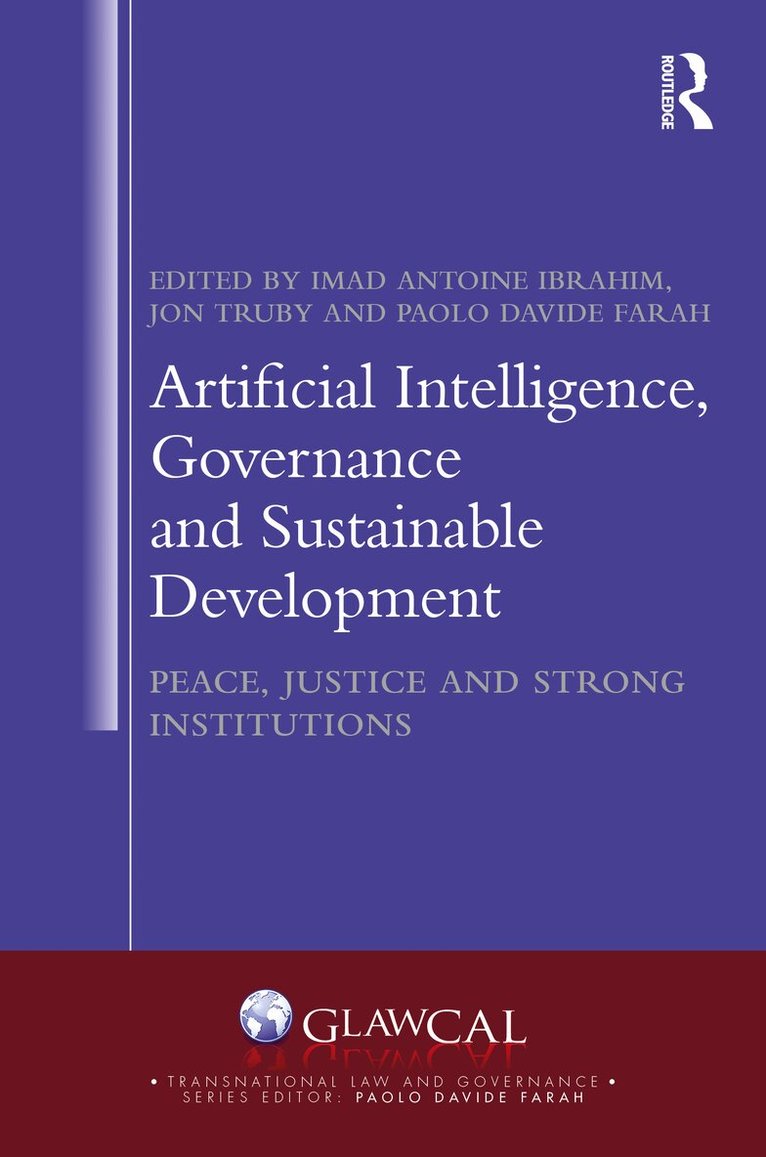
Artificial Intelligence, Governance and Sustainable Development
Peace, Justice and Strong Institutions
Inbunden, Engelska, 2026
1 921 kr
Skickas inom 10-15 vardagar
Considering the power and potential of AI and digital technologies, very few studies have systematically analysed their potential for realizing SDG16, despite the role they are expected to play in realizing the 2030 agenda. Exploring the problematic nature of artificial intelligence, this book explores the significant advantages AI offers for successfully implementing Sustainable Development Goal 16, and the potential to track progress and impact through machine learning. Focusing on governance, the book explores the potential of AI to meet the SDGs within the categories of the rule of law, criminal justice, and ethics and access to justice. Highlighting that the SDGs are a problematic human rights frame and have been critiqued as ignoring some major global disconnects when it comes to areas such as trade, the book explores the potential for the application of AI to the achievement of the SDGs to be equally problematic, and considers issues of techno-colonialism, information deficits and fundamental technological dependencies which could be exacerbated when AI meets the SDGs. Offering an analysis of the role of AI and governance in securing peace, development and security, this book will be of interest to students and academics with an interest in international law, political science and development.
2 088 kr
Skickas inom 10-15 vardagar
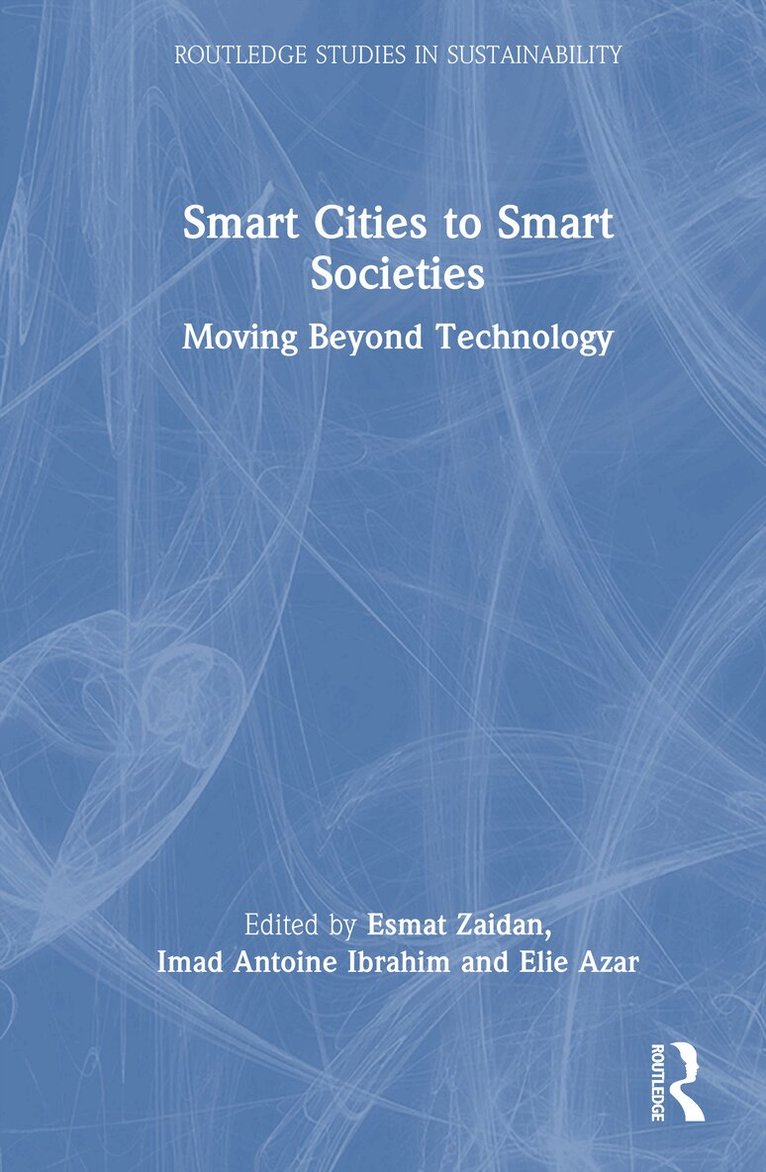
This book explores the governance of smart cities from a holistic approach, arguing that the creation of smart cities must consider the specific circumstances of each country to improve the preservation, revitalisation, liveability, and sustainability of urban areas. The recent push for smart cities is part of an effort to reshape urban development through megaprojects, centralised master planning, and approaches that convey modernism and global affluence. However, moving towards a citywide smart transition is a major undertaking, and complexities are expected to grow exponentially. This book argues that a comprehensive approach is necessary to consider all relevant aspects. The chapters seek to identify the potential and pitfalls of the smart transformation of urban communities and its role in sustainability goals; share state-of-the-art practices concerning technology, policy, and social science dimensions in smart cities and communities; and develop opportunities for cooperation and partnership in wider and larger research and development programmes. Divided into three parts, the first part of the book highlights the significance of various societal elements and factors in facilitating a successful smart transition, with a particular emphasis on the role of human capital. The second part delves into the challenges associated with technology and its integration into smart city initiatives. The final part of the book examines the current state of regulations and policies governing smart cities. The book will be an important asset for students and researchers studying law, engineering, political science, international relations, geopolitics, economics, and engineering.
576 kr
Skickas inom 10-15 vardagar
This book explores the governance of smart cities from a holistic approach, arguing that the creation of smart cities must consider the specific circumstances of each country to improve the preservation, revitalisation, liveability, and sustainability of urban areas. The recent push for smart cities is part of an effort to reshape urban development through megaprojects, centralised master planning, and approaches that convey modernism and global affluence. However, moving towards a citywide smart transition is a major undertaking, and complexities are expected to grow exponentially. This book argues that a comprehensive approach is necessary to consider all relevant aspects. The chapters seek to identify the potential and pitfalls of the smart transformation of urban communities and its role in sustainability goals; share state-of-the-art practices concerning technology, policy, and social science dimensions in smart cities and communities; and develop opportunities for cooperation and partnership in wider and larger research and development programmes. Divided into three parts, the first part of the book highlights the significance of various societal elements and factors in facilitating a successful smart transition, with a particular emphasis on the role of human capital. The second part delves into the challenges associated with technology and its integration into smart city initiatives. The final part of the book examines the current state of regulations and policies governing smart cities. The book will be an important asset for students and researchers studying law, engineering, political science, international relations, geopolitics, economics, and engineering.
Big Data Analytics and Its Impact on Basin Water Agreements and International Water Law
A Study of the Ramotswa Aquifer
Häftad, Engelska, 2022
1 085 kr
Skickas inom 5-8 vardagar
Big Data Analytics and Its Impact on Basin Water Agreements and International Water Law represents the state of the art when it comes to the use of disruptive technologies in the transboundary water context and its impact on international water law. Indeed, the case study provided in this manuscript which represents the most relevant example where big data is being used in the transboundary water context highlights this reality. The readers will understand current and also future potential impact of big data on water resources in the general context of disruptive technologies.
1 088 kr
Skickas inom 5-8 vardagar