Imran Hossain – författare
Visar alla böcker från författaren Imran Hossain. Handla med fri frakt och snabb leverans.
10 produkter
10 produkter
E-bok
PDF, Engelska, 20262 606 kr
Läs direkt efter köp
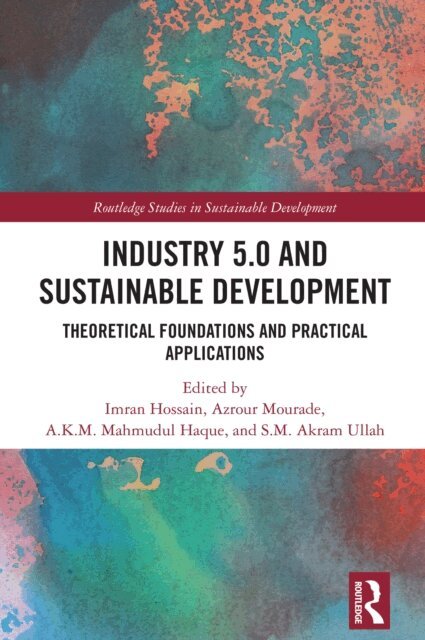
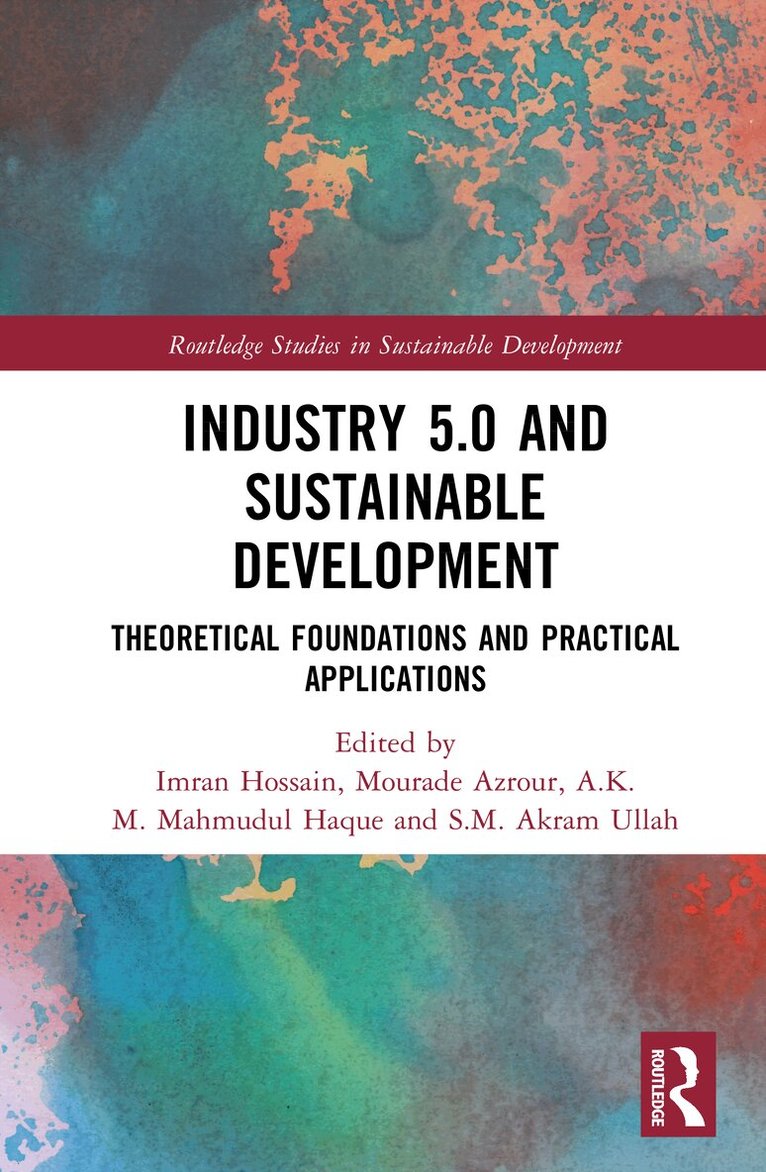
Exploring the intersection of Industry 5.0 technologies and sustainable development, this book integrates newer technologies-such as artificial intelligence (AI), automation, the Internet of Things, and robotics-within sustainability frameworks to provide both theoretical foundations and practical applications. Providing actionable insights for academics, policymakers, and industry professionals, this edited collection investigates the nexus among technology, social equity, and environmental responsibility in Industry 5.0 across a diverse range of chapters from authors based in Bangladesh, India, Indonesia, Lebanon, Morocco, Nigeria, Poland, South Africa, Sudan, and the United States, while it also includes case studies from developed and emerging economies, such as Germany, Canada, the United States, India, Brazil, China, and South Africa. Offering a balanced perspective on the challenges and opportunities in different regions, the global cases highlight the universal relevance of the discussions and address the pressing sustainability challenges faced by both developed and developing countries. By incorporating strategic recommendations for policymakers and business leaders, the book forges the connection between academic research and industry practices and serves as a comprehensive guide for aligning industrial progress with Sustainable Development Goals. It also looks to the future through a discussion of the transition toward Industry 6.0, offering valuable insight as technological advancements continue.Industry 5.0 and Sustainable Development is intended for academics, researchers, policymakers, and industry professionals engaged in sustainable development, environmental studies, business management, and industrial engineering, as well as upper-level students exploring the integration of advanced technologies with sustainability principles.
E-bok
Engelska, 20262 606 kr
Läs direkt efter köp
Exploring the intersection of Industry 5.0 technologies and sustainable development, this book integrates newer technologies-such as artificial intelligence (AI), automation, the Internet of Things, and robotics-within sustainability frameworks to provide both theoretical foundations and practical applications. Providing actionable insights for academics, policymakers, and industry professionals, this edited collection investigates the nexus among technology, social equity, and environmental responsibility in Industry 5.0 across a diverse range of chapters from authors based in Bangladesh, India, Indonesia, Lebanon, Morocco, Nigeria, Poland, South Africa, Sudan, and the United States, while it also includes case studies from developed and emerging economies, such as Germany, Canada, the United States, India, Brazil, China, and South Africa. Offering a balanced perspective on the challenges and opportunities in different regions, the global cases highlight the universal relevance of the discussions and address the pressing sustainability challenges faced by both developed and developing countries. By incorporating strategic recommendations for policymakers and business leaders, the book forges the connection between academic research and industry practices and serves as a comprehensive guide for aligning industrial progress with Sustainable Development Goals. It also looks to the future through a discussion of the transition toward Industry 6.0, offering valuable insight as technological advancements continue.Industry 5.0 and Sustainable Development is intended for academics, researchers, policymakers, and industry professionals engaged in sustainable development, environmental studies, business management, and industrial engineering, as well as upper-level students exploring the integration of advanced technologies with sustainability principles.
Inbunden, Engelska, 2026
2 184 kr
Skickas inom 10-15 vardagar
Exploring the intersection of Industry 5.0 technologies and sustainable development, this book integrates newer technologies—such as artificial intelligence (AI), automation, the Internet of Things, and robotics—within sustainability frameworks to provide both theoretical foundations and practical applications. Providing actionable insights for academics, policymakers, and industry professionals, this edited collection investigates the nexus among technology, social equity, and environmental responsibility in Industry 5.0 across a diverse range of chapters from authors based in Bangladesh, India, Indonesia, Lebanon, Morocco, Nigeria, Poland, South Africa, Sudan, and the United States, while it also includes case studies from developed and emerging economies, such as Germany, Canada, the United States, India, Brazil, China, and South Africa. Offering a balanced perspective on the challenges and opportunities in different regions, the global cases highlight the universal relevance of the discussions and address the pressing sustainability challenges faced by both developed and developing countries. By incorporating strategic recommendations for policymakers and business leaders, the book forges the connection between academic research and industry practices and serves as a comprehensive guide for aligning industrial progress with Sustainable Development Goals. It also looks to the future through a discussion of the transition toward Industry 6.0, offering valuable insight as technological advancements continue.Industry 5.0 and Sustainable Development is intended for academics, researchers, policymakers, and industry professionals engaged in sustainable development, environmental studies, business management, and industrial engineering, as well as upper-level students exploring the integration of advanced technologies with sustainability principles.
Inbunden, Engelska, 2026
1 723 kr
Skickas inom 10-15 vardagar
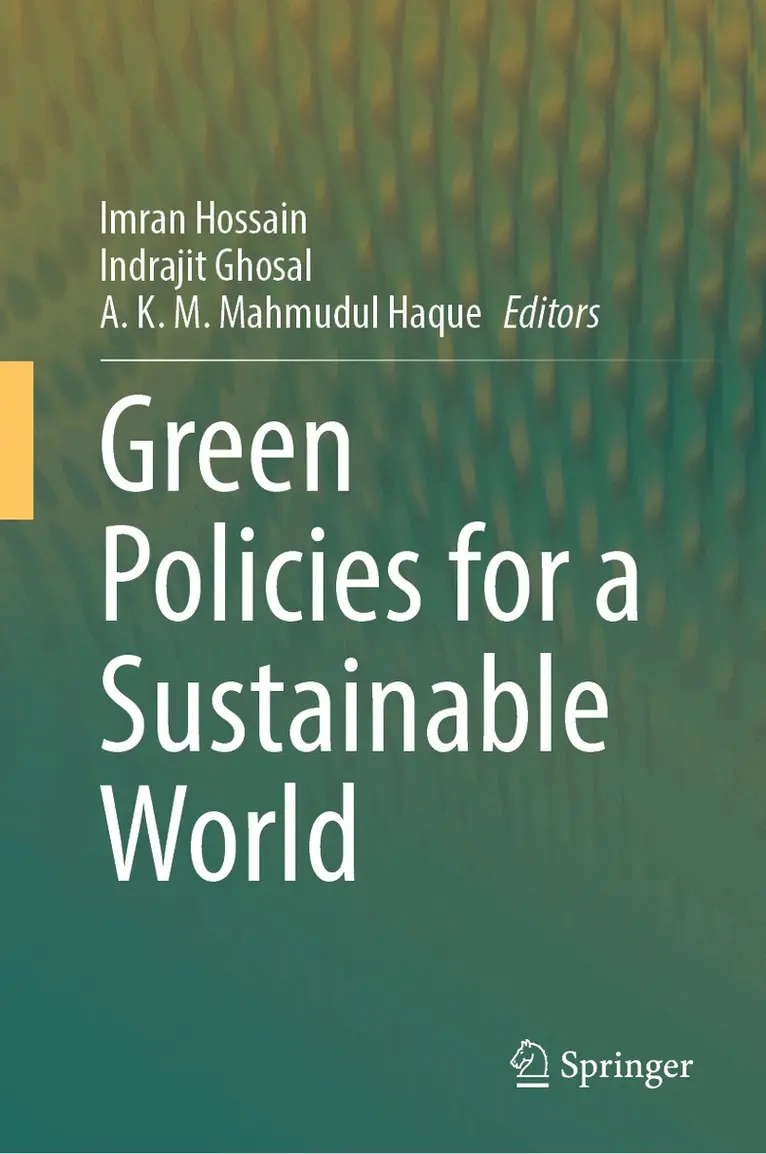
This book provides a comprehensive exploration of green policies essential for achieving a sustainable world. It delves into the intricate relationship between environmental governance and sustainable development, offering actionable insights and practical solutions. "Green Policies for a Sustainable World" is designed to be a definitive guide for policymakers, researchers, and practitioners dedicated to creating and implementing effective environmental policies. The book begins with an analysis of global environmental agreements such as the Paris Agreement and the role of international organizations like UNEP and IPCC in promoting green policies. It then examines renewable energy policies, energy efficiency standards, and successful case studies on renewable energy transitions. Sustainable transportation policies and urban planning for green cities are discussed, highlighting innovative infrastructure solutions. Strategies for biodiversity conservation, sustainable agriculture and forestry practices, and effective water resource management are also explored. Addressing climate change impacts through policies, carbon pricing mechanisms, and adaptation strategies for vulnerable communities is a key focus. The book also delves into waste reduction and recycling policies, circular economy principles, and successful waste management initiatives. Economic instruments such as green taxation, subsidies, environmental impact assessments, and green finance strategies are examined for their role in promoting sustainability. Challenges in policy design and implementation, stakeholder engagement, and adaptive management of green policies are discussed to provide a practical perspective on governance.
E-bok
Engelska, 20262 130 kr
Läs direkt efter köp
This book provides a comprehensive exploration of green policies essential for achieving a sustainable world. It delves into the intricate relationship between environmental governance and sustainable development, offering actionable insights and practical solutions. "e;Green Policies for a Sustainable World"e; is designed to be a definitive guide for policymakers, researchers, and practitioners dedicated to creating and implementing effective environmental policies. The book begins with an analysis of global environmental agreements such as the Paris Agreement and the role of international organizations like UNEP and IPCC in promoting green policies. It then examines renewable energy policies, energy efficiency standards, and successful case studies on renewable energy transitions. Sustainable transportation policies and urban planning for green cities are discussed, highlighting innovative infrastructure solutions. Strategies for biodiversity conservation, sustainable agriculture and forestry practices, and effective water resource management are also explored. Addressing climate change impacts through policies, carbon pricing mechanisms, and adaptation strategies for vulnerable communities is a key focus. The book also delves into waste reduction and recycling policies, circular economy principles, and successful waste management initiatives. Economic instruments such as green taxation, subsidies, environmental impact assessments, and green finance strategies are examined for their role in promoting sustainability. Challenges in policy design and implementation, stakeholder engagement, and adaptive management of green policies are discussed to provide a practical perspective on governance.
E-bok
PDF, Engelska, 2019215 kr
Läs direkt efter köp
Master's Thesis from the year 2018 in the subject Economy - Environment economics, grade: 4.00 out of the scale 4.00, , language: English, abstract: Climate changes and associated impacts make people think about changing their traditional consumption patterns and go for purchasing green products to make this earth livable for the future generation. The study aimed at verifying the factors determining green purchase decision of energy saving light users of Barishal city. A total of 200 (two hundred) respondents participated in the study who are only from Barishal city and use energy-saving lights. In this study, the author employed the judgmental sampling technique to collect responses from the participants through a self-administered questionnaire. Structural equation modeling was employed to analyze the empirical data and test the proposed hypotheses of the study via AMOS 23. The findings of the study revealed that perceived benefits (.41) have the most significant effect towards green purchase decision of energy saving light users in Barishal city. Marketing factors (.18) and environmental knowledge (.15) have also significant effect towards green purchase decision of energy saving light users. In this study, peer groups are considered as insignificant determinants for the consumers of energy saving lights. Marketing factors (.21) have a significant effect on environmental knowledge which is the mediating variable in the study. This paper will help marketers formulate effective strategies based on these results to reach target markets and contribute to the sustainable environment.
Inbunden, Engelska, 2025
3 021 kr
Skickas inom 5-8 vardagar
Häftad, Engelska, 2025
2 540 kr
Skickas inom 5-8 vardagar
Inbunden, Engelska, 2024
4 604 kr
Skickas inom 5-8 vardagar
Häftad, Engelska, 2024
4 162 kr
Skickas inom 5-8 vardagar