Ingrid Schoberth – författare
Visar alla böcker från författaren Ingrid Schoberth. Handla med fri frakt och snabb leverans.
9 produkter
9 produkter
E-bok
PDF, Tyska, 2021370 kr
Läs direkt efter köp
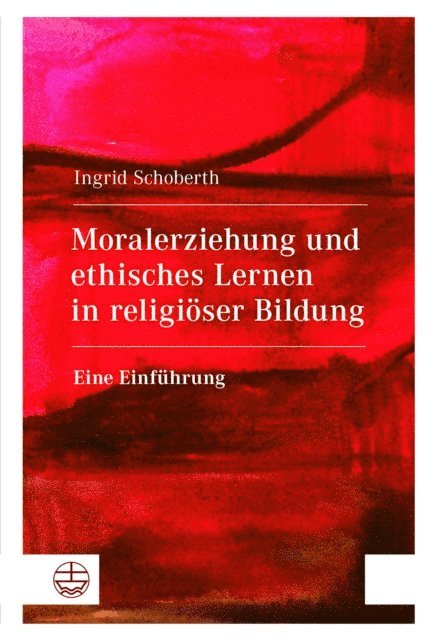
Ethisch-moralisches Lernen wird sowohl als diskursives als auch kritisches Lernen in sechzehn Thesen entfaltet und die Kontur eines Lernens anvisiert, das für religiöse Bildungsprozesse grundlegend ist. Dabei wird versucht, den inneren Zusammenhang auszuarbeiten, der ein solches Lernen in der aktuellen Gegenwartslandschaft ermöglicht. Anhand exemplarischer Lern- und Lehrperspektiven werden die Möglichkeiten unterrichtlicher Arbeit ausgelotet. Mit Hilfe von Arbeitsaufgaben und vertiefenden Lektüren dient diese Einleitung als Orientierung im ethisch-moralischen Diskurs. In ästhetischer Hinsicht wird das Lern- und Lehrfeld durch Skizzen und Abbildungen bereichert.[Moral Formation and Ethical Learning in Religious Education: An Introduction] This book develops ethical learning as both a discursive and critical exercise in sixteen theses, focussing on the contours of a type of learning that is fundamental for religious education. It strives to elaborate the inner logic that makes such learning currently possible. Highlighting various perspectives on learning and teaching, it explores the multiple avenues for instruction. Together with work assignments and in-depth reading, this introduction provides guidance in the field of ethical-moral discourse. It also provides sketches and illustrations to enrich the teaching and learning experience.
Häftad, Tyska, 2012
107 kr
Skickas inom 11-20 vardagar
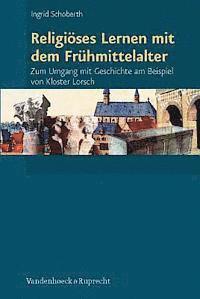
What relevance does the early Middle Ages have for religious educational processes in schools (sec. II) and the community today? A look into the pre-Reformation past challenges and promotes religious educational processes. Lorsch Abbey (8th / 9th century) serves as an exemplary reference point for dealing with the early Middle Ages. Theological topics and questions are recorded and worked on with reference to the place of learning. In an exemplary historical monument, Ingrid Schoberth develops didactic considerations and learning paths: At the same time, it draws attention to the fact that other places of history are also included in the preparation of religious educational processes - those in the immediate environment of the learners.
E-bok
PDF, Tyska, 2009477 kr
Läs direkt efter köp
Der Titel ist durchaus programmatisch zu verstehen: Wie der christliche Glaube überhaupt verfügt das Lernen christlicher Religion nicht über seine Sache. Es ist ihr am nächsten, wenn es zu ihr unterwegs ist; darum ist nicht die Vermittlung vorgängig festlegbarer Stoffe, sondern die offene und gemeinsame Suche nach dem, was Menschen vom Evangelium her zukommt, die Kontur christlichen Lernens. Diese These reflektiert Ingrid Schoberth sowohl in der Diskussion der religionspädagogischen Grundlagen als auch mit besonderem Bezug auf ihre Konkretion in religiösen Lernprozessen.Religionspädagogik im Diskurs ist darum mehr als eine intellektuelle Auseinandersetzung mit christlicher Religion; sie zielt auf ein Lernen mit Vernunft und allen Sinnen, das im Hin- und Hergehen in vielfältigen Bezügen mit den Lehrenden und Lernenden in ein kritisch konstruktives Gespräch kommt. Dabei geht es um die Tiefendimensionen ihres Lebens inmitten der mannigfaltigen Angebote, Zumutungen und Konkurrenzen, wie sie die Gegenwartskultur kennzeichnen. Der Diskurs will auch die Lehrenden dazu ermutigen, christliche Religion in der Vielfalt ihrer Bezüge aufzusuchen, gerade dort, wo sie eher vorläufig und wenig artikuliert erscheint. Im Diskurs wird das gewürdigt und auf neues Verstehen hin erprobt, was sich anfänglich und erst in Spuren zeigt. Nur wo solche interessierte Offenheit sich ereignet, kann dann auch die Eigenart des christlichen Glaubens in religiösen Lernprozessen sichtbar werden: Unterricht in christlicher Religion ist dann bei seiner Sache, gerade weil er sie nicht hat.
E-bok
PDF, Tyska, 2012573 kr
Läs direkt efter köp
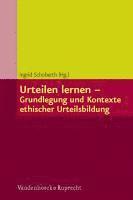
Correctly judging situations plays a large role in everyday life – it´s not always easy to determine the right thing to do, and only then can one actually do the right thing: properly deciding between two or more possible alternatives.This volume shows the necessity of making a scientific analysis of the various ways of reaching ethical competence. It demonstrates the various forms and nature of judgment within a scientific-theological and interdisciplinary research context, having resulted from a common discourse of Christian and Jewish theology as well as jurisprudence. The basic questions are discussed and compared to the perspective about learning to judge that is not innate: Moral education demands positive and workable paths in which children and adolescents as well as adults can practice executing proper judgement. For this reason a number of example contexts with an ethical background – in education, worklife and the legal system – are examined in detail.
E-bok
PDF, Tyska, 2018334 kr
Läs direkt efter köp
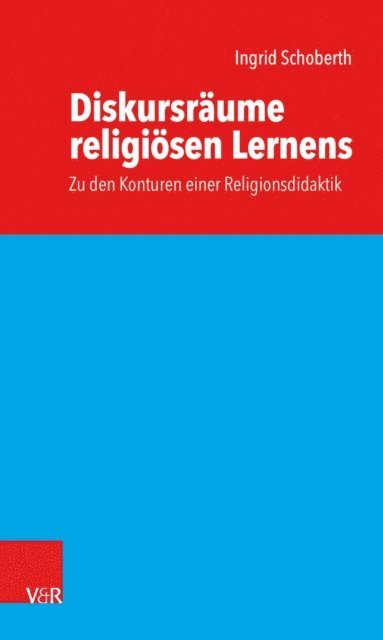
Ingrid Schoberth legt nach Jahrzehnten des Lernens und Lehrens mit Studierenden, Lehrvikarinnen und Lehrvikaren, Schülerinnen und Schülern sowie in der Erwachsenenbildung; vor und nach dem Gottesdienst, im Lehrerzimmer, mit Kollegen an der Theologischen Fakultät und in verschiedenen Kontexten der Universität die Summe ihrer didaktischen Überlegungen vor. Sie fragt nach den Diskursräumen, auf die bezogen das Lernen stattfindet und die das Lernen zugleich immer neu und kritisch bestimmen und ausrichten.Daraus resultiert eine Didaktik, die Ausdruck ist für den Vorgang Evangelischen Lernens, das sich von einem allgemeinen Modus des Lernens notwendig unterscheiden muss. Und sie fragt nach der Kontur einer Religionsdidaktik, die Spezifik evangelischen Lernens deutlich macht. Dabei ist immer die katechetische Theologie in ihrer diskursiven Variante Bezugspunkt. Ebenso wichtig ist die Berufung auf Eberhard Jüngels Überlegungen zu Kontur und Gestalt der Praktischen Theologie in ihrem Bezug auf die Aufgabe der je gegenwärtigen Auslegung und Freilegung des Wortes Gottes. Entstanden ist so eine schriftbezogene Didaktik als Entwurf einer Religionsdidaktik für heute und morgen.
334 kr
Läs direkt efter köp
Ingrid Schoberth legt nach Jahrzehnten des Lernens und Lehrens mit Studierenden, Lehrvikarinnen und Lehrvikaren, Schülerinnen und Schülern sowie in der Erwachsenenbildung; vor und nach dem Gottesdienst, im Lehrerzimmer, mit Kollegen an der Theologischen Fakultät und in verschiedenen Kontexten der Universität die Summe ihrer didaktischen Überlegungen vor. Sie fragt nach den Diskursräumen, auf die bezogen das Lernen stattfindet und die das Lernen zugleich immer neu und kritisch bestimmen und ausrichten.Daraus resultiert eine Didaktik, die Ausdruck ist für den Vorgang Evangelischen Lernens, das sich von einem allgemeinen Modus des Lernens notwendig unterscheiden muss. Und sie fragt nach der Kontur einer Religionsdidaktik, die Spezifik evangelischen Lernens deutlich macht. Dabei ist immer die katechetische Theologie in ihrer diskursiven Variante Bezugspunkt. Ebenso wichtig ist die Berufung auf Eberhard Jüngels Überlegungen zu Kontur und Gestalt der Praktischen Theologie in ihrem Bezug auf die Aufgabe der je gegenwärtigen Auslegung und Freilegung des Wortes Gottes. Entstanden ist so eine schriftbezogene Didaktik als Entwurf einer Religionsdidaktik für heute und morgen.
E-bok
PDF, Tyska, 2014573 kr
Läs direkt efter köp
Learning to Form Judgements" is a continuation of reflections on the foundations and contexts of learning to form judgements discussed in the first volume ("Urteilen lernen – Learning to Form Judgements") and seeks out the perspectives of moral judgement formation that manifest themselves in the scholarly analysis of judgement. In addition to the interdisciplinary and inter-religious orientation, the main focus is on the ways in which children and young people learn to form judgements. How can learning processes be structured to support children in developing the competence to judge? Clearly, this task cannot be accomplished without profound reflection. From the perspective of religious education, Volume II attempts to achieve this and endeavours to address the complexity of the question from an aesthetic, political and eschatological point of view."
E-bok
PDF, Tyska, 2015513 kr
Läs direkt efter köp
The present volume "Learning to Make Judgements, Part III" continues with the reflections and discourses carried out so far on how to form a judgement and looks into possibilities for practising and putting this skill to the test. The volume focuses in particular on educational processes that seek to support the training and qualification of children and young people in judgement formation. Clearly, this cannot be done without profound reflection, and this is given consideration in the anthology as are numerous contributions that present feasible pathways for religious education, especially for upper secondary education.
Häftad, Tyska, 2012
489 kr
Tillfälligt slut
Correctly judging situations plays a large role in everyday life - it's not always easy to determine the right thing to do, and only then can one actually do the right thing: properly deciding between two or more possible alternatives.This volume shows the necessity of making a scientific analysis of the various ways of reaching ethical competence. It demonstrates the various forms and nature of judgment within a scientific-theological and interdisciplinary research context, having resulted from a common discourse of Christian and Jewish theology as well as jurisprudence. The basic questions are discussed and compared to the perspective about learning to judge that is not innate: Moral education demands positive and workable paths in which children and adolescents as well as adults can practice executing proper judgement. For this reason a number of example contexts with an ethical background - in education, worklife and the legal system - are examined in detail.