Isabel Richter – författare
Visar alla böcker från författaren . Handla med fri frakt och snabb leverans.
2 produkter
2 produkter
Inbunden, Engelska, 2024
1 229 kr
Skickas inom 5-8 vardagar
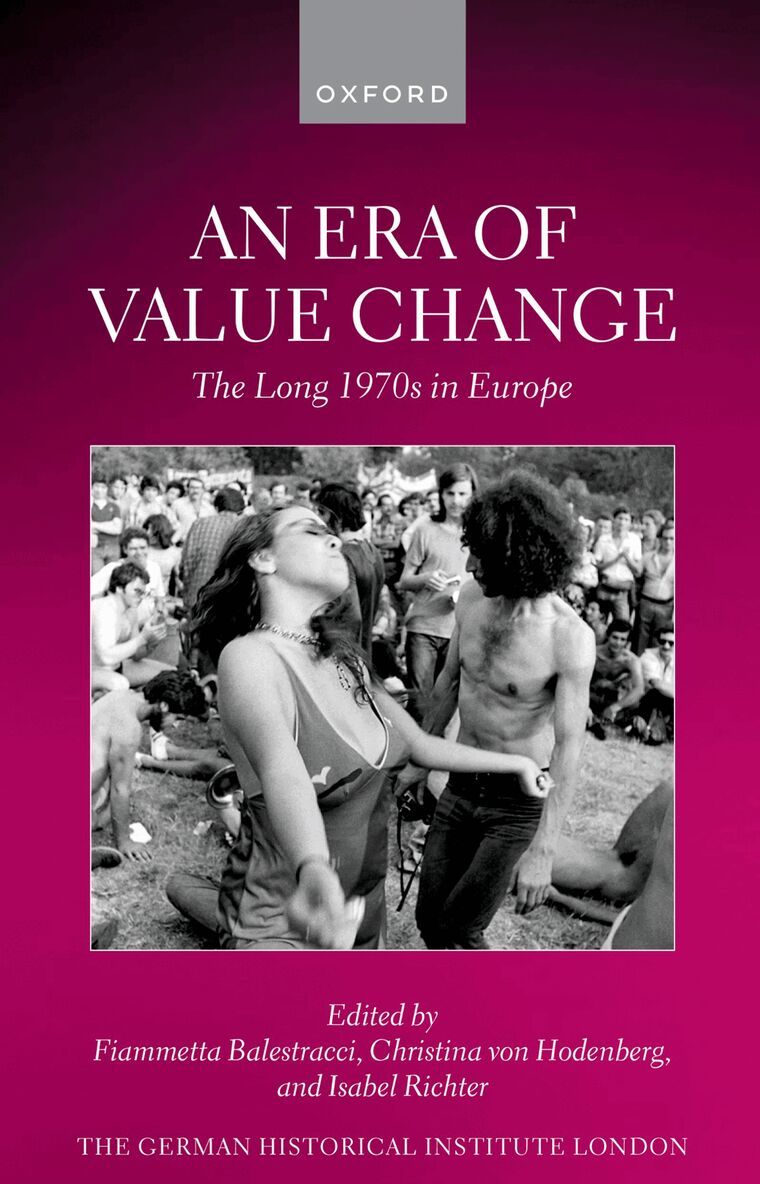
The long 1970s have recently emerged as the start of a new epoch in which we still live. This volume asks whether the accelerated value change of these years can be explained with the rise of a new kind of post-rationalism, and presents case studies from across highly industrialized Europe. Theories of value change are tested historically in France, Italy, the two Germanies, the Soviet Union, Poland, Sweden, Spain, Greece, and Portugal. Approaching the era from long-term perspective, the chapters trace the rise of post-rational values in different fields such as social science debates, gender roles, sexuality, mass media, religiosity, humanitarianism, tourism, and nonconformist consumerism. The essays engage in controversy on whether new norms and practices that developed during the decade find their origin in post-rational values, a rise in affluence and education, or political changes.The comparison in this volume extends both geographically, across the Iron Curtain and including 'smaller' countries, and chronologically, placing the 1970s as a key decade of transformation into a continuum spanning the long twentieth century. The authors show from different perspectives how the transformations of the long 1970s were linked to the legacy of the two world wars, as well as how they were related to the 1960s, which have often been presented as the primary decade of change. Instead of focusing on the dichotomy of materialism and post-materialism advocated by Ronald Inglehart's much-discussed theory of value change, the volume considers the 1970s move towards post-rational values against the backdrop of contemporary intellectual debates on rationalism in advanced industrialized societies.
E-bok
PDF, Engelska, 2020185 kr
Läs direkt efter köp
Seminar paper from the year 2018 in the subject English Language and Literature Studies - Other, Christian-Albrechts-University of Kiel, language: English, abstract: In the first section, this research paper will present the role of age on L2 phonological acquisition by explaining the strong and weak version of the critical period hypothesis. Furthermore, it will give insight into important studies that either support or decline the opinion of age being a relevant factor for a native-like acquisition of a second language phonology. Subsequently, in the last section, it will be sketched to what extent other socio-motivational circumstances among L2 learners can cause individual differences throughout the acquisition of an L2 phonology. Both sections critically examine the relevance of the L2 learner's age regarding the acquisition of an L2 phonology in order to find an answer to the question if age does affect the acquisition of a native-like pronunciation. As a last step, the main points and findings of this research paper will be summarised in the conclusion.