Isabel Toral-Niehoff - Böcker
Visar alla böcker från författaren Isabel Toral-Niehoff. Handla med fri frakt och snabb leverans.
2 produkter
2 produkter
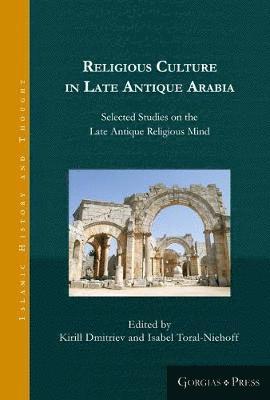
Religious Culture in Late Antique Arabia
Selected Studies on the Late Antique Religious Mind
Inbunden, Engelska, 2017
1 273 kr
Skickas inom 5-8 vardagar
This volume explores aspects of religious culture in the Eastern Mediterranean and the Arabian Peninsula across Late Antiquity – the period of dynamic and historically crucial developments, culminating in the emergence of Islam. While it would be impossible to provide an exhaustive examination of the topic in a single volume, it is the main aim of this book to further stimulate scholarly research on the Late Antique context of the origins of Islam and the history of early Arab-Muslim culture.
Del 104 - Islamic History and Civilization
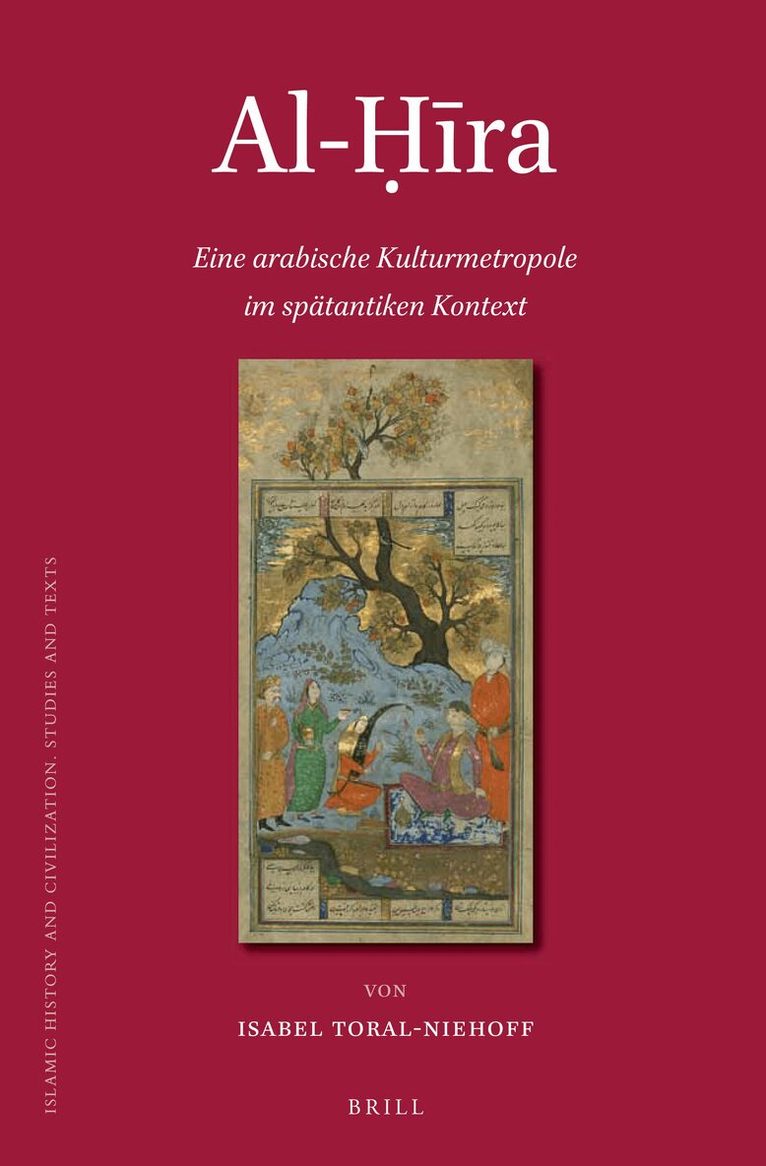
Al-Ḥīra
Eine arabische Kulturmetropole im spätantiken Kontext
Inbunden, Tyska, 2013
2 135 kr
Skickas inom 5-8 vardagar
In al-Ḥīra: Eine arabische Kulturmetropole im spätantiken Kontext, Isabel Toral-Niehoff draws a vivid portrait of this Late Antique Arab metropolis, located on the frontier between Byzantium and Sasanian Iran. Based on new archaeological and textual evidence, this study documents al-Ḥīra’s historical impact far beyond its well-known role in literary history and describes its creation of a distinctly Arabic urban cultural symbiosis that drew on neighboring civilizations. Al-Ḥīra’s multicultural synthesis is shown to be a direct precursor to the emerging city of Kufa, its Islamic successor, and Islamic city culture at large.In al-Ḥīra. Eine arabische Kulturmetropole im spätantiken Kontext zeichnet Isabel Toral-Niehoff ein lebendiges Porträt dieser spätantiken arabischen Stadt im Grenzraum zwischen Byzanz und dem sassanidischen Iran. Auf der Grundlage von teilweise neuen Zeugnissen zeigt diese Studie, dass die historische Bedeutung von al-Ḥīra weit über deren bekannte Rolle in der Literaturgeschichte hinausgeht. Sie richtet ihren Blick insbesondere auf die dort entwickelte multikulturelle Symbiose, welche die Grundlage einer spezifisch arabischen urbanen Kultur bildete, die durch den Kontakt mit den angrenzenden Zivilisationen bereichert wurde. Die Autorin zeigt, dass diese Synthese ein direkter Vorläufer der frühislamischen Kultur war, die später in Kūfa, al-Ḥīra's islamische Nachfolgestadt, entstand. Diese prägte zutiefst das klassische Modell der islamischen urbanen Gesellschaft.