Istvan Hont - Böcker
Visar alla böcker från författaren Istvan Hont. Handla med fri frakt och snabb leverans.
3 produkter
3 produkter
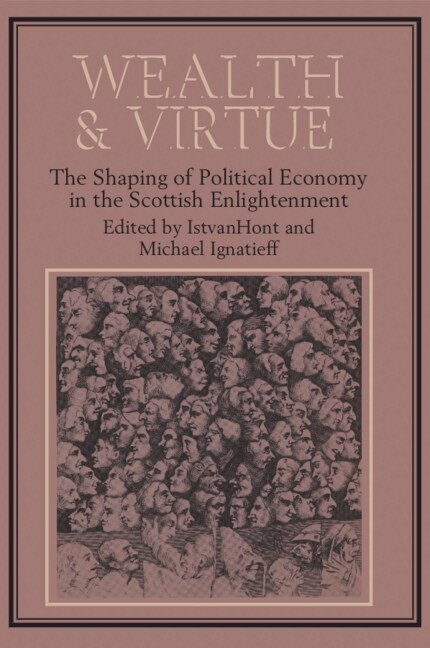
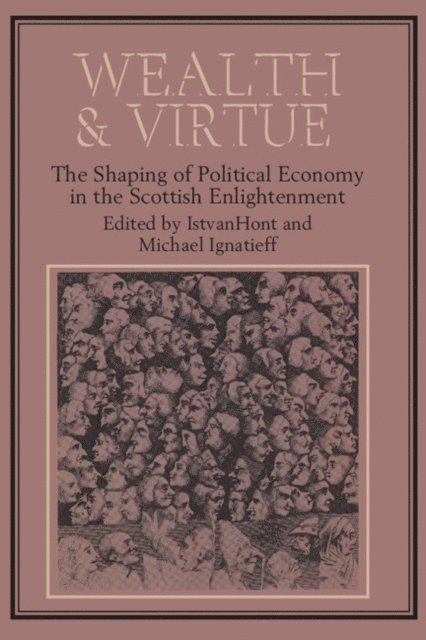
Wealth and Virtue
The Shaping of Political Economy in the Scottish Enlightenment
Häftad, Engelska, 1986
926 kr
Skickas inom 7-10 vardagar
Wealth and Virtue reassesses the remarkable contribution of the Scottish Enlightenment to the formation of modern economics and to theories of capitalism. Its unique range indicates the scope of the Scottish intellectual achievement of the eighteenth century and explores the process by which the boundaries between economic thought, jurisprudence, moral philosophy and theoretical history came to be established. Dealing not only with major figures like Hume and Smith, there are also studies of lesser known thinkers like Andrew Fletcher, Gershom Carmichael, Lord Kames and John Millar as well as of Locke in the light of eighteenth century social theory, the intellectual culture of the University of Edinburgh in the middle of the eighteenth century and of the performance of the Scottish economy on the eve of the publication of the Wealth of Nations. While the scholarly emphasis is on the rigorous historical reconstruction of both theory and context, Wealth and Virtue directly addresses itself to modern political theorists and economists and throws light on a number of major focal points of controversy in legal and political philosophy.
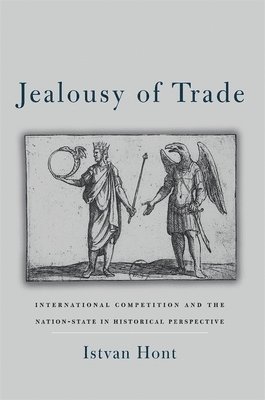
Jealousy of Trade
International Competition and the Nation-State in Historical Perspective
Häftad, Engelska, 2010
274 kr
Skickas inom 7-10 vardagar
This collection explores eighteenth-century theories of international market competition that continue to be relevant for the twenty-first century. “Jealousy of trade” refers to a particular conjunction between politics and the economy that emerged when success in international trade became a matter of the military and political survival of nations. Today, it would be called “economic nationalism,” and in this book Istvan Hont connects the commercial politics of nationalism and globalization in the eighteenth century to theories of commercial society and Enlightenment ideas of the economic limits of politics.The book begins with an analysis of how the notion of “commerce” was added to Hobbes’s “state of nature” by Samuel Pufendorf. Hont then considers British neo-Machiavellian political economy after the Glorious Revolution. From there he moves to a novel interpretation of the political economy of the Scottish Enlightenment, particularly of David Hume and Adam Smith, concluding with a conceptual history of nation-state and nationalism in the French Revolution.Jealousy of Trade combines political theory with intellectual history, illuminating the past but also considering the challenges of today.
394 kr
Skickas inom 10-15 vardagar
Scholars normally emphasize the contrast between the two great eighteenth-century thinkers Jean-Jacques Rousseau and Adam Smith. Rousseau is seen as a critic of modernity, Smith as an apologist. Istvan Hont, however, finds significant commonalities in their work, arguing that both were theorists of commercial society and from surprisingly similar perspectives.In making his case, Hont begins with the concept of commercial society and explains why that concept has much in common with what the German philosopher Immanuel Kant called unsocial sociability. This is why many earlier scholars used to refer to an Adam Smith Problem and, in a somewhat different way, to a Jean-Jacques Rousseau Problem. The two problems—and the questions about the relationship between individualism and altruism that they raised—were, in fact, more similar than has usually been thought because both arose from the more fundamental problems generated by thinking about morality and politics in a commercial society. Commerce entails reciprocity, but a commercial society also entails involuntary social interdependence, relentless economic competition, and intermittent interstate rivalry. This was the world to which Rousseau and Smith belonged, and Politics in Commercial Society is an account of how they thought about it.Building his argument on the similarity between Smith’s and Rousseau’s theoretical concerns, Hont shows the relevance of commercial society to modern politics—the politics of the nation-state, global commerce, international competition, social inequality, and democratic accountability.