J. Angelo Corlett – författare
1 954 kr
Skickas inom 10-15 vardagar
1 954 kr
Skickas inom 10-15 vardagar
1 591 kr
Skickas inom 10-15 vardagar
307 kr
Skickas inom 10-15 vardagar
2 435 kr
Läs direkt efter köp
1 089 kr
Skickas inom 10-15 vardagar
Terrorism
A Philosophical Analysis
1 089 kr
Skickas inom 10-15 vardagar
1 389 kr
Skickas inom 5-8 vardagar
1 367 kr
Läs direkt efter köp
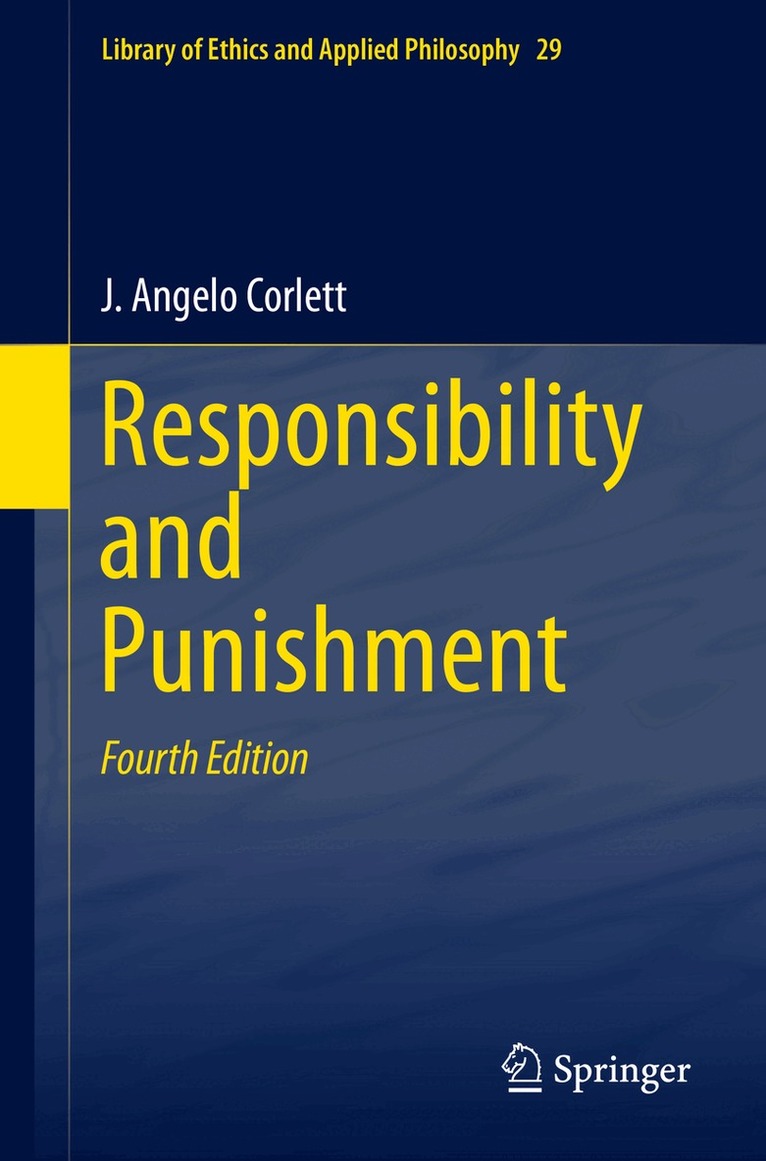
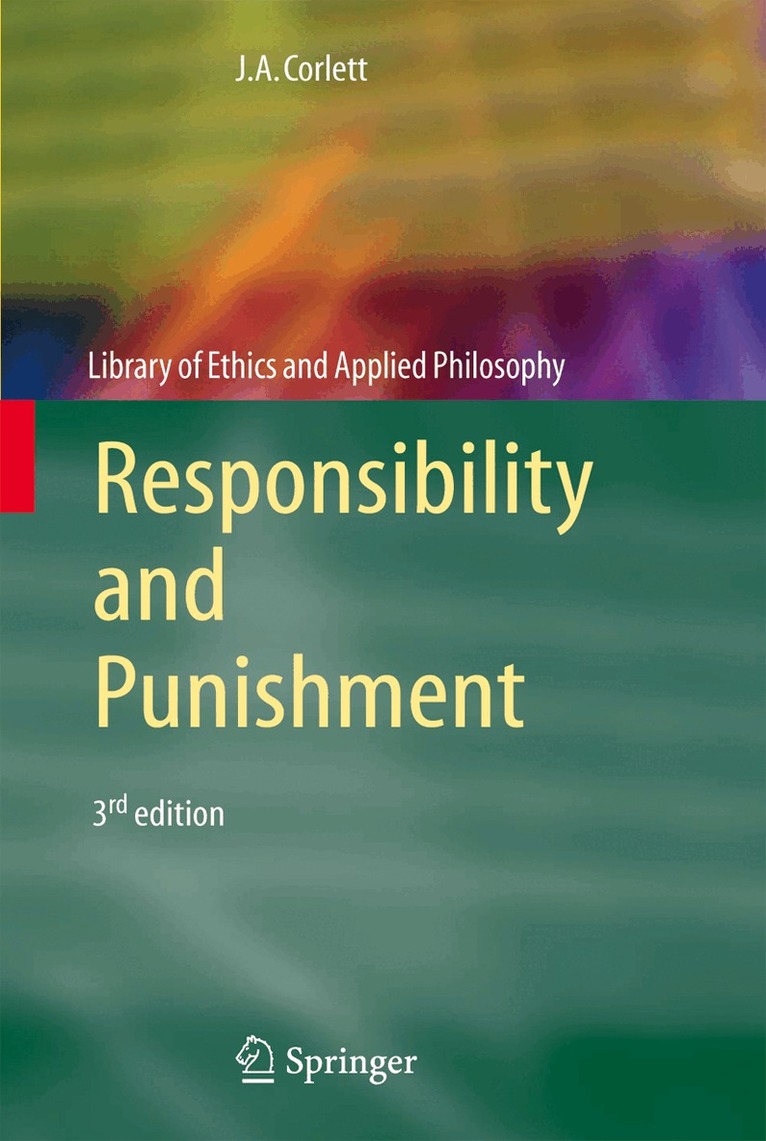
Responsibility and Punishment, Third Edition presents a clear-headed defense of retributivism against several long-standing criticisms. In the end, a viable version of retributivism emerges as one which withstands more criticism than competing theories of responsibility and punishment. Extending the problem of wrong doing to collectives and compensation, Corlett explores the matter of reparations for past wrongs in the case of the crimes committed against Native Americans by the United States Government. No other philosophical work on responsibility and punishment exhibits this breadth of scope, as it delves deeply into particular concerns with retributivism, responsibility, and certain areas of compensation. Academicians and professionals in ethics, moral, social, political, and legal philosophy are likely to benefit from this analytical treatment of responsibility and punishment.
1 389 kr
Skickas inom 5-8 vardagar
1 305 kr
Skickas inom 10-15 vardagar
1 482 kr
Läs direkt efter köp
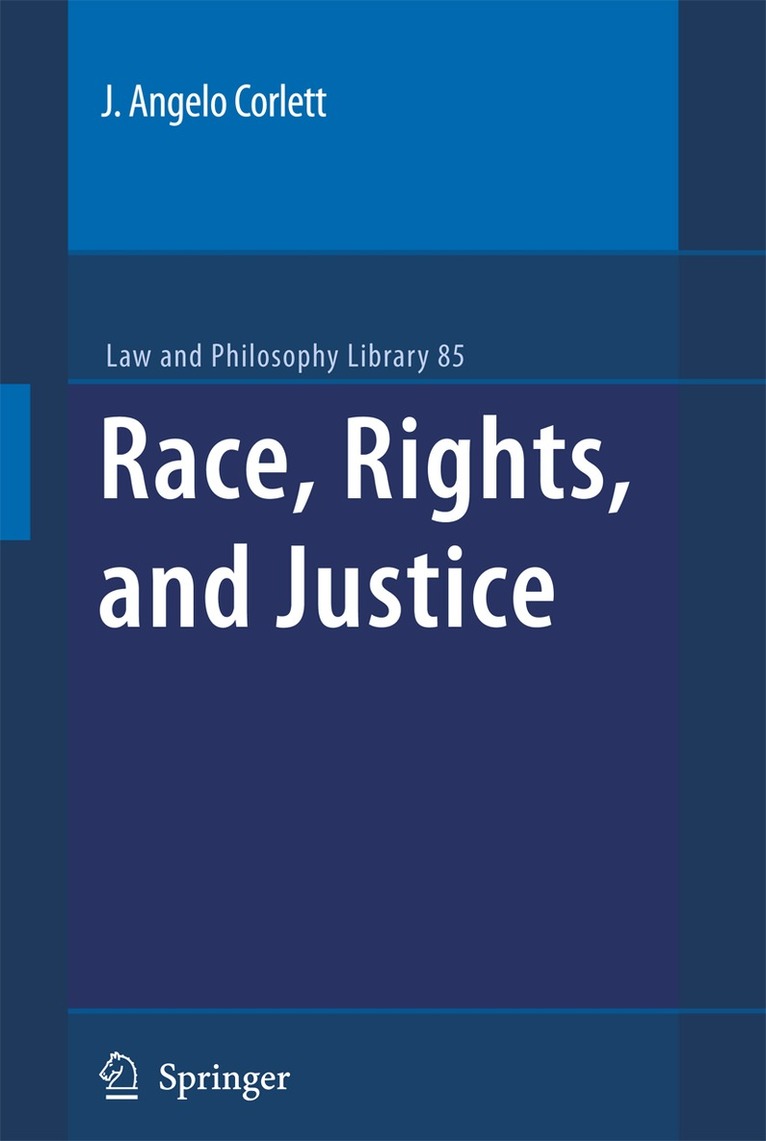
Race, Rights, and Justice explores questions of the nature of law and constitutional interpretation, international law and global justice, and the nature, function, and importance of rights each from a perspective that takes seriously the realities of race and racism. After a critical assessment of various contemporary theories of law is provided, a new theory of legal interpretation is set forth and defended. The respective words of Immanuel Kant and H.L.A. Hart on the possibility and desirability of international law are carefully explicated. Following this, Race, Rights, and Justice defends John Rawls'' Law of Peoples from the cosmopolitan liberal critique of it. The nature and importance of rights, both individual and collective, are clarified while correcting some political philosophies that have propagated confused rhetoric about rights. And the collective right to humanitarian intervention is investigated philosophically in terms of the recent problems in Colombia, with surprisingly original results. While the methodology of this book is thoroughly analytical, philosophically speaking, some of the conclusions drawn are substantially original, infusing the facts of race and racism into mainstream matters of philosophy of law.
"In this collection of essays, J. Angelo Corlett continues his important work of bringing the perspective of indigenous peoples, and more generally of race, into mainstream philosophical debates about justice and rights. Corlett''s book also has very valuable insights into the nature of international law that will greatly enrich our contemporary debates." (Larry May, Washington University in St. Louis, USA)
"Angelo Corlett is a prolific writer whose work is invariably stimulating, provocative, and insightful. Race, Rights, and Justice is an important addition to the oeuvre. Corlett is not afraid to tackle big problems, and big names. See, for example, his scathing criticisms of Bork and Scalia on constitutional interpretation." (Burleigh T. Wilkins, University of California, Santa Barbara, USA)

475 kr
Skickas inom 10-15 vardagar
497 kr
Läs direkt efter köp
399 kr
Skickas inom 10-15 vardagar
1 193 kr
Skickas inom 10-15 vardagar
473 kr
Läs direkt efter köp
J. Angelo Corlett’s new book, Interpreting Plato Socratically continues the critical discussion of the Platonic Question where Corlett’s book, Interpreting Plato’s Dialogues concluded. New arguments in favor of the Mouthpiece Interpretation of Plato’s works are considered and shown to be fallacious, as are new objections to some competing approaches to Plato’s works.The Platonic Question is the problem of how to approach and interpret Plato’s writings most of which are dialogues. How, if at all, can Plato’s beliefs, doctrines, theories and such be extracted from dialogues where there is no direct indication from Plato that his own views are even to be found therein? Most philosophers of Plato attempt to decipher from Plato’s texts seemingly all manner of ideas expressed by Socrates which they then attribute to Plato. They seek to ascribe to Plato particular views about justice, art, love, virtue, knowledge, and the like because, they believe, Socrates is Plato’s mouthpiece through the dialogues. But is such an approach justified? What are the arguments in favor of such an approach? Is there a viable alternative approach to Plato’s dialogues?In this rigorous account of the dominant approach to Plato’s dialogues, there is no room left for reasonable doubt about the problematic reasons given for the notion that Plato’s dialogues reveal either Plato’s or Socrates’ beliefs, doctrines or theories about substantive philosophical matters.Corlett’s approach to Plato’s dialogues is applied to a variety of passages throughout Plato’s works on a wide range of topics concerning justice. In-depth discussions of themes such as legal obligation, punishment and compensatory justice are clarified and with some surprising results. Plato’s works serve as a rich source of philosophical thinking about such matters.
A central question in today’s Platonic studies is whether Socrates, or any other protagonist in the dialogues, presents viewsthat the author wanted to assert or defend. Professor Corlett offers a detailed defense of his view that the role of Socrates is to raise questions rather than to provide the author’s answers to them. This defense is timely as intellectual historians consider the part played by Academic scholars centuries after Plato in systematizing Platonism. J. J. Mulhern, University of PennsylvaniaRace, Rights, and Justice
1 236 kr
Skickas inom 5-8 vardagar
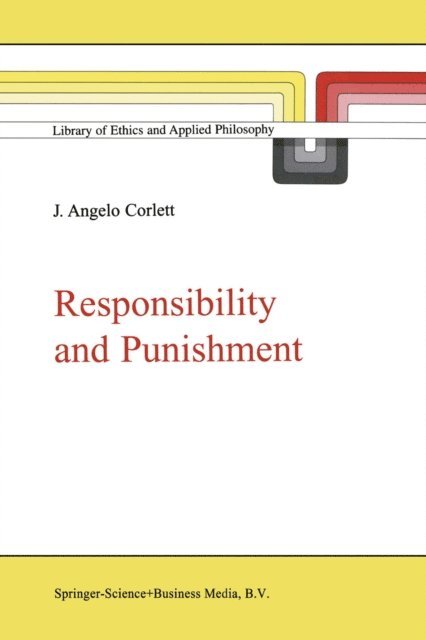
Responsibility and Punishment
1 073 kr
Skickas inom 10-15 vardagar
1 367 kr
Läs direkt efter köp
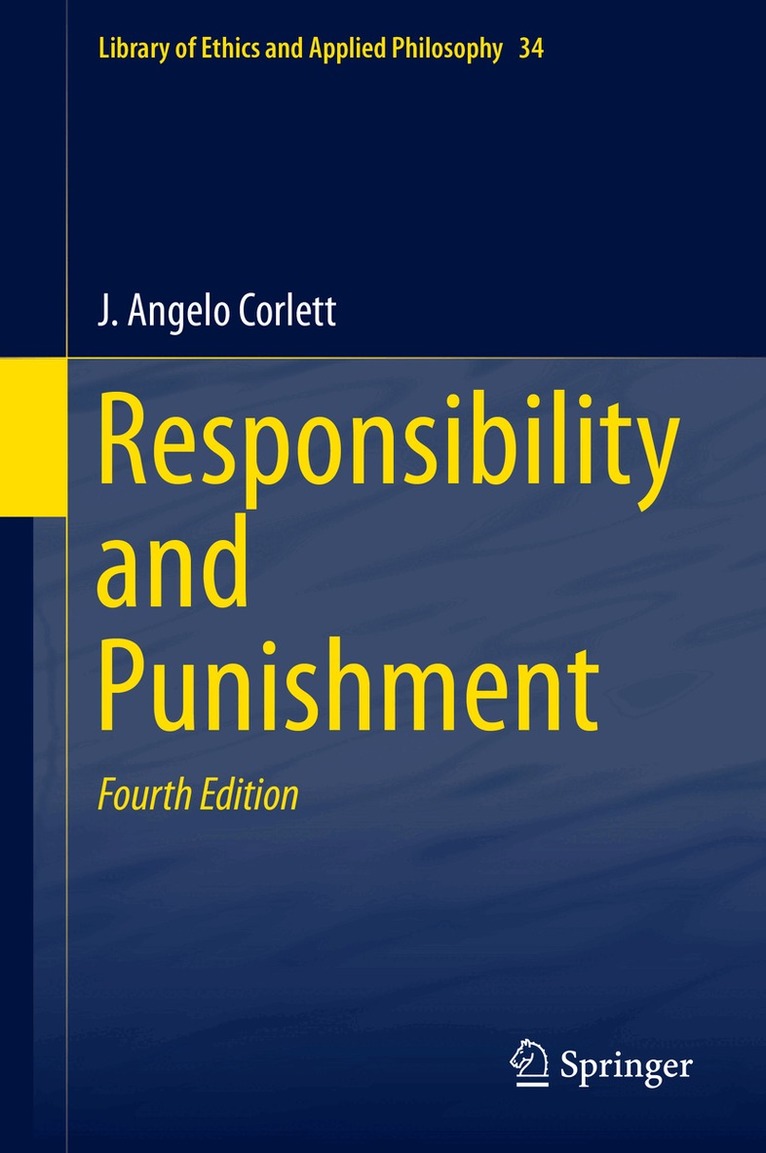
This volume provides discussions of both the concept of responsibility and of punishment, and of both individual and collective responsibility. It provides in-depth Socratic and Kantian bases for a new version of retributivism, and defends that version against the main criticisms that have been raised against retributivism in general. It includes chapters on criminal recidivism and capital punishment, as well as one on forgiveness, apology and punishment that is congruent with the basic precepts of the new retributivism defended therein. Finally, chapters on corporate responsibility and punishment are included, with a closing chapter on holding the U.S. accountable for its most recent invasion and occupation of Iraq. The book is well-focused but also presents the widest ranging set of topics of any book of its kind as it demonstrates how the concepts of responsibility and punishment apply to some of the most important problems of our time.
“This is one of the best books on punishment, and the Fourth Edition continues its tradition of excellence. The book connects punishment importantly to moral responsibility and desert, and it is comprehensive in its scope, both addressing abstract, theoretical issues and applied issues as well. The topics treated include collective responsibility, apology, forgiveness, capital punishment, and war crimes. Highly recommended.”—John Martin Fischer, Distinguished Professor of Philosophy, University of California, Riverside.
Responsibility and Punishment
1 073 kr
Skickas inom 10-15 vardagar
1 379 kr
Läs direkt efter köp
1 100 kr
Läs direkt efter köp
1 100 kr
Läs direkt efter köp
Responsibility and Punishment presents a clear-headed defense of retributivism against several long-standing criticisms. In the end, a viable version of retributivism emerges as one which withstands more criticism than competing theories of responsibility and punishment. Extending the problem of wrong doing to collectives and compensation, Corlett explores the matter of reparations for past wrongs in the case of the crimes committed against Native Americans by the United States Government. No other philosophical work on responsibility and punishment exhibits this breadth of scope, as it delves deeply into particular concerns with retributivism, responsibility, and certain areas of compensation. Academicians and professionals in ethics, moral, social, political, and legal philosophy are likely to benefit from this analytical treatment of responsibility and punishment.