J. E. Lendon – författare
Visar alla böcker från författaren J. E. Lendon. Handla med fri frakt och snabb leverans.
5 produkter
5 produkter
2 959 kr
Skickas inom 5-8 vardagar
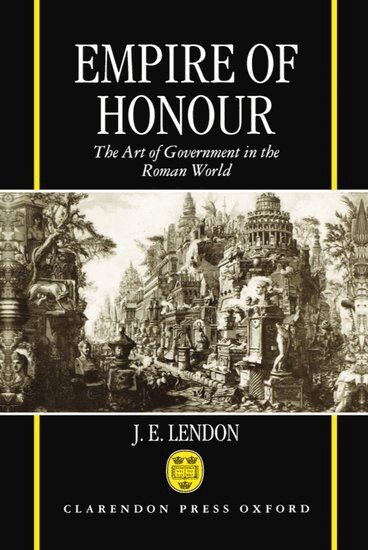
Jon Lendon offers a new interpretation of how the Roman empire worked in the first four centuries AD. A despotism rooted in force and fear enjoyed widespread support among the ruling classes of the provinces on the basis of an aristocratic culture of honour shared by rulers and ruled. The competitive Roman and Greek aristocrats of the empire conceived of their relative standing in terms of public esteem or honour, and conceived of their cities - towards which they felt a warm patriotism - as entities locked in a parallel struggle for primacy in honour over rivals. Emperors and provincial governors exploited these rivalries to gain the indispensable co-operation of local magnates by granting honours to individuals and their cities. Since rulers strove for honour as well, their subjects manipulated them with honours in their turn. Honour - whose workings are also traced in the Roman army - served as a way of talking and thinking about Roman government: it was both a species of power, and a way - connived in by rulers and ruled - of concealing the terrible realities of imperial rule.
961 kr
Skickas inom 5-8 vardagar
J. E. Lendon offers a new interpretation of how the Roman empire worked in the first four centuries AD. A despotism rooted in force and fear enjoyed widespread support among the ruling classes of the provinces on the basis of an aristocratic culture of honour shared by rulers and ruled. The competitive Roman and Greek aristocrats of the empire conceived of their relative standing in terms of public esteem or honour, and conceived of their cities - towards which they felt a warm patriotism - as entities locked in a parallel struggle for primacy in honour over rivals. Emperors and provincial governors exploited these rivalries to gain the indispensable co-operation of local magnates by granting honours to individuals and their cities. Since rulers strove for honour as well, their subjects manipulated them with honours in their turn. Honour - whose workings are also traced in the Roman army - served as a way of talking and thinking about Roman government: it was both a species of power, and a way - connived in by rulers and ruled - of concealing the terrible realities of imperial rule.
214 kr
Skickas inom 5-8 vardagar
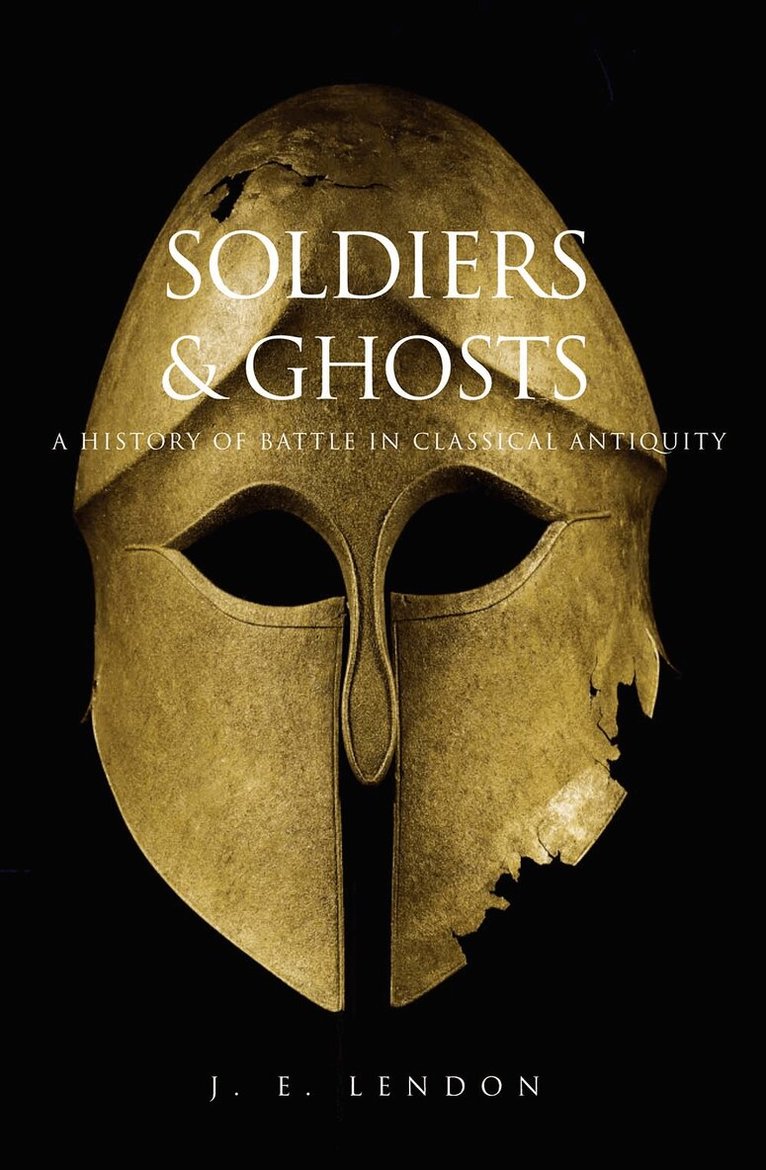
A major new history of battle in the ancient world, from the age of Homer through the decline of the Roman empireWhat set the successful armies of Sparta, Macedon, and Rome apart from those they defeated? In this major new history of battle from the age of Homer through the decline of the Roman empire, J. E. Lendon surveys a millennium of warfare to discover how militaries change—and don’t change—and how an army’s greatness depends on its use of the past. Noting this was an age that witnessed few technological advances, J. E. Lendon shows us that the most successful armies were those that made the most effective use of cultural tradition. Ancient combat moved forward by looking backward for inspiration—the Greeks, to Homer; the Romans, to the Greeks and to their own heroic past. The best ancient armies recruited soldiers from societies with strong competitive traditions; and the best ancient leaders, from Alexander to Julius Caesar, called upon those traditions to encourage ferocious competition at every rank.Ranging from the Battle of Champions between Sparta and Argos in 550 B.C. through Julian’s invasion of Persia in A.D. 363, Soldiers and Ghosts brings to life the most decisive military contests of ancient Greece and Rome. Lendon places these battles, and the methods by which they were fought, in a sweeping narrative of ancient military history. On every battlefield, living soldiers fought alongside the ghosts of tradition—ghosts that would inspire greatness for almost a millennium before ultimately coming to stifle it.
394 kr
Skickas inom 5-8 vardagar
How rhetorical training influenced deeds as well as words in the Roman EmpireThe assassins of Julius Caesar cried out that they had killed a tyrant, and days later their colleagues in the Senate proposed rewards for this act of tyrannicide. The killers and their supporters spoke as if they were following a well-known script. They were. Their education was chiefly in rhetoric and as boys they would all have heard and given speeches on a ubiquitous set of themes—including one asserting that “he who kills a tyrant shall receive a reward from the city.” In That Tyrant, Persuasion, J. E. Lendon explores how rhetorical education in the Roman world influenced not only the words of literature but also momentous deeds: the killing of Julius Caesar, what civic buildings and monuments were built, what laws were made, and, ultimately, how the empire itself should be run.Presenting a new account of Roman rhetorical education and its surprising practical consequences, That Tyrant, Persuasion shows how rhetoric created a grandiose imaginary world for the Roman ruling elite—and how they struggled to force the real world to conform to it. Without rhetorical education, the Roman world would have been unimaginably different.
237 kr
Skickas inom 5-8 vardagar
How rhetorical training influenced deeds as well as words in the Roman EmpireThe assassins of Julius Caesar cried out that they had killed a tyrant, and days later their colleagues in the Senate proposed rewards for this act of tyrannicide. The killers and their supporters spoke as if they were following a well-known script. They were. Their education was chiefly in rhetoric and as boys they would all have heard and given speeches on a ubiquitous set of themes—including one asserting that “he who kills a tyrant shall receive a reward from the city.” In That Tyrant, Persuasion, J. E. Lendon explores how rhetorical education in the Roman world influenced not only the words of literature but also momentous deeds: the killing of Julius Caesar, what civic buildings and monuments were built, what laws were made, and, ultimately, how the empire itself should be run.Presenting a new account of Roman rhetorical education and its surprising practical consequences, That Tyrant, Persuasion shows how rhetoric created a grandiose imaginary world for the Roman ruling elite—and how they struggled to force the real world to conform to it. Without rhetorical education, the Roman world would have been unimaginably different.