J. Kirkland – författare
Visar alla böcker från författaren J. Kirkland. Handla med fri frakt och snabb leverans.
5 produkter
5 produkter
Inbunden, Engelska, 1996
2 216 kr
Skickas inom 10-15 vardagar
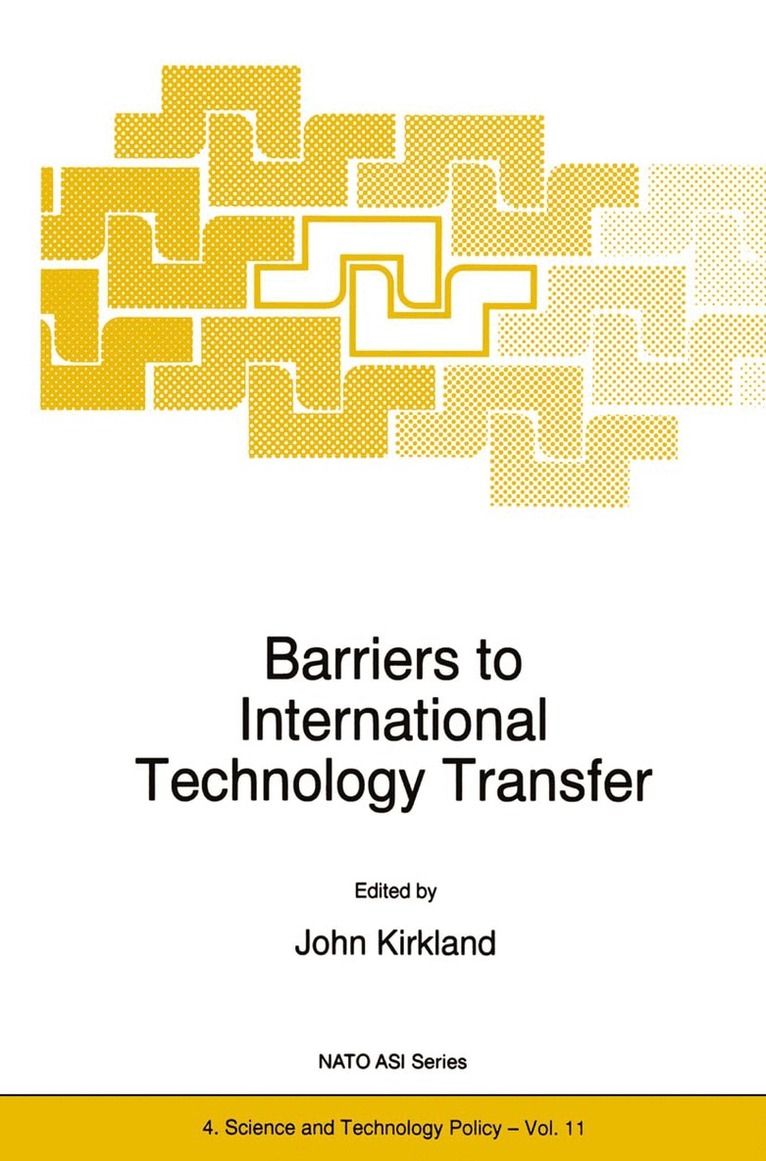
Most governments now recognise that effective technology transfer is vital to innovation and competitiveness, but the process by which ideas flow from universities to industry is complex. Several barriers can be identified: technological, cultural, legal and financial. Such problems have often been seen in isolation, but it is clear that the problem of encouraging successful transfer is complex, requiring an interdisciplinary approach. The collection of papers in this volume is deliberately diverse, offering perspectives from economics, sociology, science, engineering and public administration, drawn both from within and outside academic life, from those at the sharp end of technology licensing and the administration of government research programmes. The range of national backgrounds of the writers encompasses ten countries.
Del 1 - Library of Public Policy and Public Administration
University-Industry R&D Collaboration in the United States, the United Kingdom, and Japan
Inbunden, Engelska, 1999
1 080 kr
Skickas inom 10-15 vardagar
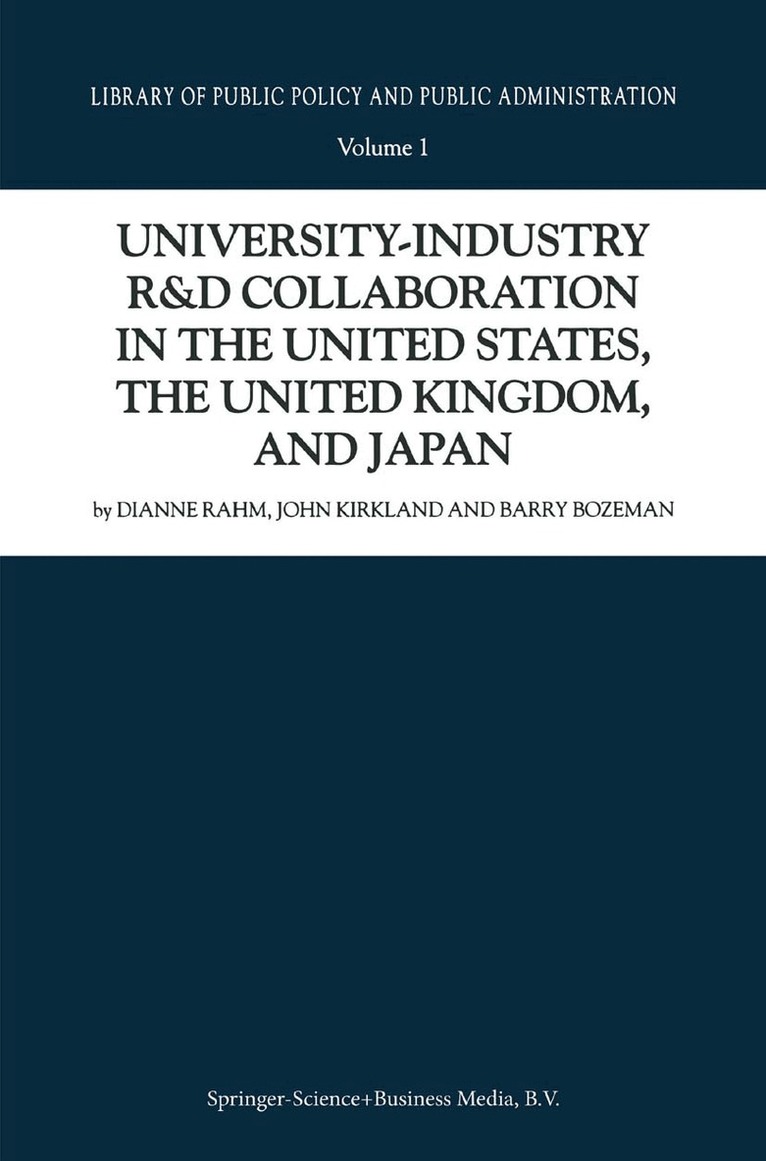
Over the last several decades there has been a growing interest in Research & Development (R&D) policy. This is particularly so in advanced industrialized nations that have adopted science- and technology- based strategies for national economic competitiveness. The United States, the United Kingdom, and Japan -- the three nations that are the subjects of this book -- share this policy strategy. Each of these nations is committed to hamessing the innovations that stern from scientific and technological advance to promote national economic prosperity. Governments can influence their nation's R&D efIort in three general ways. First, they can directly fund the R&D efIort through grants, loans, appropriations, or government contracts. Second, they can provide tax and financing incentives to encourage higher levels of private sector R&D. Third, they can use their power to create inter-organizational collaborations that vastly extend and expand the nation's collective R&D efIort. University-industry collaborations are a principal type of these inter organizational R&D efIorts -- and the focus of this book.
Häftad, Engelska, 2010
2 174 kr
Skickas inom 10-15 vardagar
The importance of technology transfer to innovation and wealth creation is now recog nised by most governments. As the policy debate has intensified, however, it has become clear that the problem of encouraging successful transfer is complex, and requires an interdisciplinary approach. The collection of papers in this volume is deliberately diverse. It offers perspectives from economics, sociology, science, engineering and public administration, and also from outside academic life, from those involved at the 'sharp end' of technology licensing and administering government research programmes. Contributions are also drawn from a rangeofnational backgrounds-the authors are drawn from ten countries, from through out Europe and North America. The main focus for the papers was a NATOAdvanced Study Workshop, which took place at the National Institute ofEconomic and Social Research, London, in September 1995. Unfortunately time and space has prevented all of the contributions appearing here, but all those who attended played an important role in making the event such a success. Thanks are also due to Dr Alain Jubier and his colleagues at NATO, without whose support and advice the seminarcould not have take place, to my fellow organising committee members Dr Katalin Balazs, Dr Linda Parker and Professor Steve Woolgar, and to Monica Miglior who, in addition to assisting in the conference organisation, pro vided detailed notes on sessions which helped greatly in later analysis.
Del 1 - Library of Public Policy and Public Administration
University-Industry R&D Collaboration in the United States, the United Kingdom, and Japan
Häftad, Engelska, 2010
1 060 kr
Skickas inom 10-15 vardagar
Over the last several decades there has been a growing interest in Research & Development (R&D) policy. This is particularly so in advanced industrialized nations that have adopted science- and technology- based strategies for national economic competitiveness. The United States, the United Kingdom, and Japan -- the three nations that are the subjects of this book -- share this policy strategy. Each of these nations is committed to hamessing the innovations that stern from scientific and technological advance to promote national economic prosperity. Governments can influence their nation's R&D efIort in three general ways. First, they can directly fund the R&D efIort through grants, loans, appropriations, or government contracts. Second, they can provide tax and financing incentives to encourage higher levels of private sector R&D. Third, they can use their power to create inter-organizational collaborations that vastly extend and expand the nation's collective R&D efIort. University-industry collaborations are a principal type of these inter organizational R&D efIorts -- and the focus of this book.
E-bok
PDF, Engelska, 20131 328 kr
Läs direkt efter köp
Over the last several decades there has been a growing interest in Research & Development (R&D) policy. This is particularly so in advanced industrialized nations that have adopted science- and technology- based strategies for national economic competitiveness. The United States, the United Kingdom, and Japan -- the three nations that are the subjects of this book -- share this policy strategy. Each of these nations is committed to hamessing the innovations that stern from scientific and technological advance to promote national economic prosperity. Governments can influence their nation''s R&D efIort in three general ways. First, they can directly fund the R&D efIort through grants, loans, appropriations, or government contracts. Second, they can provide tax and financing incentives to encourage higher levels of private sector R&D. Third, they can use their power to create inter-organizational collaborations that vastly extend and expand the nation''s collective R&D efIort. University-industry collaborations are a principal type of these inter organizational R&D efIorts -- and the focus of this book.