J rgen Habermas – författare
229 kr
Läs direkt efter köp
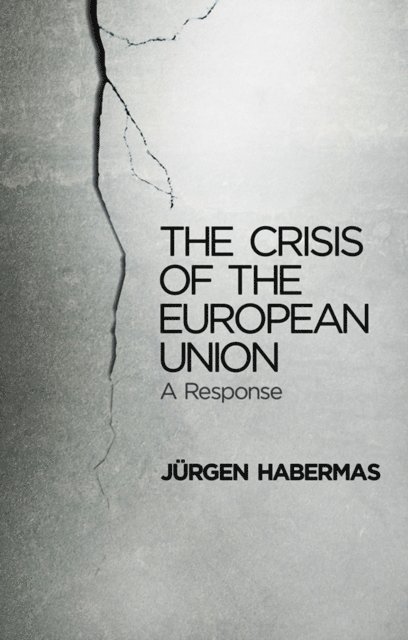
In the midst of the current crisis that is threatening to derail the historical project of European unification, Jürgen Habermas has been one of the most perceptive critics of the ineffectual and evasive responses to the global financial crisis, especially by the German political class. This extended essay on the constitution for Europe represents Habermas’s constructive engagement with the European project at a time when the crisis of the eurozone is threatening the very existence of the European Union. There is a growing realization that the European treaty needs to be revised in order to deal with the structural defects of monetary union, but a clear perspective for the future is missing. Drawing on his analysis of European unification as a process in which international treaties have progressively taken on features of a democratic constitution, Habermas explains why the current proposals to transform the system of European governance into one of executive federalism is a mistake. His central argument is that the European project must realize its democratic potential by evolving from an international into a cosmopolitan community. The opening essay on the role played by the concept of human dignity in the genealogy of human rights in the modern era throws further important light on the philosophical foundations of Habermas’s theory of how democratic political institutions can be extended beyond the level of nation-states. Now that the question of Europe and its future is once again at the centre of public debate, this important intervention by one of the greatest thinkers of our time will be of interest to a wide readership.
252 kr
Läs direkt efter köp
Over the past 25 years, Jürgen Habermas has presented what is arguably the most coherent and wide-ranging defence of the project of European unification and of parallel developments towards a politically integrated world society. In developing his key concepts of the transnationalisation of democracy and the constitutionalisation of international law, Habermas offers the main players in the struggles over the fate of the European Union (the politicians, the political parties and the publics of the member states) a way out of the current economic and political crisis, should they choose to follow it.
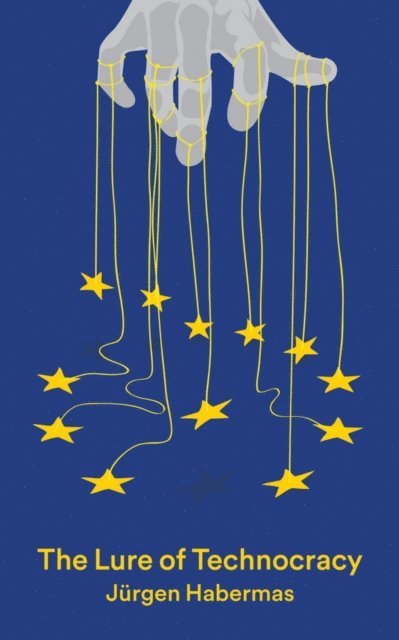
In the title essay Habermas addresses the challenges and threats posed by the current banking and public debt crisis in the Eurozone for European unification. He is harshly critical of the incrementalist, technocratic policies advocated by the German government in particular, which are being imposed at the expense of the populations of the economically weaker, crisis-stricken countries and are undermining solidarity between the member states. He argues that only if the technocratic approach is replaced by a deeper democratization of the European institutions can the European Union fulfil its promise as a model for how rampant market capitalism can once again be brought under political control at the supranational level.
This volume reflects the impressive scope of Habermas?s recent writings on European themes, including theoretical treatments of the complex legal and political issues at stake, interventions on current affairs, and reflections on the lives and works of major European philosophers and intellectuals. Together the essays provide eloquent testimony to the enduring relevance of the work of one of the most influential and far-sighted public intellectuals in the world today, and are essential reading for all philosophers, legal scholars and social scientists interested in European and global issues.
245 kr
Läs direkt efter köp
What kind of international order should we seek to create in our contemporary global age? How should we understand the political project of Europe and how can the democratic deficit of the EU be overcome? How should we understand the relation between democracy as popular sovereignty, which has become the defining principle of political legitimacy in the modern world, and the idea of basic human rights embodied in the rule of law?
Habermas brings his formidable powers of analysis and his distinctive theoretical perspective to bear on these and other key questions of the modern age. His analysis is shaped throughout by his commitment to informed public debate and his powerful advocacy of a postnational renewal of the project of constitutional democracy.
Time of Transitions will be essential reading for all students and scholars of sociology and politics, and it will be of interest to anyone concerned with the key social and political questions of our time.
229 kr
Läs direkt efter köp
In this important new book, Jürgen Habermas – the most influential philosopher and social thinker in Germany today – takes up the question of genetic engineering and its ethical implications and subjects it to careful philosophical scrutiny. His analysis is guided by the view that genetic manipulation is bound up with the identity and self-understanding of the species. We cannot rule out the possibility that knowledge of one’s own hereditary factors may prove to be restrictive for the choice of an individual’s way of life and may undermine the symmetrical relations between free and equal human beings.
In the concluding chapter – which was delivered as a lecture on receiving the Peace Prize of the German Book Trade for 2001 – Habermas broadens the discussion to examine the tension between science and religion in the modern world, a tension which exploded, with such tragic violence, on September 11th.
258 kr
Läs direkt efter köp
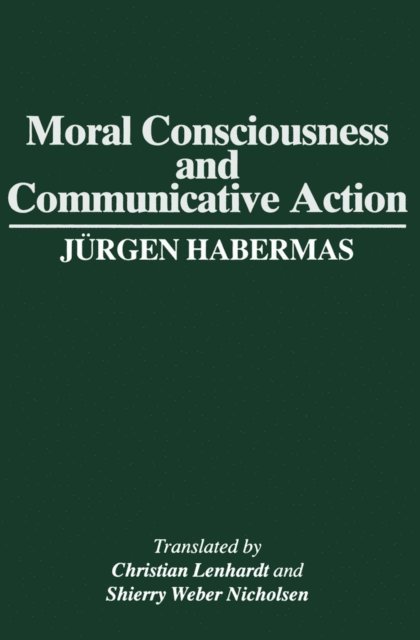
Habermas connects communicative ethics to the theory of social action via an examination of research in the social psychology of moral and interpersonal development. He aims to show that our basic moral intuitions spring from something deeper and more universal than contingent features of our tradition, namely from normative presuppositions of social interaction that belong to the repertoire of competent agents in any society.
Moral Consciousness and Communicative Action confronts directly a variety of difficult and controversial problems which are at the centre of current debates in philosophy and social and political theory.
258 kr
Läs direkt efter köp
260 kr
Läs direkt efter köp
Habermas argues that Western societies have succeeded to some extent in stabilizing the economic fluctuations associated with capitalism, but this has created a new range of crisis tendencies which are expressed in other spheres. States intervene in economic life and attempt to regulate markets, but they find themselves confronted by increasing and often conflicting demands. As individuals become increasingly disillusioned, the state is faced with the possibility of a mass withdrawal of loyalty or support - a ''legitimation crisis''.
Widely recognized as a classic of contemporary social and political analysis, Legitimation Crisis sheds light on a range of issues which are central to current debates, from the decline of class conflict and the disillusionment with established political institutions to the crisis of the welfare state. It remains essential reading for students of sociology, politics and the social sciences generally.
272 kr
Läs direkt efter köp
358 kr
Läs direkt efter köp
In this extraordinarily wide-ranging book, Habermas examines the principal positions of modern philosophy - Kantianism, Marxism, positivism, pragmatism, hermeneutics, the philosophy of science, linguistic philosophy and phenomenology - to lay bare the structure of the processes of enquiry that determine the meaning and the validity of all our statements which claim objectivity.
This edition contains a postscript written by Habermas for the second German edition of Knowledge and Human Interests.
287 kr
Läs direkt efter köp
Through a series of highly original historical studies, Habermas re-examines the relations between philosophy, science and politics. Beginning with the classical doctrine of politics as developed by Aristotle, he traces the changing constellation of theory and practice through the work of Machiavelli, More, Hobbes, Hegel and Marx. He argues that, with the development of the modern sciences, politics has become increasingly regarded as a technical discipline concerned with problems of prediction and control. Politics has thus lost its link with the practical cultivation of character, that is, with the praxis of enlightened citizens.
Theory and Practices includes a major re-assessment of Marx''s work and of the status of Marxism as a form of critique. In an important concluding chapter Habermas examines the role of reason and the prospects for critical theory in our modern scientific civilization.
306 kr
Läs direkt efter köp
The 1980s have been a crucial decade in the political life of Western democracies in general, and of the Federal Republic of Germany in particular. The transformations that accompanied a shift from 13 years of Social democratic rule in Germany to government by the conservative Christian Democrats are captured in this series of insightful, often passionate political and cultural commentaries. The central theme uniting the essays is the German problem of ''coming to terms within the past,'' a problem that has important implications outside Germany as well.
Of particular note are the essays on what has come to be known as the Historian''s Debate: Habermas''s attack on the revisionist German historians who have been trying to trivialize and "normalize" the history of the Nazi period, and his defence of the need for a realistic and discriminating approach to the Nazi period and its legacy. Habermas also takes up the recent debate concerning Martin Heidegger''s involvement with Nazism and the rise of the neoconservative movement in Europe and America. In particular, the essay on The New Obscurity combines Habermas''s analysis of the problems of the welfare state with his suggestions for avenues open to utopian impulses today.
272 kr
Läs direkt efter köp
Like most contemporary thinkers, Habermas is critical of the Western metaphysical tradition and its exaggerated conception of reason. But he cautions against the temptation to relinquish this conception altogether. In opposition to the radical critics of Western philosophy, Habermas argues that postmetaphysical thinking can remain critical only if it preserves the idea of reason while stripping it of its metaphysical trappings. Habermas contributes to this task by developing further his distinctive approach to problems of meaning, rationality and subjectivity.
This book will be of particular interest to students of philosophy, sociology and social and political theory, and it will be essential reading for anyone interested in the continuing development of Habermas''s project.
287 kr
Läs direkt efter köp
Habermas approaches these tasks through a combination of conceptual analyses, systematic reflections, and critical reconstructions of such predecessors as Marx and Weber, Durkheim and Mead, Horkheimer and Adorno, Schutz and Parsons. Reason and the Rationalization of Society develops a sociological theory of action that stresses not its means-ends or teleological aspect, but the need to coordinate action socially via communication. In the introductory chapter Habermas sets out a powerful series of arguments on such foundational issues as cultural and historical relativism, the methodology of Verstehen, the inseparabilty of interpretation from critique. In addition to clarifying the normative foundations of critical social inquiry, this sets the stage for a systematic appropriation of Weber''s theory of rationalization and its Marxist reception by Lukacs, Horkheimer and Adorno.
This is an important book for degree students of philosophy, sociology and related subjects.
306 kr
Läs direkt efter köp
252 kr
Läs direkt efter köp
Here, as in his earlier The Past as Future, Habermas emerges as an inspired analyst of contemporary German political and intellectual life. He repeatedly criticizes recent efforts by historical and political commentators to ''normalize'' and, in part, to understate the horrors of modern German history. He insists that 1945 - not 1989 - was the crucial turning point in German history, since it was then that West Germany decisively repudiated certain aspects of its cultural and political past (nationalism and antisemitism in particular) and turned towards Western Traditions of democracy: free and open discussion, and respect for the civil rights of all individuals. Similarly, Habermas deplores the renewal of nationalist sentiment in Germany and throughout Europe. Drawing upon his vast historical knowledge and contemporary insight, Habermas argues for heightened emphasis on trans-European and global democratic institutions - institutions far better suited to meet the challenges (and dangers) of the next century.
280 kr
Läs direkt efter köp
306 kr
Läs direkt efter köp
One of the distinctive features of Habermas''s work has been its approach to the problem of political legitimacy through a sustained reflection on the dual legitimating and regulating function of modern legal systems. Extending his discourse theory of normative validity to the legal-political domain, Habermas has defended a proceduralist conception of deliberative democracy in which the burden of legitimating state power is borne by informal and legally institutionalized processes of political deliberation. Its guiding intuition is the radical democratic idea that there is an internal relation between the rule of law and popular sovereignty. In these essays he brings this discursive and proceduralist analysis of political legitimacy to bear on such urgent contemporary issues as the enduring legacy of the welfare state, the future of the nation state, and the prospects of a global politics of human rights.
This book will be essential reading for students and academics in sociology and social theory, politics and political theory, philosophy and the social sciences generally.
382 kr
Läs direkt efter köp
Written from 1976 to 1996, the essays show the extent to which formal pragmatics underpins Habermas''s theory of communicative action. They are presented in chronological order, so that the reader can trace developments and revisions in Habermas''s thought. The volume includes a critical discussion of Searle''s theory of meaning, and Richard Rorty''s neopragmatism. It concludes with Habermas''s recent defence of his theory of communicative action, in which he reaffirms his view that interpretative understanding inescapably involves evaluation.
This book will be an indispensable text for students and academics who want a clear and accessible introduction to the development of Habermas''s theory of communication and its relation to his broader social and political theory.
260 kr
Läs direkt efter köp
Does a global economy render the traditional nation-state obsolete? Does globalization threaten democratic life, or offer it new forms of expression? What are the implications of globalization for our understanding of politics and of national and cultural identities?
In The Postnational Constellation, the leading German philosopher and social theorist J?rgen Habermas addresses these and other questions. He explores topics such as the historical and political origins of national identity, the catastrophes and achievements of "the long twentieth century," the future of democracy in the wake of the era of the nation-state, the moral and political challenges facing the European Union, and the status of global human rights in the ongoing debate on the sources of cultural identity. In their scope, critical insight, and argumentative clarity, the essays in The Postnational Constellation present a powerful vision of the contemporary political scene and of the challenges and opportunities we face in the new millennium.
Those unfamiliar with Habermas''s theoretical work will find in this volume a lucid and engaging introduction to one of the world''s most influential thinkers. For readers familiar with Habermas''s writings, The Postnational Constellation provides an invaluable application of his social and political theories to current political realities.
244 kr
Läs direkt efter köp
In a new introduction written especially for this volume, Eduardo Mendieta places Habermas'' engagement with religion in the context of his work as a whole. Mendieta also discusses Habermas'' writings in relation to Jewish Messianism and the Frankfurt School, showing how the essays in Religion and Rationality, one of which is translated into English for the first time, foreground an important, yet often neglected, dimension of critical theory. The volume concludes with an original extended interview, also in English for the first time, in which Habermas develops his current views on religion in modern society.
This book will be of great interest to students and scholars in theology, religious studies and philosophy, as well as to all those already familiar with Habermas'' work.
290 kr
Läs direkt efter köp
Two additional essays elaborating the themes of the lectures are also included in this volume. ''Intentions, Conventions, and Linguistic Interactions'' is an essay in the philosophy of action that focuses on the validity of social norms and examines the conceptual connections between rules, conventions, norm-governed action, and intentionality. ''Reflections on Communicative Pathology'' addresses the question of deviant processes of socialization and contains an analysis of the formal conditions of systematically distorted communication.
This book was designed as a companion to On the Pragmatics of Communication (1998), which took pieces from Habermas''s later work to create a systematic introduction to his theory of formal pragmatics.
287 kr
Läs direkt efter köp
358 kr
Läs direkt efter köp
275 kr
Läs direkt efter köp
In this timely and important volume, Jürgen Habermas responds to the dramatic political events of the period since September 11, 2001, and maps out a way to move the political agenda forward, beyond the acrimonious debates that have pitched opponents of the war against the Bush Administration and its coalition of the willing. What is fundamentally at stake, argues Habermas, is the Kantian project of overcoming the state of nature between states through the constitutionalization of international law.
Habermas develops a detailed multidimensional model of transnational and supranational governance inspired by Kantian cosmopolitanism, situates it in the context of the evolution of international law toward a cosmopolitan constitutional order during the nineteenth and twentieth centuries, and defends it against the new challenge posed by the hegemonic liberal vision underlying the aggressive unilateralism of the current US administration.
The Divided West is a major intervention by one of the most highly regarded political thinkers of our time. It will be essential reading for students of sociology, politics, international relations, and international law, and it will be of great interest to anyone concerned with the current and future course of European and international politics.
385 kr
Läs direkt efter köp
The tension between naturalism and religion is the central theme of this major new book by Jürgen Habermas. On the one hand he argues for an appropriate naturalistic understanding of cultural evolution that does justice to the normative character of the human mind. On the other hand, he calls for an appropriate interpretation of the secularizing effects of a process of social and cultural rationalization increasingly denounced by the champions of religious orthodoxies as a historical development peculiar to the West. These reflections on the enduring importance of religion and the limits of secularism under conditions of postmetaphysical reason set the scene for an extended treatment the political significance of religious tolerance and for a fresh contribution to current debates on cosmopolitanism and a constitution for international society.
245 kr
Läs direkt efter köp
The future of Europe and the role it will play in the 21st century are among the most important political questions of our time. The optimism of a decade ago has now faded but the stakes are higher than ever. The way these questions are answered will have enormous implications not only for all Europeans but also for the citizens of Europe’s closest and oldest ally – the USA.
In this new book, one of Europe''s leading intellectuals examines the political alternatives facing Europe today and outlines a course of action for the future. Habermas advocates a policy of gradual integration of Europe in which key decisions about Europe''s future are put in the hands of its peoples, and a ''bipolar commonality'' of the West in which a more unified Europe is able to work closely with the United States to build a more stable and equitable international order.
This book includes Habermas''s portraits of three long-time philosophical companions, Richard Rorty, Jacques Derrida and Ronald Dworkin. It also includes several important new texts by Habermas on the impact of the media on the public sphere, on the enduring importance religion in "post-secular" societies, and on the design of a democratic constitutional order for the emergent world society.
229 kr
Läs direkt efter köp
Habermas argues that in order to engage in this dialogue, two conditions must be met: religion must accept the authority of secular reason as the fallible results of the sciences and the universalistic egalitarianism in law and morality; and conversely, secular reason must not set itself up as the judge concerning truths of faith. This argument was developed in part as a reaction to the conception of the relation between faith and reason formulated by Pope Benedict XVI in his 2006 Regensburg address.
In 2007 Habermas conducted a debate, under the title ‘An Awareness of What Is Missing'', with philosophers from the Jesuit School for Philosophy in Munich. This volume includes Habermas''s essay, the contributions of his interlocutors and Habermas''s reply to them. It will be indispensable reading for anyone who wishes to understand one of the most urgent and intractable issues of our time.
275 kr
Läs direkt efter köp
258 kr
Läs direkt efter köp
‘There is no alternative to postmetaphysical thinking’: this statement, made by Jürgen Habermas in 1988, has lost none of its relevance. Postmetaphysical thinking is, in the first place, the historical answer to the crisis of metaphysics following Hegel, when the central metaphysical figures of thought began to totter under the pressure exerted by social developments and by developments within science. As a result, philosophy’s epistemological privilege was shaken to its core, its basic concepts were de-transcendentalized, and the primacy of theory over practice was opened to question. For good reasons, philosophy ‘lost its extraordinary status’, but as a result it also courted new problems. In Postmetaphysical Thinking II, the sequel to the 1988 volume that bears the same title (English translation, Polity 1992), Habermas addresses some of these problems.
The first section of the book deals with the shift in perspective from metaphysical worldviews to the lifeworld, the unarticulated meanings and assumptions that accompany everyday thought and action in the mode of ‘background knowledge’. Habermas analyses the lifeworld as a ‘space of reasons’ – even where language is not (yet) involved, such as, for example, in gestural communication and rituals. In the second section, the uneasy relationship between religion and postmetaphysical thinking takes centre stage. Habermas picks up where he left off in 1988, when he made the far-sighted observation that ‘philosophy, even in its postmetaphysical form, will be able neither to replace nor to repress religion’, and explores philosophy’s new-found interest in religion, among other topics. The final section includes essays on the role of religion in the political context of a post-secular, liberal society.
This volume will be of great interest to students and scholars in philosophy, religion and the social sciences and humanities generally.
306 kr
Läs direkt efter köp
How can the norms that underpin the linguistically structured world in which we live be brought into step with the contingency of the development of socio-cultural forms of life? How can the idea that our world exists independently of our attempts to describe it be reconciled with the insight that we can never reach reality without the mediation of language and that ''bare'' reality is therefore unattainable?
In Knowledge and Human Interests Habermas answered these questions with reference to a weak naturalism and a transcendental-pragmatic realism. Since then, however, he has developed a formal pragmatic theory which is based on an analysis of speech acts and language use. In this new volume Habermas takes up the philosophical questions of truth, objectivity and reality from the perspective of his linguistically-based pragmatic theory. The final section addresses the limits of philosophy and reassesses the relation between theory and practice from a perspective that could be described as ''post-Marxist''.
This volume, now available in paperback as well, by one of the world''s leading philosophers will be essential reading for students and scholars of philosophy, social theory and the humanities and social sciences generally.