Pablo De Greiff – författare
Visar alla böcker från författaren Pablo De Greiff. Handla med fri frakt och snabb leverans.
12 produkter
Handbook of Reparations
E-bok, 2006
766 kr
Lägg i varukorg
This Handbook is provides a broad range of essential information about past experiences with massive reparations programs as well as normative guidance for future practice. It examines in detail reparations programs in different parts of the world; includes thematic papers on topics that frequently …
The Handbook of Reparations
Häftad, 2008
1829 kr
Lägg i varukorg
This Handbook is provides a broad range of essential information about past experiences with massive reparations programs as well as normative guidance for future practice. It examines in detail reparations programs in different parts of the world; includes thematic papers on topics that frequently …
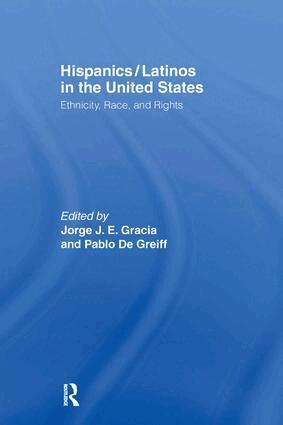
Hispanics/Latinos in the United States
Ethnicity, Race, and Rights
Av Jorge J.E. Gracia, Pablo De Greiff
Inbunden, 2000
2746 kr
Lägg i varukorg
The presence and impact of Hispanics/Latinos in the United States cannot be ignored. Already the largest minority group, by 2050 their numbers will exceed all the other minority groups in the United States combined. The diversity of this population is often understated, but the people differ in …
Hispanics/Latinos in the United States
Ethnicity, Race, and Rights
Av Jorge J.E. Gracia, Pablo De Greiff
Häftad, 2000
925 kr
Lägg i varukorg
The presence and impact of Hispanics/Latinos in the United States cannot be ignored. Already the largest minority group, by 2050 their numbers will exceed all the other minority groups in the United States combined. The diversity of this population is often understated, but the people differ in …
Inclusion of the Other
Studies in Political Theory
Av Jürgen Habermas, Ciaran Cronin m. fl.
Häftad, 2002
286 kr
Lägg i varukorg
The Inclusion of the Other contains Habermas's most recent work in political theory and political philosophy. Here Habermas picks up some of the central themes of Between Facts and Norms and elaborates them in relation to current political debates. One of the distinctive features of Habermas's work …
Inclusion of the Other
Studies in Political Theory
Av J rgen Habermas, Pablo De Greiff m. fl.
E-bok, 2015
326 kr
Lägg i varukorg
The Inclusion of the Other contains Habermas''s most recent work in political theory and political philosophy. Here Habermas picks up some of the central themes of Between Facts and Norms and elaborates them in relation to current political debates. One of the distinctive features of Habermas''s …
Drugs and the Limits of Liberalism
Moral and Legal Issues
Inbunden, 1999
914 kr
Lägg i varukorg
Society's drug problem will persist, and debates over how to solve it will continue, getting nowhere, until we define our terms. This book is an effort to do just that—to parse the legal, moral, and philosophical underpinnings for any discussion of drug policy. Does liberal political theory, with …
Transitional Justice and Development – Making Connections
Av Pablo De Greiff, Roger Duthie m. fl.
Häftad, 2009
264 kr
Lägg i varukorg
As developing societies emerge from legacies of conflict and authoritarianism, they are frequently beset by poverty, inequality, weak institutions, broken infrastructure, poor governance, insecurity, and low levels of social capital. These countries also tend to propagate massive human rights …
Disarming the Past – Transitional Justice and Ex–Combatants
Av Ana Cutter Patel, Pablo De Greiff m. fl.
Häftad, 2010
244 kr
Lägg i varukorg
For the past twenty years, international donors have invested heavily in large-scale disarmament, demobilization, and reintegration (DDR) programs, while, at the same time, transitional justice measures have proliferated, bringing truth, justice, and reparations to those recovering from state …
Hispanics/Latinos in the United States
Ethnicity, Race, and Rights
Av Pablo De Greiff, Jorge J.E. Gracia
E-bok, 2012
1091 kr
Lägg i varukorg
The presence and impact of Hispanics/Latinos in the United States cannot be ignored. Already the largest minority group, by 2050 their numbers will exceed all the other minority groups in the United States combined. The diversity of this population is often understated, but the people differ in …
Hispanics/Latinos in the United States
Ethnicity, Race, and Rights
Av Pablo De Greiff, Jorge J.E. Gracia
E-bok, 2012
1091 kr
Lägg i varukorg
The presence and impact of Hispanics/Latinos in the United States cannot be ignored. Already the largest minority group, by 2050 their numbers will exceed all the other minority groups in the United States combined. The diversity of this population is often understated, but the people differ in …
Global Justice and Transnational Politics
Av Pablo De Greiff, Ciaran P. Cronin
Häftad, 2002
80 kr
Tillfälligt slut