JaA› Elsner – författare
Visar alla böcker från författaren JaA› Elsner. Handla med fri frakt och snabb leverans.
9 produkter
9 produkter
E-bok
Engelska, 20161 363 kr
Läs direkt efter köp
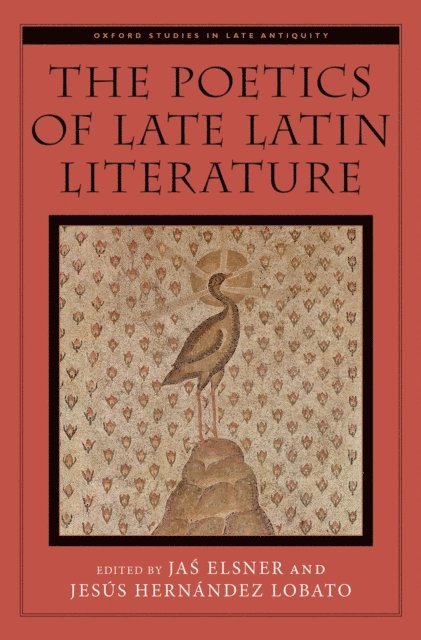
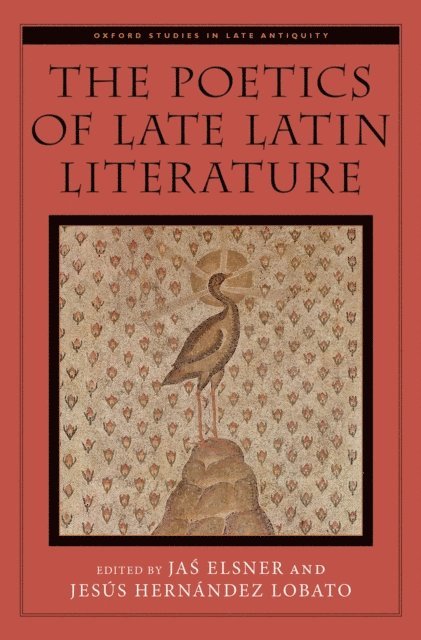
The aesthetic changes in late Roman literature speak to the foundations of modern Western culture. The dawn of a modern way of being in the world, one that most Europeans and Americans would recognize as closely ancestral to their own, is to be found not in the distant antiquity of Greece nor in the golden age of a Roman empire that spanned the Mediterranean, but more fundamentally in the original and problematic fusion of Greco-Roman culture with a new and unexpected foreign element-the arrival of Christianity as an exclusive state religion. For a host of reasons, traditionalist scholarship has failed to give a full and positive account of the formal, aesthetic and religious transformations of ancient poetics in Late Antiquity. The Poetics of Late Latin Literature attempts to capture the excitement and vibrancy of the living ancient tradition reinventing itself in a new context in the hands of a series of great Latin writers mainly from the fourth and fifth centuries AD. A series of the most distinguished expert voices in later Latin poetry as well as some of the most exciting new scholars have been specially commissioned to write new papers for this volume.
E-bok
Engelska, 2018165 kr
Läs direkt efter köp
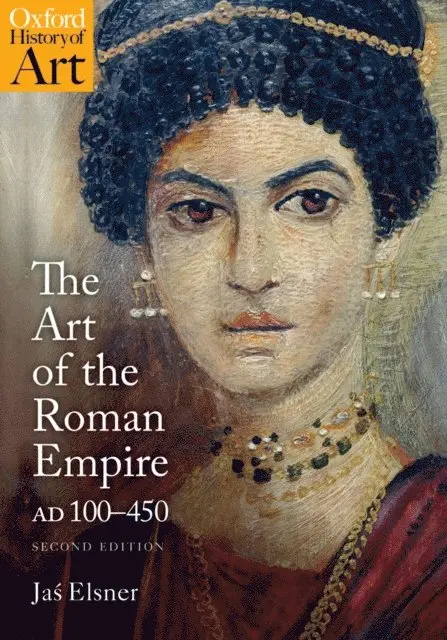
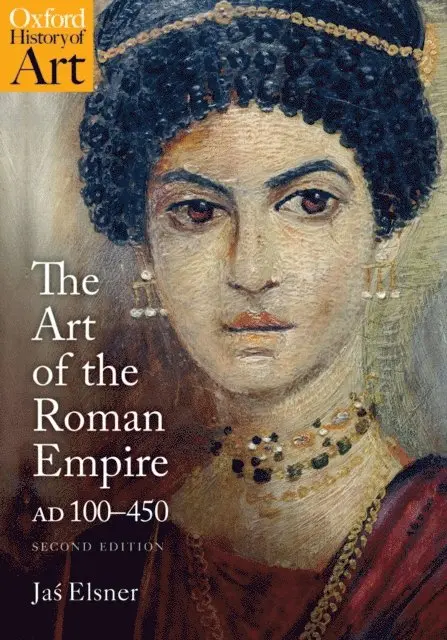
The passage from Imperial Rome to the era of late antiquity, when the Roman Empire underwent a religious conversion to Christianity, saw some of the most significant and innovative developments in Western culture. This stimulating book investigates the role of the visual arts, the great diversity of paintings, statues, luxury arts, and masonry, as both reflections and agents of those changes. Jas'' Elsner''s ground-breaking account discusses both Roman and early Christian art in relation to such issues as power, death, society, acculturation, and religion. By examining questions of reception, viewing, and the culture of spectacle alongside the more traditional art-historical themes of imperial patronage and stylistic change, he presents a fresh and challenging interpretation of an extraordinarily rich cultural crucible in which many fundamental developments of later European art had their origins.This second edition includes a new discussion of the Eurasian context of Roman art, an updated bibliography, and new, full colour illustrations.
E-bok
Engelska, 20171 398 kr
Läs direkt efter köp
In the opening decades of the twentieth century, Germany was at the cutting edge of arts and humanities scholarship across Europe. However, when many of its key thinkers - leaders in their fields in classics, philosophy, archaeology, art history, and oriental studies - were forced to flee to England following the rise of the Nazi regime, Germany''s loss became Oxford''s gain.From the mid-1930s onwards, Oxford could accurately be described as an ''ark of knowledge'' of western civilization: a place where ideas about art, culture, and history could be rescued, developed, and disseminated freely. The city''s history as a place of refuge for scientists who were victims of Nazi oppression is by now familiar, but the story of its role as a sanctuary for cultural heritage, though no less important, has received much less attention.In this volume, the impact of Oxford as a shelter, a meeting point, and a centre of thought in the arts and humanities specifically is addressed, by looking both at those who sought refuge there and stayed, and those whose lives intersected with Oxford at crucial moments before and during the war. Although not every great refugee can be discussed in detail in this volume, this study offers an introduction to the unique conjunction of place, people, and time that shaped Western intellectualhistory, exploring how the meeting of minds enabled by libraries, publishing houses, and the University allowed Oxford''s refugee scholars to have a profound and lasting impact on the development of British culture. Drawing on oral histories, previously unpublished letters, and archives, it illuminatesand interweaves both personal and global histories to demonstrate how, for a short period during the war, Oxford brought together some of the greatest minds of the age to become the custodians of a great European civilization.
E-bok
PDF, Engelska, 20171 398 kr
Läs direkt efter köp
In the opening decades of the twentieth century, Germany was at the cutting edge of arts and humanities scholarship across Europe. However, when many of its key thinkers - leaders in their fields in classics, philosophy, archaeology, art history, and oriental studies - were forced to flee to England following the rise of the Nazi regime, Germany''s loss became Oxford''s gain.From the mid-1930s onwards, Oxford could accurately be described as an ''ark of knowledge'' of western civilization: a place where ideas about art, culture, and history could be rescued, developed, and disseminated freely. The city''s history as a place of refuge for scientists who were victims of Nazi oppression is by now familiar, but the story of its role as a sanctuary for cultural heritage, though no less important, has received much less attention.In this volume, the impact of Oxford as a shelter, a meeting point, and a centre of thought in the arts and humanities specifically is addressed, by looking both at those who sought refuge there and stayed, and those whose lives intersected with Oxford at crucial moments before and during the war. Although not every great refugee can be discussed in detail in this volume, this study offers an introduction to the unique conjunction of place, people, and time that shaped Western intellectualhistory, exploring how the meeting of minds enabled by libraries, publishing houses, and the University allowed Oxford''s refugee scholars to have a profound and lasting impact on the development of British culture. Drawing on oral histories, previously unpublished letters, and archives, it illuminatesand interweaves both personal and global histories to demonstrate how, for a short period during the war, Oxford brought together some of the greatest minds of the age to become the custodians of a great European civilization.
E-bok
PDF, Engelska, 2020397 kr
Läs direkt efter köp
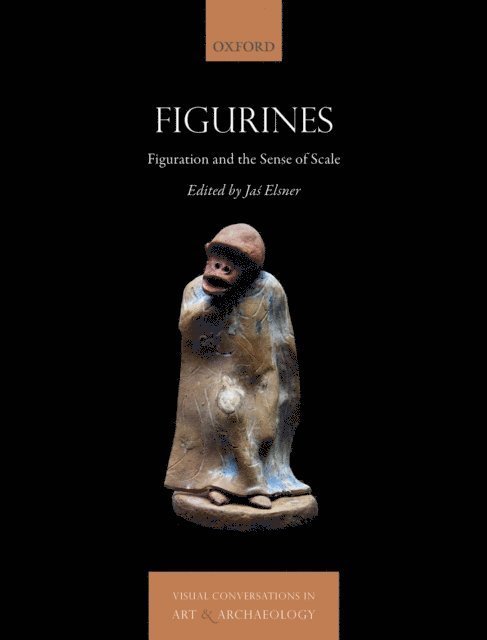
Figurines are objects of handling. As touchable objects, they engage the viewer in different ways from flat art, whether relief sculpture or painting. Unlike the voyeuristic relationship of viewing a neatly framed pictorial narrative as if from the outside, the viewer as handler is always potentially and without protection within the narrative of figurines. As such, they have potential for a potent, even animated, agency in relation to those who use them.This volume concerns figurines as archaeologically-attested materials from literate cultures with surviving documents that have no direct links of contiguity, appropriation, or influence in relation to each other. It is an attempt to put the category of the figurine on the table as a key conceptual and material problematic in the art history of antiquity. It does so through comparative juxtaposition of close-focused chapters drawn from deep art-historical engagement with specific ancient cultures - Chinese, pre-Columbian Mesoamerican, and Greco-Roman. It encourages comparative conversation across the disciplines that constitute the art history of the ancient world through finding categories and models of discourse that may offer fertile ground for comparison and antithesis. It extends the rich and astute literature on prehistoric figurines into understanding the figurine in historical contexts, where literary texts and documents, inscriptions, or surviving terminologies can be adduced alongside material culture. At stake are issues of figuration and anthropomorphism, miniaturization and portability, one-off production and replication, and substitution and scale at the interface of archaeology and art history.
E-bok
Engelska, 2020393 kr
Läs direkt efter köp
Figurines are objects of handling. As touchable objects, they engage the viewer in different ways from flat art, whether relief sculpture or painting. Unlike the voyeuristic relationship of viewing a neatly framed pictorial narrative as if from the outside, the viewer as handler is always potentially and without protection within the narrative of figurines. As such, they have potential for a potent, even animated, agency in relation to those who use them.This volume concerns figurines as archaeologically-attested materials from literate cultures with surviving documents that have no direct links of contiguity, appropriation, or influence in relation to each other. It is an attempt to put the category of the figurine on the table as a key conceptual and material problematic in the art history of antiquity. It does so through comparative juxtaposition of close-focused chapters drawn from deep art-historical engagement with specific ancient cultures - Chinese, pre-Columbian Mesoamerican, and Greco-Roman. It encourages comparative conversation across the disciplines that constitute the art history of the ancient world through finding categories and models of discourse that may offer fertile ground for comparison and antithesis. It extends the rich and astute literature on prehistoric figurines into understanding the figurine in historical contexts, where literary texts and documents, inscriptions, or surviving terminologies can be adduced alongside material culture. At stake are issues of figuration and anthropomorphism, miniaturization and portability, one-off production and replication, and substitution and scale at the interface of archaeology and art history.
Landscape and Space
Comparative Perspectives from Chinese, Mesoamerican, Ancient Greek, and Roman Art
E-bok
PDF, Engelska, 2021802 kr
Läs direkt efter köp
Landscape has been a key theme in world archaeology and trans-cultural art history over the last half century, particularly in the study of painting in art history and in all questions of human intervention and the placement of monuments in the natural world within archaeology. However, the representation of landscape has been rather less addressed in the scholarship of the archaeologically-accessed visual cultures of the ancient world. The kinds of reliefs, objects, and paintings discussed here have a significant purchase on matters concerned with landscape and space in the visual sphere, but were discovered within archaeological contexts and by means of excavation. Through case studies focused on the invention of wilderness imagery in ancient China, the relation of monuments to landscape in ancient Greece, the place of landscape painting in Mesoamerican Maya art, and the construction of sacred landscape across Eurasia between Stonehenge and the Silk Road via Pompeii, this book emphasises the importance of thinking about models of landscape in ancient art, as well as the value of comparative approaches in underlining core aspects of the topic. Notably, it explores questions of space, both actual and conceptual, including how space is configured through form and representation.
Landscape and Space
Comparative Perspectives from Chinese, Mesoamerican, Ancient Greek, and Roman Art
E-bok
Engelska, 2021802 kr
Läs direkt efter köp
Landscape has been a key theme in world archaeology and trans-cultural art history over the last half century, particularly in the study of painting in art history and in all questions of human intervention and the placement of monuments in the natural world within archaeology. However, the representation of landscape has been rather less addressed in the scholarship of the archaeologically-accessed visual cultures of the ancient world. The kinds of reliefs, objects, and paintings discussed here have a significant purchase on matters concerned with landscape and space in the visual sphere, but were discovered within archaeological contexts and by means of excavation. Through case studies focused on the invention of wilderness imagery in ancient China, the relation of monuments to landscape in ancient Greece, the place of landscape painting in Mesoamerican Maya art, and the construction of sacred landscape across Eurasia between Stonehenge and the Silk Road via Pompeii, this book emphasises the importance of thinking about models of landscape in ancient art, as well as the value of comparative approaches in underlining core aspects of the topic. Notably, it explores questions of space, both actual and conceptual, including how space is configured through form and representation.
E-bok
PDF, Engelska, 20161 363 kr
Läs direkt efter köp
The aesthetic changes in late Roman literature speak to the foundations of modern Western culture. The dawn of a modern way of being in the world, one that most Europeans and Americans would recognize as closely ancestral to their own, is to be found not in the distant antiquity of Greece nor in the golden age of a Roman empire that spanned the Mediterranean, but more fundamentally in the original and problematic fusion of Greco-Roman culture with a new and unexpected foreign element-the arrival of Christianity as an exclusive state religion. For a host of reasons, traditionalist scholarship has failed to give a full and positive account of the formal, aesthetic and religious transformations of ancient poetics in Late Antiquity. The Poetics of Late Latin Literature attempts to capture the excitement and vibrancy of the living ancient tradition reinventing itself in a new context in the hands of a series of great Latin writers mainly from the fourth and fifth centuries AD. A series of the most distinguished expert voices in later Latin poetry as well as some of the most exciting new scholars have been specially commissioned to write new papers for this volume.