Julia M. H. Smith - Böcker
Visar alla böcker från författaren Julia M. H. Smith. Handla med fri frakt och snabb leverans.
8 produkter
8 produkter
414 kr
Skickas
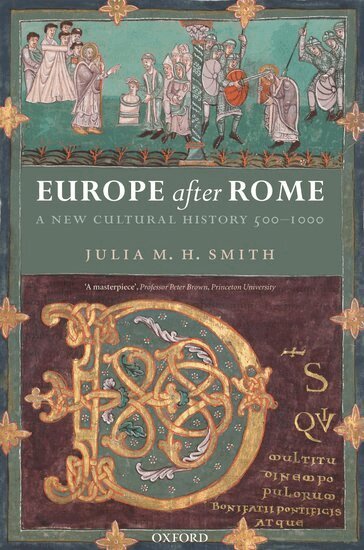
This is the first single-author study in over fifty years to offer an integrated appraisal of the early Middle Ages as a dynamic and formative period in European history. Written in an attractive and accessible style, it makes extensive use of original sources to introduce early medieval men and women at all levels of society from slave to emperor, and allows them to speak to the reader in their own words. It overturns traditional narratives and instead offers an entirely fresh approach to the centuries from c.500 to c.1000. Rejecting any notion of a dominant, uniform early medieval culture, it argues that the fundamental characteristic of the early middle ages is diversity of experience. To explain how the men and women who lived in this period ordered their world in cultural, social, and political terms, it employs an innovative methodology combining cultural history, regional studies, and gender history. Ranging comparatively from Ireland to Hungary and from Scotland and Scandinavia to Spain and Italy, the analysis highlights three themes: regional variation, power, and the legacy of Rome. The book's eight chapters examine the following subjects: Speaking and Writing; Living and Dying; Friends and Relations; Men and Women; Labour and Lordship; Getting and Giving; Kingship and Christianity; Rome and the Peoples of Europe. Collectively, they establish the complex cultural realities which distinguished Europe in the period between the end of the central institutions of the western Roman empire in the fifth century and the emergence of a Rome-centred papal monarchy from the late eleventh century onwards. In the context of debates about the social, religious and cultural meaning of 'Europe' in the early twenty-first century, this books seeks the origins of European cultural pluralism and diversity in the early Middle Ages.
539 kr
Skickas inom 7-10 vardagar
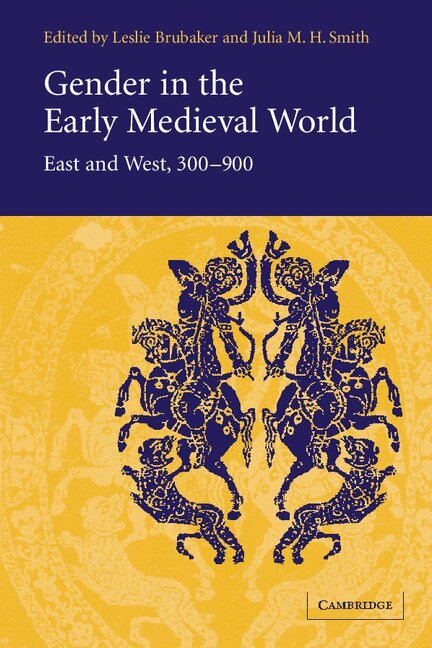
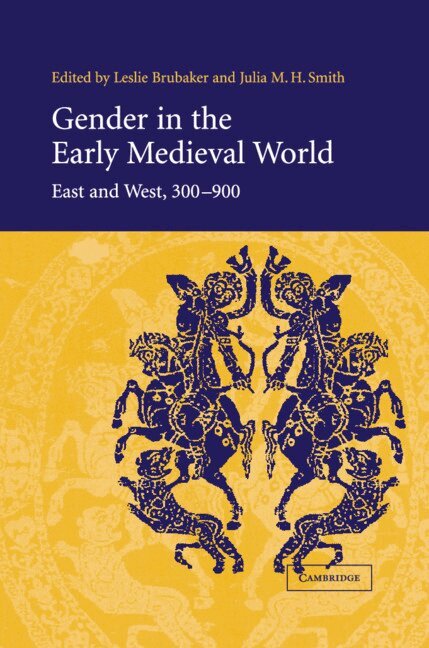
Gender analysis is one of the most probing ways to understand both power and cultural strategies in pre-industrial societies. In this book, sixteen scholars on the cutting edges of their disciplines explore the ideas and expressions of gender that characterised the centuries from c.300 to 900 in milieux ranging from York to Baghdad, via Rome and Constantinople. Deploying a variety of disciplines and perspectives, they draw on the evidence of material culture as well as texts to demonstrate the wide range of gender identities that informed the social, political and imaginary worlds of these centuries. The essays make clear that the fixed point in the gender systems of the period was constituted by the hegemonic masculinity of the ruling elite, marginalised groups often invisible as historical subjects in their own right were omnipresent in, and critical to, the gendered discourses which buttressed assertions of power.
Del 18 - Cambridge Studies in Medieval Life and Thought: Fourth Series
Province and Empire
Brittany and the Carolingians
Häftad, Engelska, 2006
645 kr
Skickas inom 7-10 vardagar
This book offers ideas about the processes of political and cultural change in the early Middle Ages. The main focus is on relations between the centre and periphery of the Carolingian empire, in particular on the development of Brittany as a territorial principality in the ninth and tenth centuries. A major theme is the interaction of Carolingian imperial policies, Frankish aristocratic feuding, and local Breton communities. Other issues discussed include economy and society in Brittany and Neustria, the impact of Carolingian imperialism on local Breton communities, changes in the political, ecclesiastical and social structures arising from Carolingian overlordship of Brittany, the interaction of Celtic and Carolingian culture, and the construction of an early medieval ethnic identity. The book shows how regional autonomy and self-regulating villages were as integral to the Carolingian world as court politics, cultural imperialism and frontier strife, and it argues that, in order to understand both the establishment and the collapse of the Carolingian empire, politics at the periphery demand as much attention as politics at the centre.
Del 18 - Cambridge Studies in Medieval Life and Thought: Fourth Series
Province and Empire
Brittany and the Carolingians
Inbunden, Engelska, 1992
1 499 kr
Skickas inom 7-10 vardagar
This book offers ideas about the processes of political and cultural change in the early Middle Ages. The main focus is on relations between the centre and periphery of the Carolingian empire, in particular on the development of Brittany as a territorial principality in the ninth and tenth centuries. A major theme is the interaction of Carolingian imperial policies, Frankish aristocratic feuding, and local Breton communities. Other issues discussed include economy and society in Brittany and Neustria, the impact of Carolingian imperialism on local Breton communities, changes in the political, ecclesiastical and social structures arising from Carolingian overlordship of Brittany, the interaction of Celtic and Carolingian culture, and the construction of an early medieval ethnic identity. The book shows how regional autonomy and self-regulating villages were as integral to the Carolingian world as court politics, cultural imperialism and frontier strife, and it argues that, in order to understand both the establishment and the collapse of the Carolingian empire, politics at the periphery demand as much attention as politics at the centre.
984 kr
Skickas inom 7-10 vardagar
Gender analysis is one of the most probing ways to understand both power and cultural strategies in pre-industrial societies. In this book, sixteen scholars on the cutting edges of their disciplines explore the ideas and expressions of gender that characterised the centuries from c.300 to 900 in milieux ranging from York to Baghdad, via Rome and Constantinople. Deploying a variety of disciplines and perspectives, they draw on the evidence of material culture as well as texts to demonstrate the wide range of gender identities that informed the social, political and imaginary worlds of these centuries. The essays make clear that the fixed point in the gender systems of the period was constituted by the hegemonic masculinity of the ruling elite, marginalised groups often invisible as historical subjects in their own right were omnipresent in, and critical to, the gendered discourses which buttressed assertions of power.
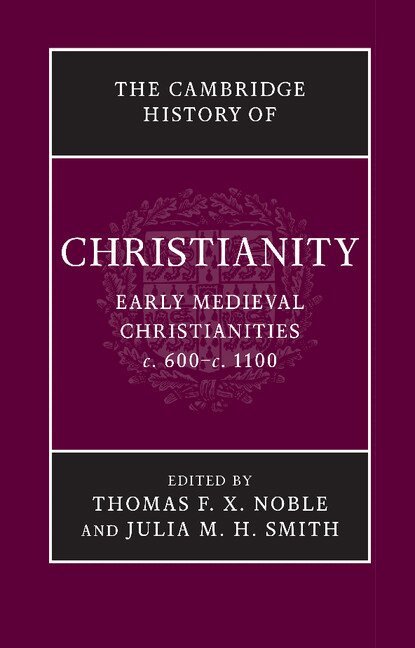
The Cambridge History of Christianity: Volume 3, Early Medieval Christianities, c.600-c.1100
Inbunden, Engelska, 2008
2 392 kr
Skickas inom 7-10 vardagar
The key focus of this book is the vitality and dynamism of all aspects of Christian experience from late antiquity to the First Crusade. By putting the institutional and doctrinal history firmly in the context of Christianity's many cultural manifestations and lived formations everywhere from Afghanistan to Iceland, this volume of The Cambridge History of Christianity emphasizes the ever-changing, varied expressions of Christianity at both local and world level. The insights of many disciplines, including gender studies, codicology, archaeology and anthropology, are deployed to offer fresh interpretations which challenge the conventional truths concerning this formative period. Addressing eastern, Byzantine and western Christianity, it explores encounters between Christians and others, notably Jews, Muslims, and pagans; the institutional life of the church including law, reform and monasticism; the pastoral and sacramental contexts of worship, belief and morality; and finally its cultural and theological meanings, including heresy, saints' cults and the afterlife.
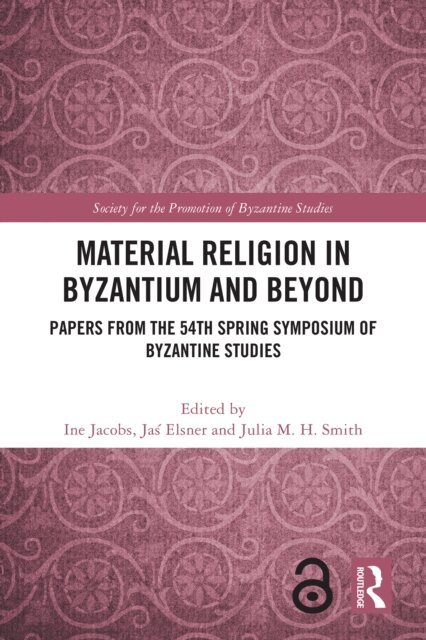
Material Religion in Byzantium and Beyond
Papers from the 54th Spring Symposium of Byzantine Studies
Inbunden, Engelska, 2025
1 900 kr
Skickas inom 10-15 vardagar
The theoretical framework known as Material Religion has emerged as a vibrant and profoundly influential approach within religious studies over the past two decades. Originating in the first decade of the 21st century from currents within cultural anthropology, Material Religion challenges a foundational assumption of much modern Western thought: that matter and spirit — materiality and religion — are fundamentally opposed. Rather than conceiving religion primarily as a system of ideas, doctrines, and beliefs, this framework accords equal significance to behaviours, practices, and objects. It reorients the study of religion towards the physical world, while simultaneously highlighting the capacity of tangible environments to mediate between humans and extraordinary powers.This volume introduces the insights of Material Religion to the field of Byzantine Studies. It presents Material Religion as a new theoretical lens to Byzantinists, who have long explored religious life through behaviours, practices, and material culture, and who have long recognized their significance. A series of case studies — encompassing individual sites, urban spaces, landscape features, and categories of objects — illustrates the relevance and analytical power of the framework across the full span of byzantine material culture, from Late Antiquity to the Fall of Constantinople, including instances of cultural exchange within and beyond the Empire’s heartland.Material Religion in Byzantium and Beyond will appeal to a broad audience, from students of Byzantium to established scholars who may be unfamiliar with the Material Religion framework.
563 kr
Skickas inom 7-10 vardagar
The key focus of this book is the vitality and dynamism of all aspects of Christian experience from late antiquity to the First Crusade. By putting the institutional and doctrinal history firmly in the context of Christianity's many cultural manifestations and lived formations everywhere from Afghanistan to Iceland, this volume of The Cambridge History of Christianity emphasizes the ever-changing, varied expressions of Christianity at both local and world level. The insights of many disciplines, including gender studies, codicology, archaeology and anthropology, are deployed to offer fresh interpretations which challenge the conventional truths concerning this formative period. Addressing eastern, Byzantine and western Christianity, it explores encounters between Christians and others, notably Jews, Muslims, and pagans; the institutional life of the church including law, reform and monasticism; the pastoral and sacramental contexts of worship, belief and morality; and finally its cultural and theological meanings, including heresy, saints' cults and the afterlife.