Jaime de Melo - Böcker
Visar alla böcker från författaren Jaime de Melo. Handla med fri frakt och snabb leverans.
7 produkter
7 produkter
1 632 kr
Skickas inom 10-15 vardagar
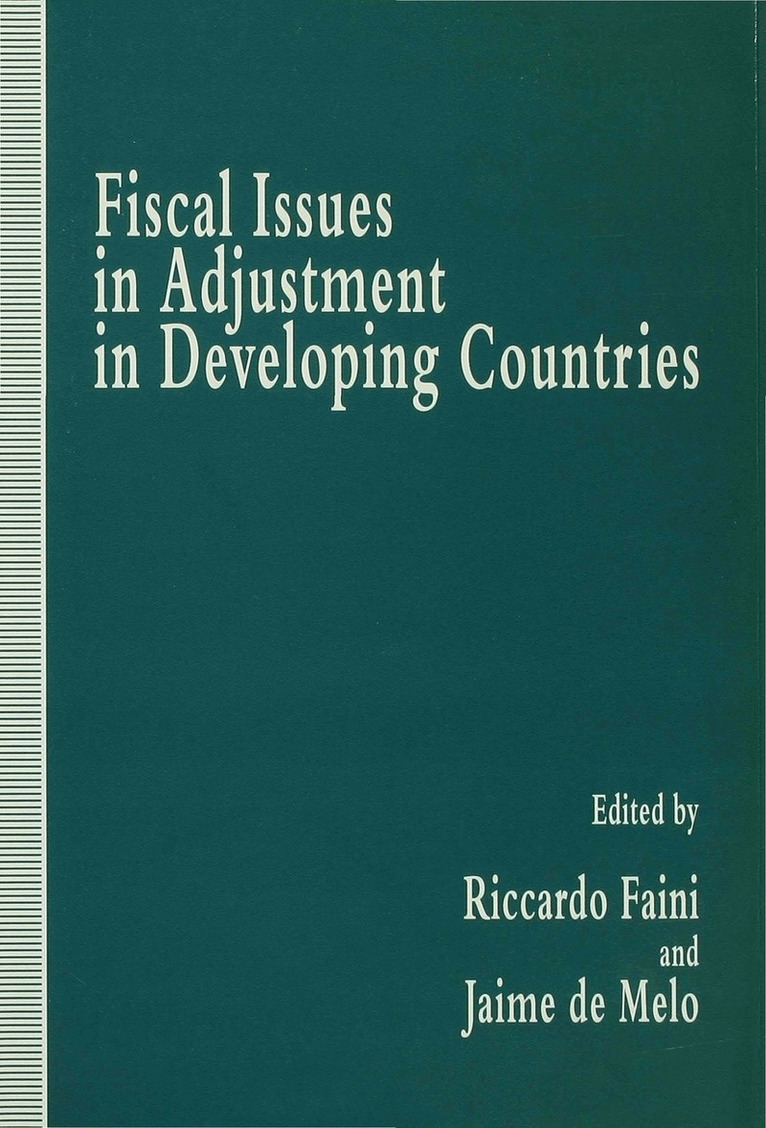
This collection of essays deals with aspects of the recent fiscal crisis in developing countries. Macro aspects cover theoretical underpinning of fiscal policy, the size of the required adjustment and the link between internal and external transfers. Micro aspects cover the relation between private and public investment, the experience of tax and expenditure reforms and the impact of fiscal adjustment on the poor. The essays are by applied economists, who analyze real-life issues.
550 kr
Skickas inom 7-10 vardagar
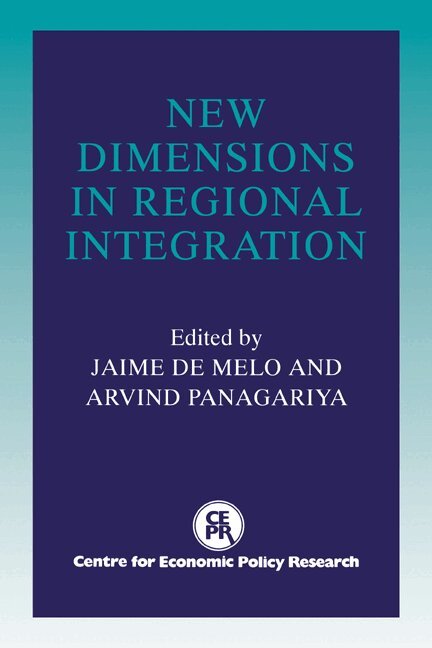
Interest in regional integration has recently revived in both developed and developing countries. The US has responded to the lack of progress in the Uruguay Round of the GATT by pursuing bilateral trade negotiations, while developing countries have been prompted to re-evaluate the potential benefits of regional integration. The tendency for the world trading system to divide into three blocs - the European Community, the Americas and East Asia - is providing their members with guaranteed access to large markets; however, poor non-member countries will suffer from the loss of access and the risk of trade wars is increased. In this book leading international experts assess the renewed attractiveness of regional integration to individual countries, the types of integration that are suitable to various circumstances, the conditions necessary to their success, and the relationship of regionalism to multilateral free trade.
1 008 kr
Skickas inom 7-10 vardagar
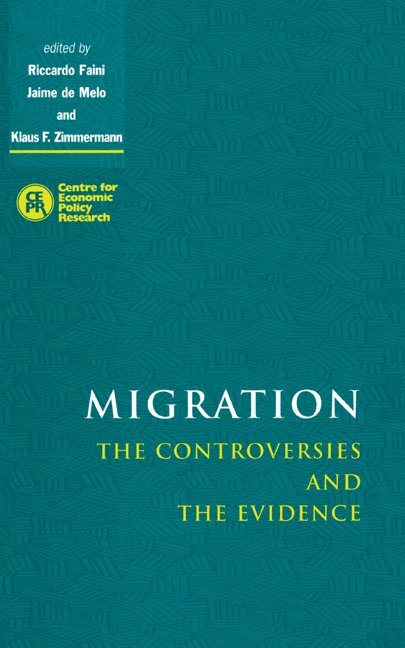
This 1999 volume takes a critical look at the current divide over immigration policies. It hopes to shed light on the debate by bringing together papers that investigate the link between trade and factor mobility, particularly labour migration, from theoretical and empirical perspectives. It examines the substitutability between trade and migration, the impact of regional integration on the location of economic activity, the role of public goods provisions, and the political economy of migration. Several papers quantify the link between trade, trade policies, migration and income distribution in sending and receiving nations using econometric methods and general equilibrium simulations. Case studies of past and present migration episodes are also presented: the impact of NAFTA on migratory pressure and wage gaps; the trade-migration links between Eastern and Western Europe; and the historical experience with migration flows in the nineteenth century.
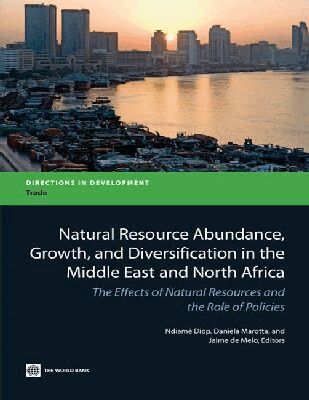
Natural Resource Abundance, Growth, and Diversification in the Middle East and North Africa
The Effects on Natural Resources and the Role of Policies
Häftad, Engelska, 2012
329 kr
Skickas inom 10-15 vardagar
MENA is one of the richest regions in the world in terms of natural resources: it holds more than 60 percent of the world’s proven oil reserves, mostly located in the Gulf region, and nearly half of gas reserves. Oil represents 80-85 percent of merchandise exports in the region, making it highly depending on fluctuations in international prices. A long strand of economic literature has suggested that such dependence may hurt a country’s growth prospects and the scope for job creation by reducing economic diversification. This volume investigates the effect of natural resources and the role of policies on achieving higher and sustained growth through diversification away from oil. It explores analytical questions which include: (i) the impact of the real exchange rate on manufacturing and tradable services competitiveness in MENA; (ii) the role of fiscal policy in supporting diversification; (iii) how “weak links” (input sectors with low productivity) play a critical role in explaining the concentration of economic activities, in addition to the classical Dutch Disease effect and (iv) the impact of macroeconomic factors on the drive for regional integration Several policy recommendations emerge from this analysis: (i) policymakers should strive to avoid real exchange rate overvaluation through consistent fiscal policies, flexible exchange rates and adequate product and factor market regulations; (ii) reforms to improve the competition and efficiency of upstream input activities are crucial for improving the performance of downstream activities and diversification in MENA (iii) a consistent and transparent fiscal policy is essential to reduce instability, build the fiscal space needed to invest in core infrastructure and human capital and create a favorable environment for diversification; (iv) while regional trade integration is desirable for political, social, cultural and economic reasons, in terms of trade liberalization, this is not the best option for resource-rich countries of the region. Policymakers should take this into account in discussing regional integration options. It is hoped that the findings of this work will be of interest to policymakers, the civil society, donors and practitioners in MENA countries and stimulate the debate of such an important topic.
1 632 kr
Skickas inom 10-15 vardagar
The book deals with aspects of the recent fiscal crisis in developing countries. Micro aspects cover the relation between private and public investment, the experience of tax and expenditure reforms, and the impact of fiscal adjustment on the poor.
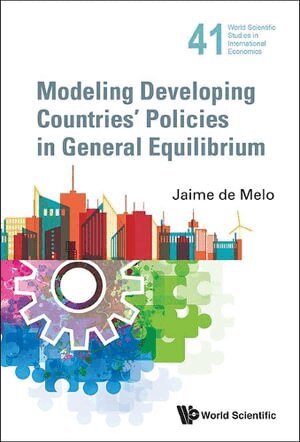
Del 41 - World Scientific Studies in International Economics
Modeling Developing Countries' Policies In General Equilibrium
Inbunden, Engelska, 2015
2 807 kr
Skickas inom 3-6 vardagar
Policies affecting resource allocation across tradable sectors and those affecting the incentives to produce tradable activities are key determinants of macroeconomic balance and growth. Computable general equilibrium models have made significant contributions to both types of policies. With advancements in computing power and software, these models have become easy to implement and are now widespread. The question then is when and how to formulate them to avoid the ‘black box’ syndrome.This book seeks to address these issues through carefully selected essays that analyse how to model general equilibrium linkages in a single economy, across developing and developed economies, and across both micro and macro policies. Micro policies examined include tariffs quotas and VERs, the choice of taxes to maximize government revenue, migration and remittances, and the political economy of tariff setting. Applications on macro policies cover capital inflows, real exchange rate determination, and the modeling of the effects of adjustment policies on income distribution.The book provides insights on the development of a family of models for diverse policy choices, focusing on the ways to model the following: links between tradable and non-tradable activities, labor markets, and portfolio choices given limited capital mobility. Selected essays are all inspired by specific policy problems, including the adaptation to external shocks (i.e. oil), consequences of capital inflows, determinants of migration and associated remittances, the productivity of foreign aid, and rent-seeking activities under trade regimes with non-price trade restrictions. Examples in this book lay out the theoretical foundations, alongside a variety of applications, to help formulate coherent and transparent models for policy analysis. Archetype economies are extensively used to show how differences in economic structure influence the effects of policies. Graduate students and policy analysts interested in modeling will find this a useful compendium of studies.
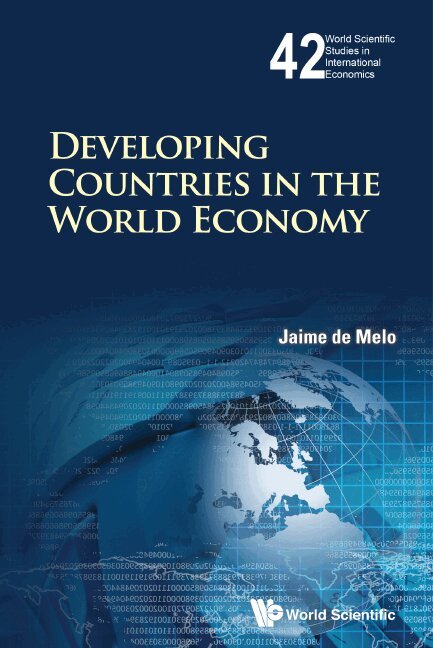
Del 42 - World Scientific Studies in International Economics
Developing Countries In The World Economy
Inbunden, Engelska, 2015
3 173 kr
Skickas inom 3-6 vardagar
Differences in the choices of trade and macro policies, both by developing countries and by developed countries towards developing countries, have been critical in determining the overall performance of developing countries. All too often, the performance of developing countries has not been assessed using appropriately conducted studies. The papers in this book are chosen to bridge this gap and show how a quantitative approach to policy evaluation can help resolve controversies and explain the choice of observed policies.The book brings together carefully selected papers that assess the impacts of various trade and macro policies, by quantifying the policies of developing countries at the macro level (exchange rate, investment, savings) and at the sector level (trade and industrial policies), in addition to policies of developed countries towards developing countries (trade preferences, quotas, VERs and migration policies). Facets of the political economy of trade, migration, and climate policies are explored (such as the enlargement of the EU, the rise of regionalism and how it can ease the pains of adjustment to trade liberalization, openness and inequality). Growing tensions between trade and the environment are also investigated. In short, this book covers a wide area of events ranging from external and internal shocks to external and internal policies, showing how the consequences of these events can be brought to rigorous quantitative analysis.