Jakobina K. Arch - Böcker
Visar alla böcker från författaren Jakobina K. Arch. Handla med fri frakt och snabb leverans.
4 produkter
4 produkter
823 kr
Skickas inom 7-10 vardagar
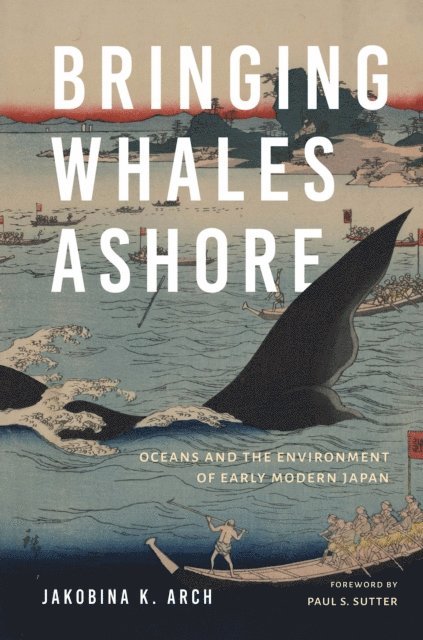
Japan today defends its controversial whaling expeditions by invoking tradition—but what was the historical reality? In examining the techniques and impacts of whaling during the Tokugawa period (1603–1868), Jakobina Arch shows that the organized, shore-based whaling that first developed during these years bore little resemblance to modern Japanese whaling. Drawing on a wide range of sources, from whaling ledgers to recipe books and gravestones for fetal whales, she traces how the images of whales and by-products of commercial whaling were woven into the lives of people throughout Japan. Economically, Pacific Ocean resources were central in supporting the expanding Tokugawa state.In this vivid and nuanced study of how the Japanese people brought whales ashore during the Tokugawa period, Arch makes important contributions to both environmental and Japanese history by connecting Japanese whaling to marine environmental history in the Pacific, including the devastating impact of American whaling in the nineteenth century.
444 kr
Skickas inom 7-10 vardagar
Japan today defends its controversial whaling expeditions by invoking tradition—but what was the historical reality? In examining the techniques and impacts of whaling during the Tokugawa period (1603–1868), Jakobina Arch shows that the organized, shore-based whaling that first developed during these years bore little resemblance to modern Japanese whaling. Drawing on a wide range of sources, from whaling ledgers to recipe books and gravestones for fetal whales, she traces how the images of whales and by-products of commercial whaling were woven into the lives of people throughout Japan. Economically, Pacific Ocean resources were central in supporting the expanding Tokugawa state.In this vivid and nuanced study of how the Japanese people brought whales ashore during the Tokugawa period, Arch makes important contributions to both environmental and Japanese history by connecting Japanese whaling to marine environmental history in the Pacific, including the devastating impact of American whaling in the nineteenth century.
2 150 kr
Skickas inom 10-15 vardagar
Across the early modern world (late 1400s to mid-1900s), oceans provided the key connection between far-flung communities in an age of empire and colonial expansion, while also serving as an increasingly important source of resources, from salted fish to whale oil to luxurious pearls.This story has rarely been told from the perspective of the marine environment itself. This book brings together the newest research to explore an era of newfound importance for the global ocean, focusing on the changing human relationships with maritime environments as cultures around the world found new ways to use and manipulate different aspects of this environment. The book focuses on key themes in early modern maritime history: harvesting marine life, movement through and on water, changing coastal environments, sea–land connections, and the metaphysics of the ocean in an age of change. While making a case for the importance of early modern marine environmental history throughout all the oceans of the world, this book also provides a foundation for more work on the topic.This book is for undergraduate and graduate students beginning work on premodern environmental, maritime, ocean and global history, as well as literary scholars or ocean scientists interested in ocean history.
593 kr
Skickas inom 10-15 vardagar
Across the early modern world (late 1400s to mid-1900s), oceans provided the key connection between far-flung communities in an age of empire and colonial expansion, while also serving as an increasingly important source of resources, from salted fish to whale oil to luxurious pearls.This story has rarely been told from the perspective of the marine environment itself. This book brings together the newest research to explore an era of newfound importance for the global ocean, focusing on the changing human relationships with maritime environments as cultures around the world found new ways to use and manipulate different aspects of this environment. The book focuses on key themes in early modern maritime history: harvesting marine life, movement through and on water, changing coastal environments, sea–land connections, and the metaphysics of the ocean in an age of change. While making a case for the importance of early modern marine environmental history throughout all the oceans of the world, this book also provides a foundation for more work on the topic.This book is for undergraduate and graduate students beginning work on premodern environmental, maritime, ocean and global history, as well as literary scholars or ocean scientists interested in ocean history.