Jakub Nowosad – författare
Visar alla böcker från författaren Jakub Nowosad. Handla med fri frakt och snabb leverans.
4 produkter
4 produkter
2 199 kr
Skickas inom 10-15 vardagar
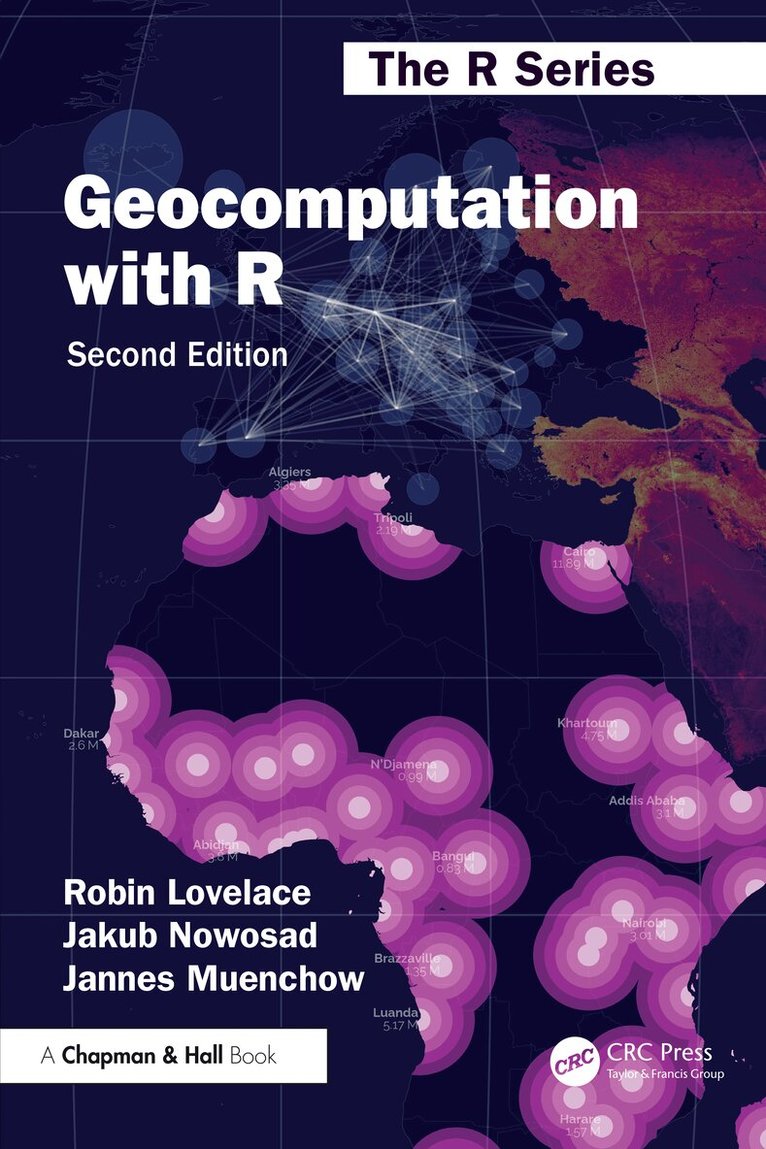
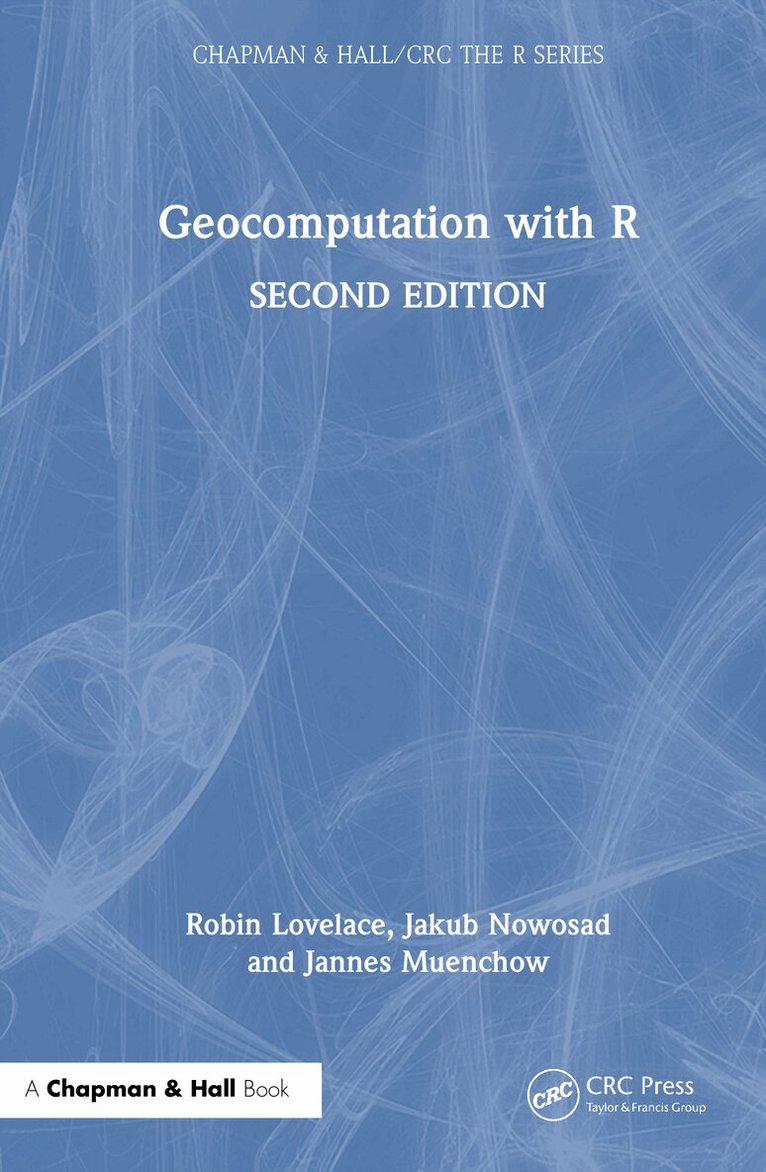
Geocomputation with R is for people who want to analyze, visualize, and model geographic data with open source software. The book provides a foundation for learning how to solve a wide range of geographic data analysis problems in a reproducible, and therefore scientifically sound and scalable way. The second edition features numerous updates, including the adoption of the high-performance terra package for all raster data processing, detailed coverage of the spherical geometry engine s2, updated information on coordinate reference systems and new content on openEO, STAC, COG, and gdalcubes. The data visualization chapter has been revamped around version 4 of the tmap package, providing a fresh perspective on creating publication-quality maps from the command line. The importance of the book is also highlighted in a new foreword by Edzer Pebesma.The book equips you with the knowledge and skills necessary to tackle a wide range of issues manifested in geographic data, including those with scientific, societal, and environmental implications. The book is especially well-suited to:Data scientists and engineers interested in upskilling to handle spatial data.People with existing geographic data skills interested in developing powerful geosolutions via code.Anyone who needs to work with spatial data in a reproducible and scalable way.The book is divided into three parts: Foundations, Extensions, and Applications, covering progressively more advanced topics. The exercises at the end of each chapter provide the necessary skills to address various geospatial problems, with solutions and supplementary materials available at r.geocompx.org/solutions/.
815 kr
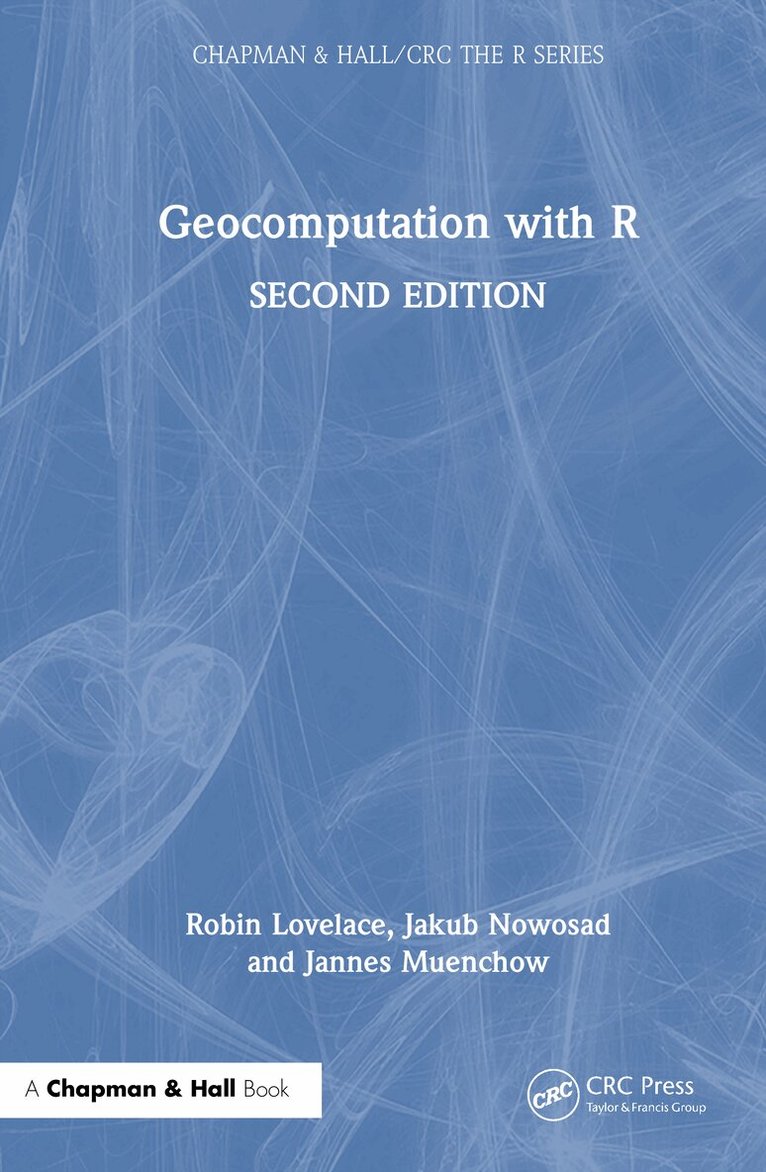
Geocomputation with R is for people who want to analyze, visualize, and model geographic data with open source software. The book provides a foundation for learning how to solve a wide range of geographic data analysis problems in a reproducible, and therefore scientifically sound and scalable way. The second edition features numerous updates, including the adoption of the high-performance terra package for all raster data processing, detailed coverage of the spherical geometry engine s2, updated information on coordinate reference systems and new content on openEO, STAC, COG, and gdalcubes. The data visualization chapter has been revamped around version 4 of the tmap package, providing a fresh perspective on creating publication-quality maps from the command line. The importance of the book is also highlighted in a new foreword by Edzer Pebesma.The book equips you with the knowledge and skills necessary to tackle a wide range of issues manifested in geographic data, including those with scientific, societal, and environmental implications. The book is especially well-suited to:Data scientists and engineers interested in upskilling to handle spatial data.People with existing geographic data skills interested in developing powerful geosolutions via code.Anyone who needs to work with spatial data in a reproducible and scalable way.The book is divided into three parts: Foundations, Extensions, and Applications, covering progressively more advanced topics. The exercises at the end of each chapter provide the necessary skills to address various geospatial problems, with solutions and supplementary materials available at r.geocompx.org/solutions/.
2 199 kr
Skickas inom 10-15 vardagar
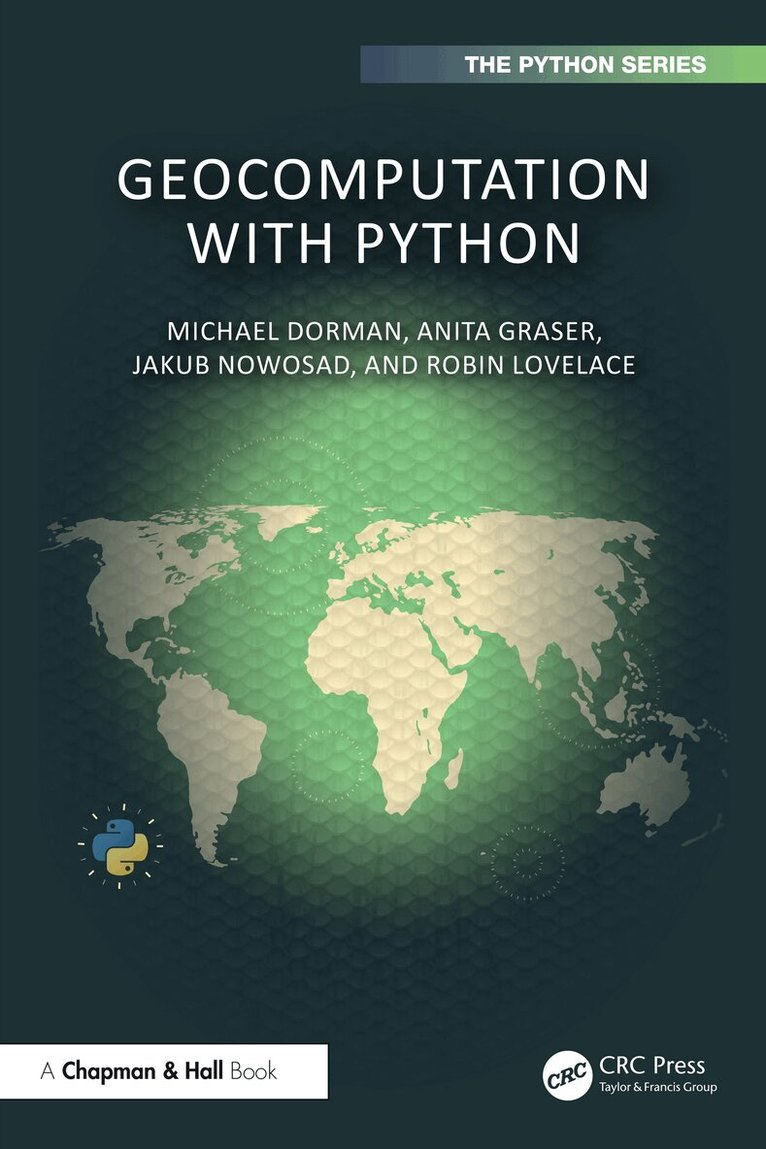
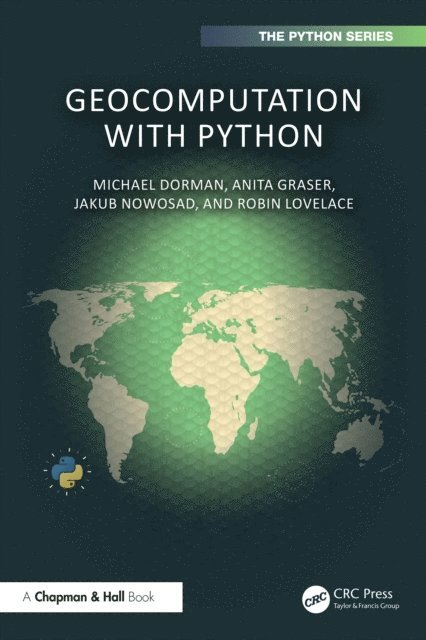
Geocomputation with Python is a comprehensive resource for working with geographic data with the most popular programming language in the world. The book gives an overview of Python's capabilities for spatial data analysis, as well as dozens of worked-through examples covering the entire range of standard GIS operations. A unique selling point of the book is its cohesive and joined-up coverage of both vector and raster geographic data models and consistent learning curve. This book is an excellent starting point for those new to working with geographic data with Python, making it ideal for students and practitioners beginning their journey with Python.Key features:Showcases the integration of vector and raster datasets operations.Provides explanation of each line of code in the book to minimize surprises.Includes example datasets and meaningful operations to illustrate the applied nature of geographic research.Another unique feature is that this book is part of a wider community. Geocomputation with Python is a sister project of Geocomputation with R (Lovelace, Nowosad, and Muenchow 2019), a book on geographic data analysis, visualization, and modeling using the R programming language that has numerous contributors and an active community.The book teaches how to import, process, examine, transform, compute, and export spatial vector and raster datasets with Python, the most widely used language for data science and many other domains. Reading the book and running the reproducible code chunks within will make you a proficient user of key packages in the ecosystem, including shapely, geopandas, and rasterio. The book also demonstrates how to make use of dozens of additional packages for a wide range of tasks, from interactive map making to terrain modeling. Geocomputation with Python provides a firm foundation for more advanced topics, including spatial statistics, machine learning involving spatial data, and spatial network analysis, and a gateway into the vibrant and supportive community developing geographic tools in Python and beyond.
815 kr
Skickas inom 10-15 vardagar
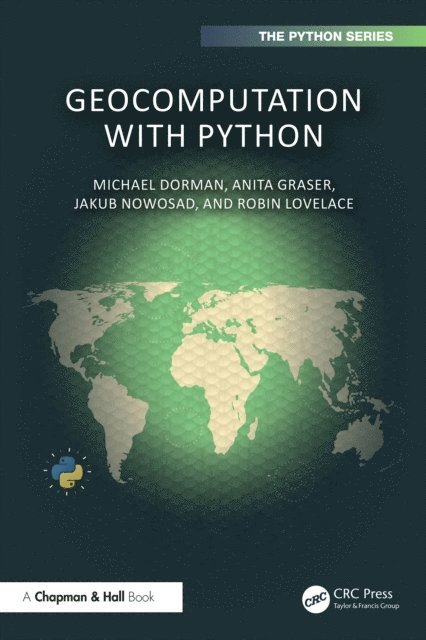
Geocomputation with Python is a comprehensive resource for working with geographic data with the most popular programming language in the world. The book gives an overview of Python's capabilities for spatial data analysis, as well as dozens of worked-through examples covering the entire range of standard GIS operations. A unique selling point of the book is its cohesive and joined-up coverage of both vector and raster geographic data models and consistent learning curve. This book is an excellent starting point for those new to working with geographic data with Python, making it ideal for students and practitioners beginning their journey with Python.Key features:Showcases the integration of vector and raster datasets operations.Provides explanation of each line of code in the book to minimize surprises.Includes example datasets and meaningful operations to illustrate the applied nature of geographic research.Another unique feature is that this book is part of a wider community. Geocomputation with Python is a sister project of Geocomputation with R (Lovelace, Nowosad, and Muenchow 2019), a book on geographic data analysis, visualization, and modeling using the R programming language that has numerous contributors and an active community.The book teaches how to import, process, examine, transform, compute, and export spatial vector and raster datasets with Python, the most widely used language for data science and many other domains. Reading the book and running the reproducible code chunks within will make you a proficient user of key packages in the ecosystem, including shapely, geopandas, and rasterio. The book also demonstrates how to make use of dozens of additional packages for a wide range of tasks, from interactive map making to terrain modeling. Geocomputation with Python provides a firm foundation for more advanced topics, including spatial statistics, machine learning involving spatial data, and spatial network analysis, and a gateway into the vibrant and supportive community developing geographic tools in Python and beyond.