Jamal Nassar - Böcker
Visar alla böcker från författaren Jamal Nassar. Handla med fri frakt och snabb leverans.
2 produkter
2 produkter
1 039 kr
Skickas inom 10-15 vardagar
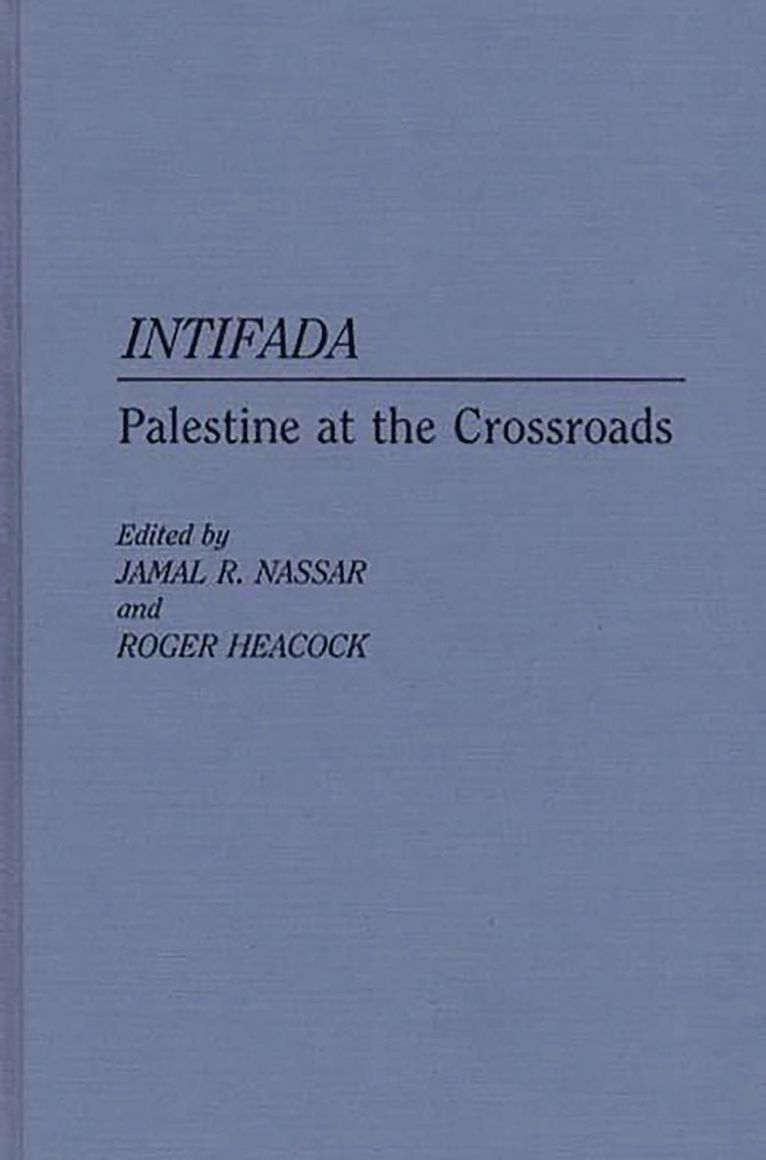
The theme is the struggle for Palestinian national liberation from `colonial' rule, of which the uprising since December 1987 is seen as the latest and most powerful phase. Most of the contributors are professionals in the occupied territories (in sociology, economics, political science, public health, etc.), and they write as scholars and firsthand observers as well as supporters of the intifada. There is much interesting material on the respective roles of villagers, urban workers, the merchant class and Palestinian women, as well as on the competing secular and Islamic wings of the nationalist movement. Foreign Affairs An unusually well-informed collection of 19 essays on the Palestinian uprising, or intifada, which has been underway since December 1987. The contributors know their subject and in composite they provide a clear, pithy (and sympathetic) picture of the economic, political, and social underpinnings of the uprising. Although the perspective is generally inside looking outward, there are several good chapters on the international aspects of the intifada. . . . Highly recommended for academic libraries. ChoiceThis edited volume presents a historical background of the occupation and its nature and ramifications to Palestinian nationalism. Its coverage also embraces the catalysts for and the revolutionary transformation of the Palestinian uprising and it includes an interim assessment of the achievements and failures of the Intifada. By relying on first-hand original Arabic and Hebrew sources, the book provides a comprehensive survey and analysis of the Palestinian uprising. Intifada's perspective is unique in that many of its contributors have been actual participants in the uprising as well as its professional observers.Part I presents the setting and conditions that gave rise to the uprising, with an analysis of the nature of the occupation, a presentation of the colonial economic policies imposed by the Israelis and the development of the Palestinian political consciousness, and an analysis of the infrastructure of the resistance. Part II looks at the participants of the uprising from several different perspectives: refugee camps, villages, the role of women, the working class, petite bourgeoisie, religion, revolution, and the PLO. Part III examines the Intifada's implications on the Arab world, the United States, and the European community. Part IV examines the impact on the protagonists, Israel and the Palestinians. The conclusion takes a look at prospects for the future. This book should appeal to students and scholars of Middle East/Israeli-Arab relations.
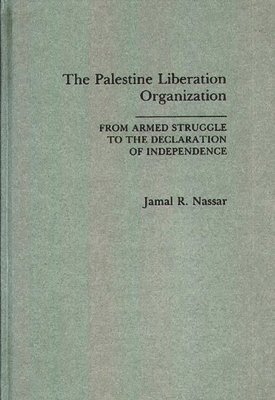
Palestine Liberation Organization
From Armed Struggle to the Declaration of Independence
Inbunden, Engelska, 1991
1 039 kr
Skickas inom 10-15 vardagar
This book takes a comprehensive look at the PLO, examining its origins, legal status, goals, and strategies. Jamal R. Nassar investigates the PLO's role in regional and international politics and unveils the dynamics of the power relationships responsible for the organization's successes and failures. The book discerns patterns and trends in the PLO's activities and studies the conditions under which these patterns and trends develop. Nassar places the PLO in a global perspective, delving into the basis of the organization's legitimacy and its prospects for participation in the peaceful resolution of the Arab-Israeli conflict. The book's organization and comprehensive coverage--beginning with a thorough historical background of the Palestinian experience--make it an excellent study for the student of Middle Eastern politics.Nassar probes the rise of the PLO to its present position as a major actor in the Middle East--one that is no less significant than a number of sovereign states. He shows that the PLO is a complex power that cannot hope to achieve its objectives independently of other regional powers but can prevent these powers from resolving the Arab-Israeli dispute. The book outlines the many peace initiatives that have been foiled by the PLO and reveals how Israel's refusal to talk to the PLO will likely thwart the achievement of peace. Students and scholars of Middle East and Palestinian politics, the Arab-Israeli conflict, terrorism, political ideologies, revolutionary movements, transnational politics, and contemporary history will find Jamal Nassar's book on the PLO an invaluable resource.