James Clover - Böcker
Visar alla böcker från författaren James Clover. Handla med fri frakt och snabb leverans.
3 produkter
3 produkter
3 018 kr
Skickas inom 10-15 vardagar
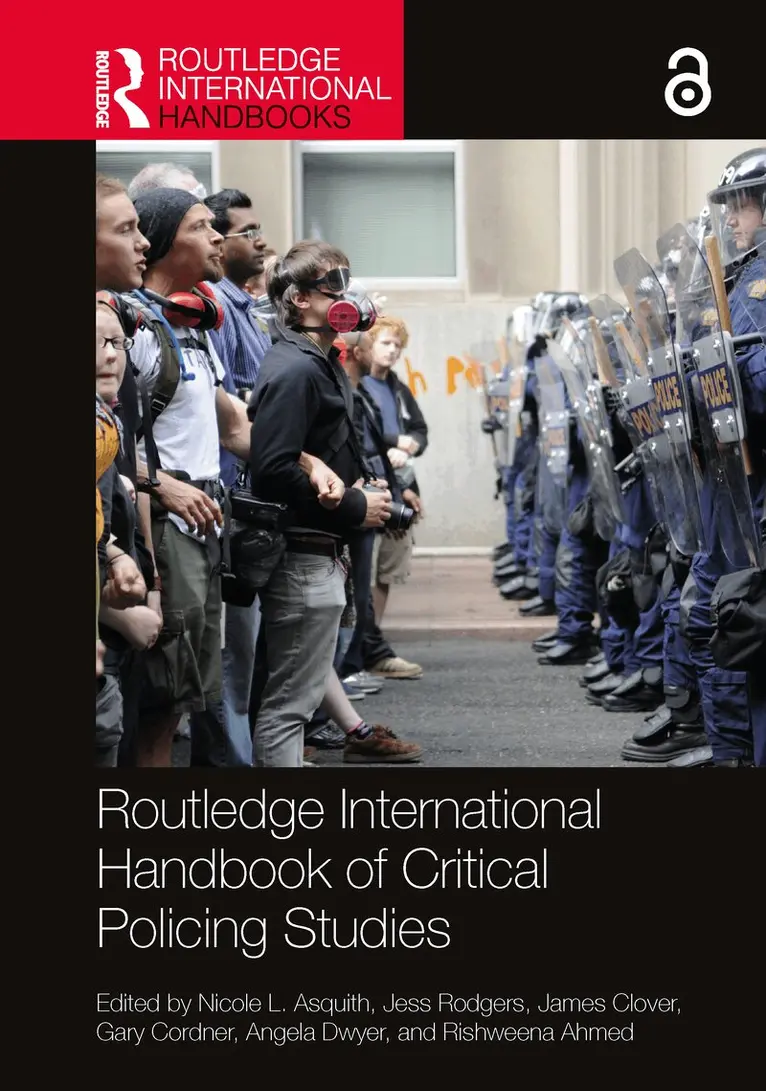
Critical analyses of policing have accompanied accounts of the police since the early days of modern police organisations. More so than ever, police and policing are subject to close and critical scrutiny from governments and the public. It is timely, therefore, to consider what is critical about police and policing.The Routledge International Handbook of Critical Policing Studies brings together scholars and practitioners to critically explore the full continuum of safety governance from police reforms to the redistribution of policing resources to the replacement of state police. In offering the three Rs of policing—reform, redistribute, replace—we provide a conceptualisation of critical policing studies that acknowledges a continuum of policing that mirrors the different trajectories, priorities, and possibilities that exist across different cultural and historical contexts. This collection is composed of 65 scholars and practitioners across 39 chapters, edited by a team of police pracademics and policing scholars, to showcase accounts of policing from outside the Anglo-European metropole, privileging works from First Nations people and from the Global South, and presenting contextualised solutions to the problems facing police and communities.This Handbook identifies the key issues facing the police and safety governance across the globe and offers insights into the implications for policing theory and practice, proposing solutions to some of the most intransigent problems facing contemporary societies. Individually, and as a collection, this Handbook will be an essential read for scholars, practitioners, and activists alike.
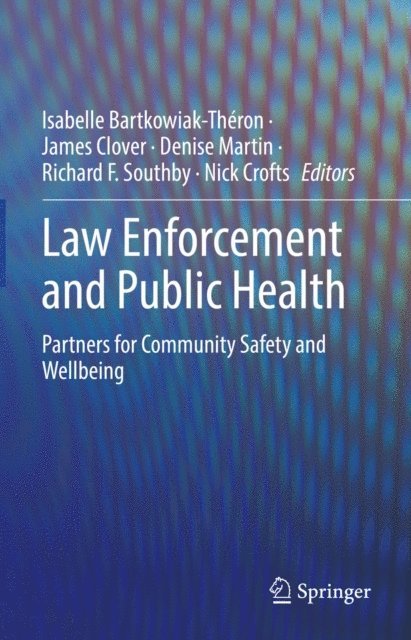
Law Enforcement and Public Health
Partners for Community Safety and Wellbeing
Inbunden, Engelska, 2022
1 101 kr
Skickas inom 10-15 vardagar
The expanding remit of policing as a fundamental part of the public health continuum is increasingly acknowledged on the international scene. Similarly the growing role of health professionals as brokers of public safety means that the need for scholarly resources for developing knowledge and broadening theoretical positioning and questioning is becoming urgent and crucial. The fields of law enforcement and public health are beginning to understand the inextricable links between public safety and public health and the need to shift policies and practices towards more integrated practices. This book comes as a first, an utterly timely scholarly collection that brings together the views of multidisciplinary commentators on a wide range of issues and disciplines within the law enforcement and public health (LEPH) arena. The book addresses the more conceptual aspects of the relationship as well as more applied fields of collaboration, and the authors describe and analyze a range of servicedelivery examples taken from real-life instances of partnerships in action. Among the topics covered:Defund, Dismantle or Define Law Enforcement, Public Health, and Vulnerability Law Enforcement and Mental Health: The Missing Middle The Challenges of Sustaining Partnerships and the Diversification of Cultures Using Public Health Concepts and Metrics to Guide Policing Strategy and Practice Policing PandemicsLaw Enforcement and Public Health: Partners for Community Safety and Wellbeing is essential reading for a wide array of professions and areas of expertise in the intersectoral field of LEPH. It is an indispensable resource for public health and law enforcement specialists (practitioners, educators, scholars, and researchers) and training programs across the world, as well as individuals interested in developing their knowledge and capacity to respond to complex LEPH issues in the field, including public prosecutors, coroners, and the judiciary. The text also can be used for undergraduate and postgraduate university policing, criminology, sociology, psychology, social work, public health, and medicine programs.
718 kr
Skickas inom 10-15 vardagar
The expanding remit of policing as a fundamental part of the public health continuum is increasingly acknowledged on the international scene. Similarly the growing role of health professionals as brokers of public safety means that the need for scholarly resources for developing knowledge and broadening theoretical positioning and questioning is becoming urgent and crucial. The fields of law enforcement and public health are beginning to understand the inextricable links between public safety and public health and the need to shift policies and practices towards more integrated practices. This book comes as a first, an utterly timely scholarly collection that brings together the views of multidisciplinary commentators on a wide range of issues and disciplines within the law enforcement and public health (LEPH) arena. The book addresses the more conceptual aspects of the relationship as well as more applied fields of collaboration, and the authors describe and analyze a range of servicedelivery examples taken from real-life instances of partnerships in action. Among the topics covered:Defund, Dismantle or Define Law Enforcement, Public Health, and Vulnerability Law Enforcement and Mental Health: The Missing Middle The Challenges of Sustaining Partnerships and the Diversification of Cultures Using Public Health Concepts and Metrics to Guide Policing Strategy and Practice Policing PandemicsLaw Enforcement and Public Health: Partners for Community Safety and Wellbeing is essential reading for a wide array of professions and areas of expertise in the intersectoral field of LEPH. It is an indispensable resource for public health and law enforcement specialists (practitioners, educators, scholars, and researchers) and training programs across the world, as well as individuals interested in developing their knowledge and capacity to respond to complex LEPH issues in the field, including public prosecutors, coroners, and the judiciary. The text also can be used for undergraduate and postgraduate university policing, criminology, sociology, psychology, social work, public health, and medicine programs.